
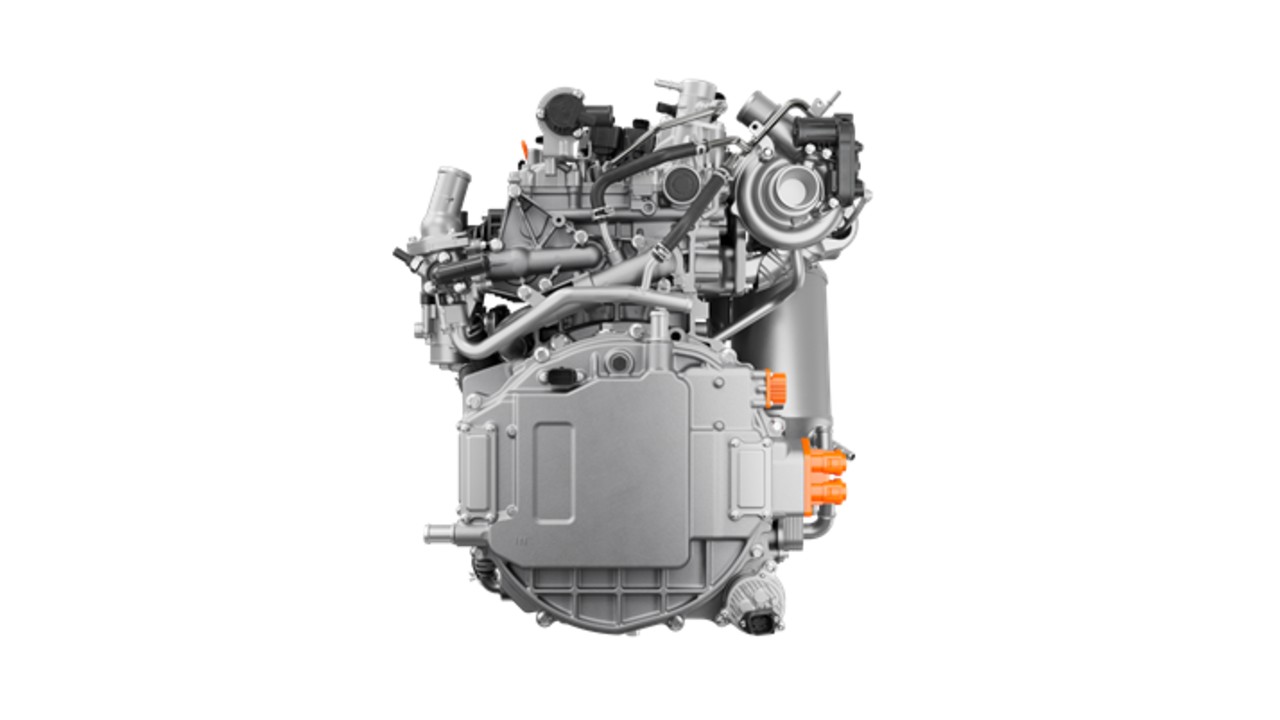
Horse Powertrain has introduced a new methanol-powered range-extender system designed for electric vehicles, expanding its portfolio of electrified propulsion technologies with a powertrain that combines a turbocharged combustion engine, generator and power electronics into a single integrated unit.
The new D20 Methanol system was unveiled at Auto China 2026 by Horse Powertrain, the joint venture established by Renault and Geely. The company said the powertrain is intended for range-extended electric vehicles (REEVs), in which the combustion engine functions solely as a generator to recharge the traction battery rather than driving the wheels directly.
Methanol-Fueled Range Extender
According to Horse Powertrain, the D20 Methanol delivers up to 105 kilowatts of power and integrates a 2.0-liter turbocharged four-cylinder engine, generator and power electronics into a package weighing approximately 170 kilograms.
The combustion engine is designed to operate entirely on methanol. The company said a high-energy ignition system enables lean combustion while supporting cold starts in temperatures as low as minus 35 degrees Celsius.
Horse added that nitrogen oxide emissions are designed to comply with both China’s CN6b emissions standard and the upcoming Euro 7 regulations.
Axial Flux Generator Debuts
A key feature of the new powertrain is its axial flux generator, replacing the conventional radial flux design commonly used in electric machines.
Horse said the disc-shaped axial flux configuration reduces overall length by 46% while increasing volumetric power density by 63% compared with comparable radial flux generators.
The company reported an electrical efficiency of 96.4% for the drive system and a fuel-to-electricity conversion efficiency of 47%.
According to laboratory testing cited by Horse, approximately 19.6 liters of methanol can generate enough electricity to fully recharge a 40-kWh battery.
Expanding Electrified Powertrain Portfolio
The D20 Methanol forms part of Horse Powertrain’s broader strategy of offering multiple electrified propulsion systems for different vehicle platforms and regional markets.
Earlier this year, the company introduced the X-Range C15 Direct Drive system, which enables manufacturers to adapt battery-electric vehicle platforms for hybrid, plug-in hybrid or range-extender applications with relatively limited engineering changes.
Unlike the C15 Direct Drive, which can mechanically connect the combustion engine to the wheels under certain driving conditions, the D20 Methanol operates exclusively as a generator to produce electricity for the battery.
Range-extended electric vehicles have gained increasing attention in China, where they combine battery-electric driving for shorter trips with additional driving range provided by an onboard generator. The architecture also allows manufacturers to develop multiple powertrain configurations from a common electric vehicle platform.