
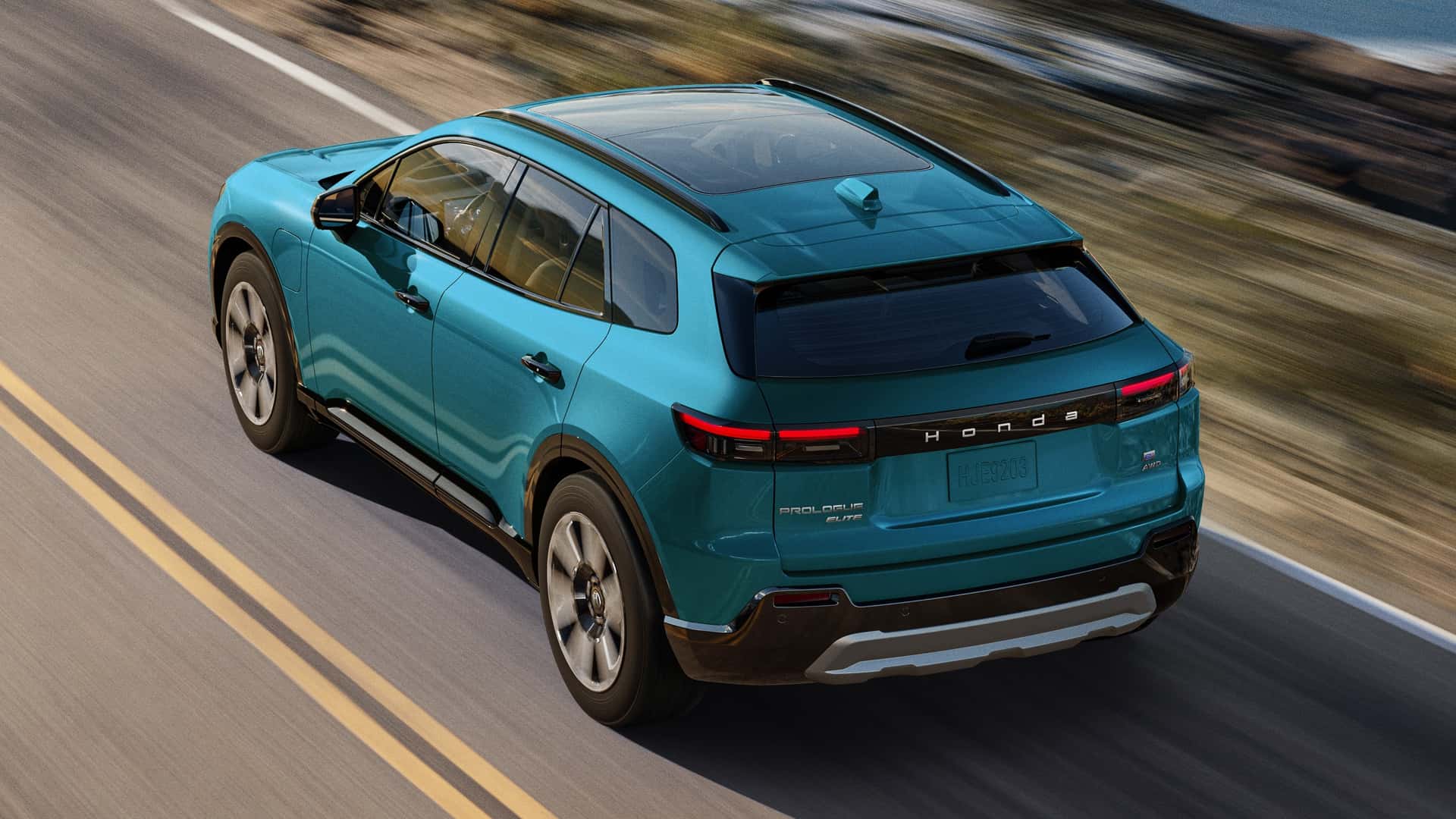
Honda Motor Co said on Monday it will cut back its investment in electric vehicles as global demand slows, shifting focus to hybrid cars and expanding its motorcycle business to bolster profitability. The company now plans to invest 7 trillion yen ($45 billion) in electrification and software by 2030, down from a previously announced 10 trillion yen.
The automaker said battery-electric vehicles (BEVs) are unlikely to make up 30% of its global sales by 2030, a target it had set earlier. Instead, Honda will prioritize development of hybrid electric vehicles (HEVs), citing strong consumer demand for transitional technologies. “Mostly next-generation HEV models [will] be introduced to market in 2027 onward, as the powertrain that will play a key role during the transition period toward the popularization of EVs,” the company said.
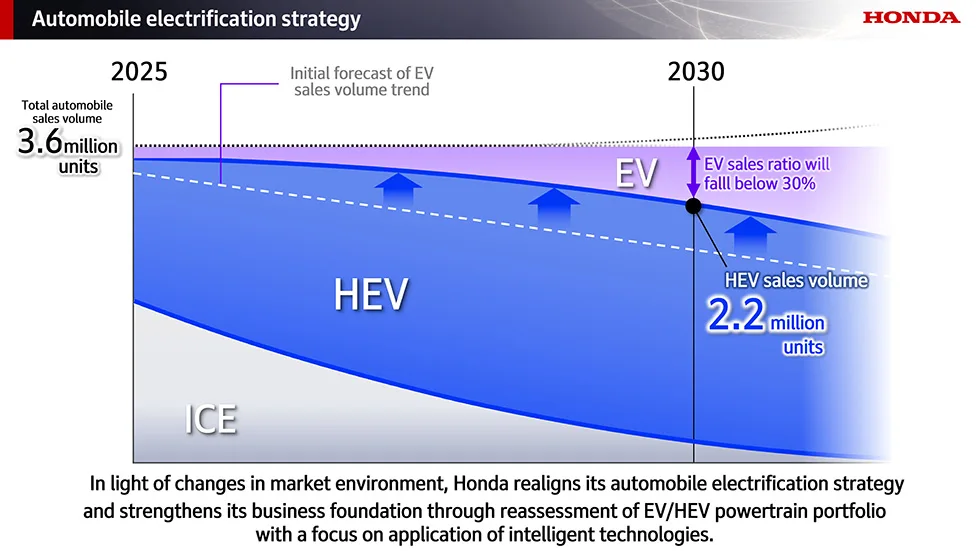
Under its revised strategy, Honda aims to launch 13 hybrid models globally over four years beginning in 2027, while improving HEV fuel economy by 10% and reducing system costs by 50% compared to 2018 levels. The company also said it will target growth in its motorcycle business—particularly in developing markets like India—where it sold 20.57 million units last fiscal year, accounting for roughly 40% of the global motorcycle market.
In parallel, Honda is advancing a next-generation advanced driver-assistance system (ADAS), slated for launch in 2027 on both EVs and HEVs in Japan and North America. In China, Honda will collaborate with local startup Momenta Global to develop ADAS technology tailored to regional driving conditions. The company is also designing a new hybrid system for large vehicles geared toward North American preferences for size and towing power, with market entry expected in the second half of the decade.
Despite the pivot, Honda reaffirmed its long-term goals of achieving carbon neutrality across all products and operations by 2050 and eliminating traffic fatalities. The company said it remains committed to electrification, but with a more diversified approach.