





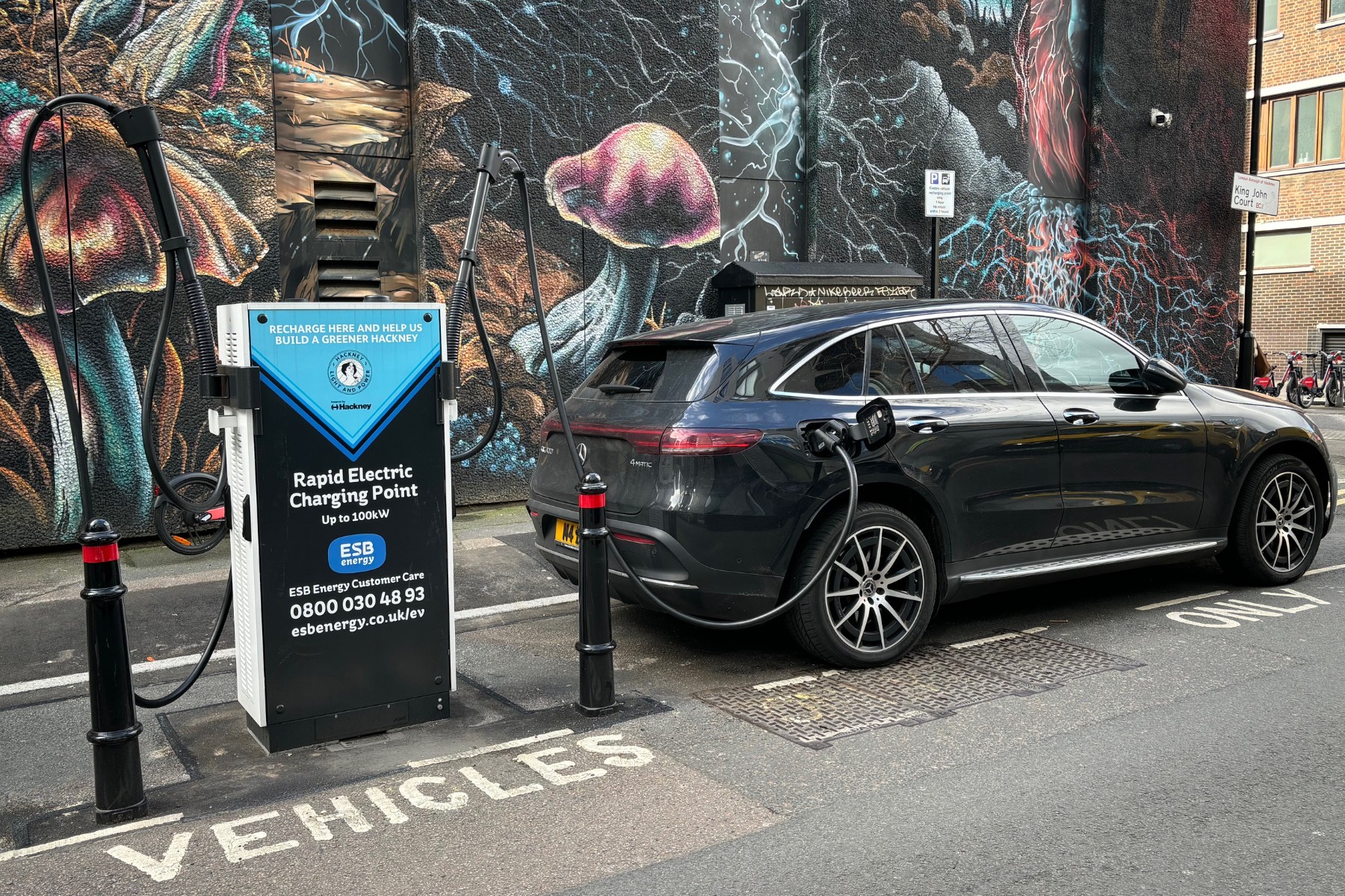
The Hackney Council has launched the first nine rapid electric vehicle chargers as part of a broader plan to install more than 50 units across the borough by 2030.
The chargers, supplied and operated by ESB Energy, offer up to 100 kW of charging power and are designed to deliver approximately 30-minute charging sessions. The rollout is aimed particularly at residents who do not have access to private home charging.
Each charging unit is installed in a dedicated parking bay large enough to accommodate delivery vans and commercial vehicles, reflecting a focus on both residential and business users.
Access to the chargers is open to all drivers, though discounted rates are available through the ESB Energy EV Plug In app under the borough’s “Hackney Light and Power Plan.” Eligible residents—those with EV parking permits—can benefit from reduced overnight tariffs between 1 a.m. and 5 a.m., as well as preferential daytime pricing.
Sarah Young said the initiative supports wider environmental goals. “This is a huge step forward in expanding our electric vehicle charging network. By rolling out rapid chargers across the borough, we’re supporting more residents and businesses to consider switching to electric vehicles. And this means cleaner air and quieter streets for everyone,” she said.
She added that pricing incentives aim to lower barriers to adoption. “Our discounted night-time tariff goes even further, supporting people who have to drive for work with access to fast and affordable charging, and helping remove barriers to going electric.”
The chargers are distributed across several locations in Hackney, including De Beauvoir, Hackney Wick, Hoxton and Stoke Newington, forming part of a wider effort to improve on-street charging infrastructure in urban areas.


