
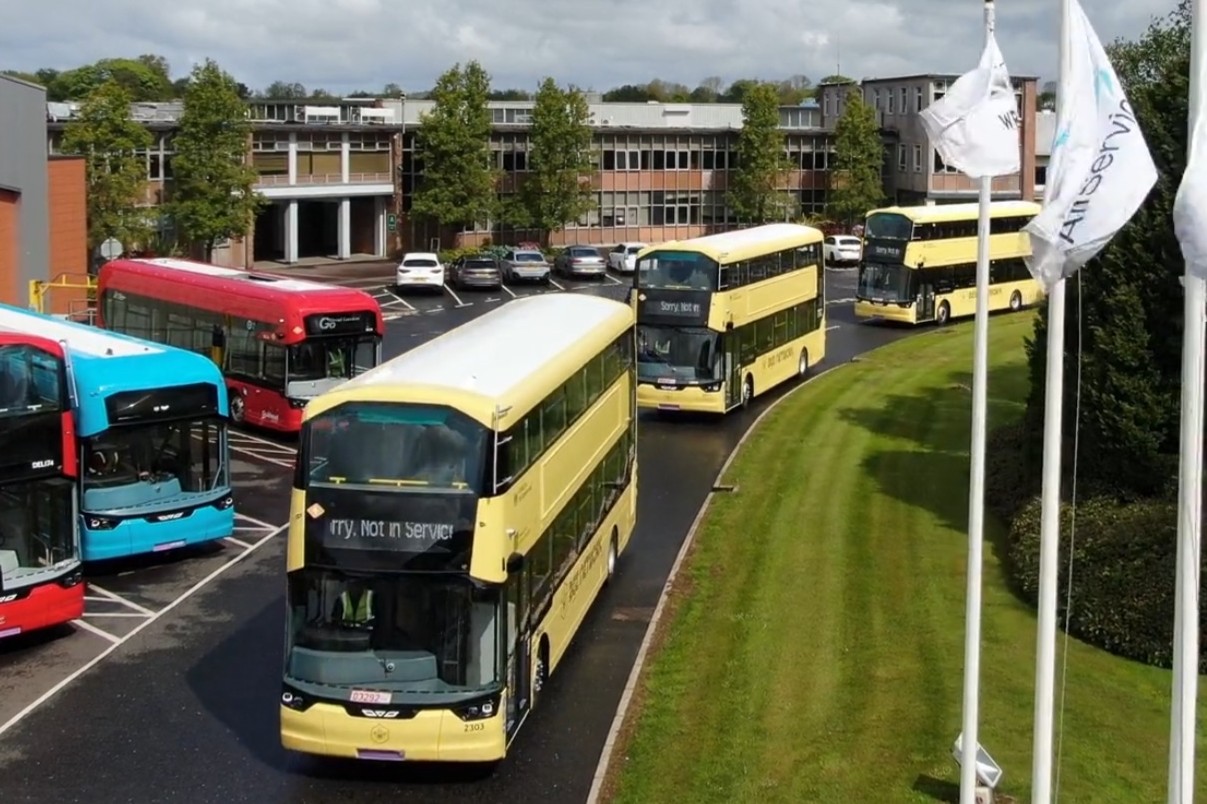
Transport for Greater Manchester (TfGM) has awarded Wrightbus a contract for 125 additional battery-electric buses, expanding the region’s efforts to transition the Bee Network to a fully zero-emission fleet by the end of the decade.
The latest order follows a previous contract awarded to Wrightbus in March for 55 electric buses and forms part of Greater Manchester’s broader strategy to electrify public transport across the region.
Of the 125 newly ordered vehicles, 100 will be allocated to Metroline Manchester and operated from the Hyde Road depot, which is currently being upgraded to accommodate a larger fleet of battery-electric buses. TfGM did not specify which Wrightbus models will be supplied under this portion of the contract.
The remaining 25 buses will be delivered to Stagecoach and will consist of 16 single-deck and nine double-deck battery-electric vehicles.
Neither TfGM nor Wrightbus disclosed delivery schedules for the new order. Delivery timelines have also not been announced for the 55 buses ordered earlier this year.
The transport authority is currently receiving 76 electric buses from a previous procurement. Of those vehicles, 33 battery-electric double-deck buses are expected to serve routes 8 and 10 linking Bolton, Farnworth, Pendlebury and Salford.
The remaining 43 buses have been configured for operation on the V1, V2 and V4 routes along the Leigh Guided Busway.
According to Transport for Greater Manchester, the 43 electric buses designated for the Leigh Guided Busway have completed acceptance testing at Wrightbus’s Ballymena manufacturing facility and are expected to enter passenger service in the coming weeks.
Alongside vehicle procurement, TfGM is continuing to expand charging infrastructure across its bus depots to support the transition to battery-electric operations.
The authority said that half of the Bee Network’s depots have now been electrified. Facilities in Ashton and Middleton are fully equipped to support zero-emission buses, while depot upgrades have also been completed in Bolton, Oldham and Hyde Road.
The infrastructure programme is considered a key element of Greater Manchester’s target of operating an entirely zero-emission bus fleet by 2030.
TfGM said the latest order keeps the region on track to achieve that objective. An interim target calls for half of the Bee Network fleet to be battery-electric by the end of this year.
The procurement forms part of a wider investment programme announced by the Greater Manchester Combined Authority in late 2025, when nearly £60 million was allocated to support the acquisition of approximately 220 additional electric buses.
At the time, local authorities said the first vehicles funded through that programme would enter service by the end of 2026. Officials projected that around 350 electric buses would be operating within the Bee Network by then, accounting for roughly 20% of the overall fleet.
Based on previous and current orders, Wrightbus is expected to supply a significant share of Greater Manchester’s future electric bus fleet. Including 76 buses currently being delivered, 55 ordered in March and the latest 125-vehicle contract, the manufacturer is set to provide 256 electric buses under recent procurement rounds, with additional vehicles from earlier contracts also operating in the network.
Wrightbus is not the sole supplier supporting the fleet transition. Scottish bus manufacturer Alexander Dennis also plays a major role in the Bee Network.
According to TfGM, nearly 500 buses produced by Alexander Dennis at facilities in Falkirk and Scarborough are already operating across Greater Manchester, contributing to the region’s broader public transport modernization programme.