


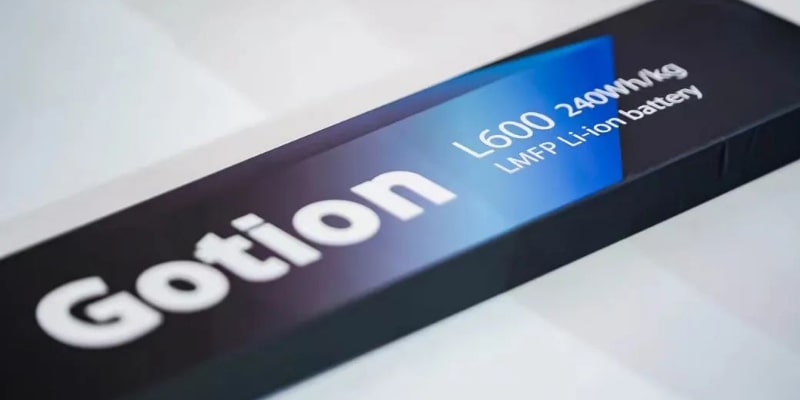
Gotion High-Tech has signed a strategic cooperation memorandum with German chemical group BASF to jointly develop next-generation solid-state battery technology, as the industry moves closer to commercial deployment of advanced battery systems.
The agreement was signed in Hefei, Anhui province, where Gotion is headquartered, the company said in a statement on Tuesday.
See also: Gotion High-Tech Sees 2025 Profit More Than Doubling After Chery Listing Gains
According to Gotion, the collaboration will focus on joint research and development of high-performance materials for solid-state batteries, covering multiple core components. The partnership will also seek to address technical bottlenecks related to commercialization.
The latest agreement builds on a 13-year relationship between the two companies. Gotion did not disclose financial terms or specific development milestones.
Gotion said it has already established a 0.2 GWh pilot production line for its “Gemstone” all-solid-state battery, achieving a yield rate exceeding 90% and an energy density of 300 Wh/kg. The company first unveiled the Gemstone battery at its 13th technology conference on May 17, 2024, marking its entry into the solid-state battery segment.
See also: Gotion High-tech Begins Deliveries of Unified Cells to Volkswagen, Marking Start of Mass Production
Pan Ruijun, head of Gemstone R&D, said at the time that the all-solid-state battery would begin small-scale production and vehicle integration testing in 2027, with mass production targeted for 2030.
Other major Chinese battery manufacturers, including CATL and BYD, have also outlined plans for small-scale solid-state battery production around 2027.
Gotion ranked fifth globally in 2025 with a 4.5% market share and 53.5 GWh of installed battery capacity, according to data from South Korean market research firm SNE Research.
Industry analysts expect solid-state batteries to offer higher energy density and improved safety compared with conventional lithium-ion batteries, although large-scale manufacturing remains technically challenging.