
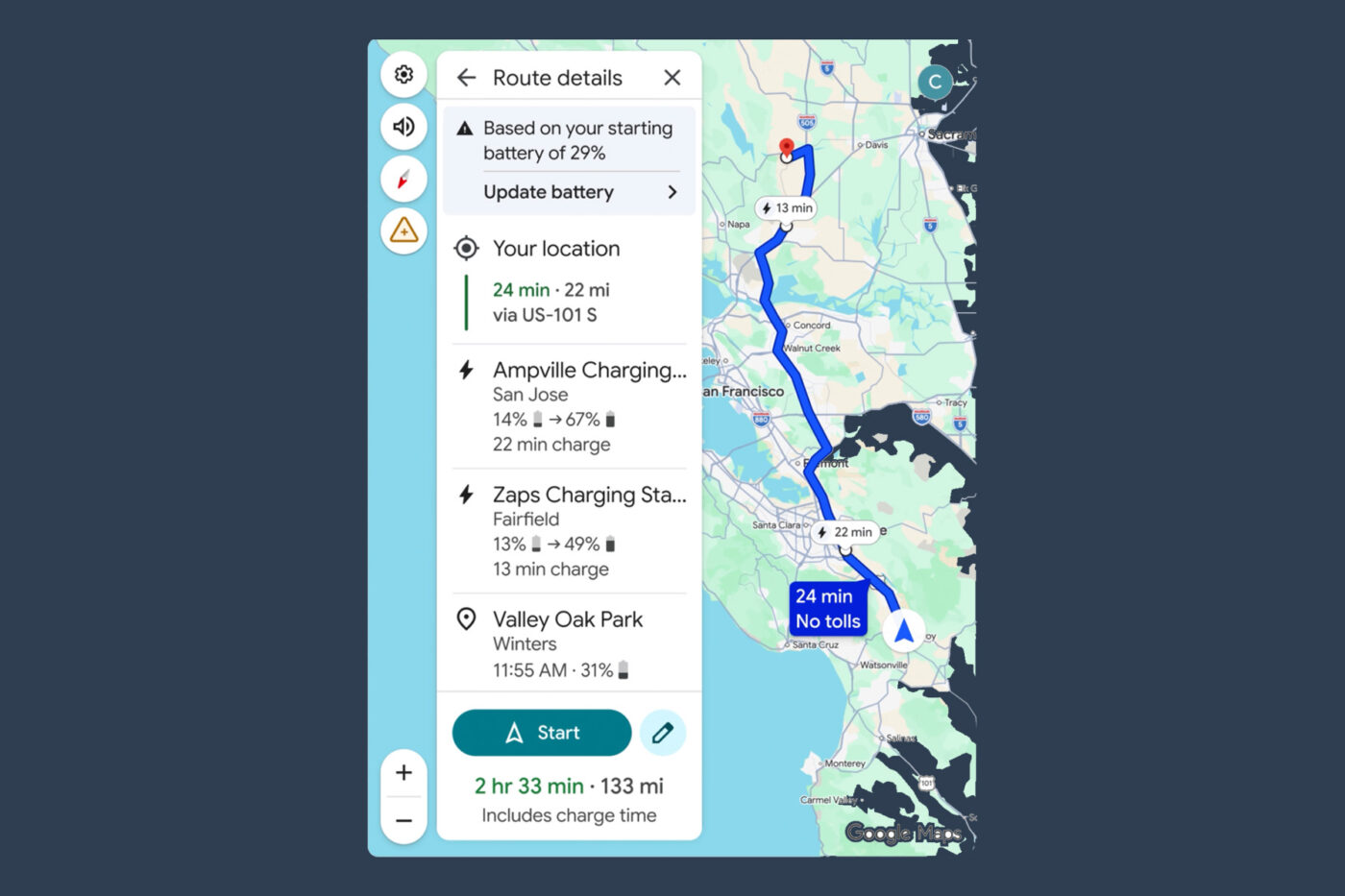
Google is expanding the electric vehicle capabilities of its Maps platform, introducing artificial intelligence-based battery prediction and route planning designed to support more than 350 EV models via Android Auto, the company said.
The rollout initially covers vehicles from more than 15 brands in the United States, with further geographic and model expansion planned. The feature is compatible with models from manufacturers including BMW, Hyundai, Mercedes-Benz and Volkswagen.
See also: Google Introduces Gemini AI to Android Auto, Replacing Google Assistant
Unlike systems that rely on direct vehicle integration, Google’s approach allows drivers to manually input their starting battery charge. The platform then dynamically updates energy consumption estimates based on real-time driving conditions, including traffic, terrain and weather. This method enables compatibility with a wider range of vehicles, including those without built-in route planning tools.
After entering vehicle details such as make and model, users can input a destination and view projected battery usage along the route. By adding the current state of charge, Maps generates recommended charging stops, including estimated arrival battery levels, charging durations and updated arrival times.
Google said the system combines artificial intelligence with energy modelling to deliver consistent predictions across different vehicle types.
See also: Polestar to Adopt Google’s Gemini AI Assistant Across Global Lineup From 2026
“To deliver accurate battery predictions for hundreds of vehicles, we combine AI with advanced energy models that analyse car details — like weight and battery size — alongside Maps’ real-time information about traffic, road elevation and weather,” the company said.
With the update, Google is positioning Maps as a central interface for EV navigation, reducing reliance on third-party applications commonly used for route planning and charging.
The company added that “Maps will recommend when and where to charge based on your EV model and battery level, reducing range anxiety and the need to juggle multiple apps.”
The feature is being rolled out across supported EV models in the United States, with Google indicating that additional vehicles and markets will be included in future updates.