





General Motors said on Thursday it expects to take an additional $6 billion charge linked to its decision to scale back electric vehicle investments, underscoring the financial toll facing traditional automakers as U.S. policy support for zero-emission vehicles has been rolled back.
The latest charge comes on top of a $1.6 billion writedown GM disclosed in October related to revisions to its electric vehicle plans. Together, the charges highlight the cost of strategic shifts made after the Trump administration moved to dismantle emissions regulations and financial incentives that had encouraged automakers to accelerate EV adoption.
See also: General Motors Puts 5,500 Workers on Leave Amid EV Production Slowdown
GM and its peers had invested heavily in electric vehicles during the Biden administration, anticipating tighter emissions standards and broader adoption of California-style rules that aimed to phase out new gasoline-powered vehicle sales within the next decade. GM had previously set a target to sell only electric vehicles by 2035.
That outlook has since changed. The Trump administration has reversed emissions rules, ended federal financial support for EVs and challenged states’ authority to impose stricter standards. While electric vehicles continue to see demand in the United States and stronger growth in other global markets, the pace of adoption has slowed domestically.
See also: General Motors to Take $1.6 Billion Charge as U.S. EV Demand Slows After Tax Credit Ends
GM said much of the newly disclosed $6 billion charge will be used to settle cancelled contracts with parts suppliers tied to its revised EV plans. The company did not announce the discontinuation of specific electric models, nor did it outline additional factory closures or job cuts associated with the charge.
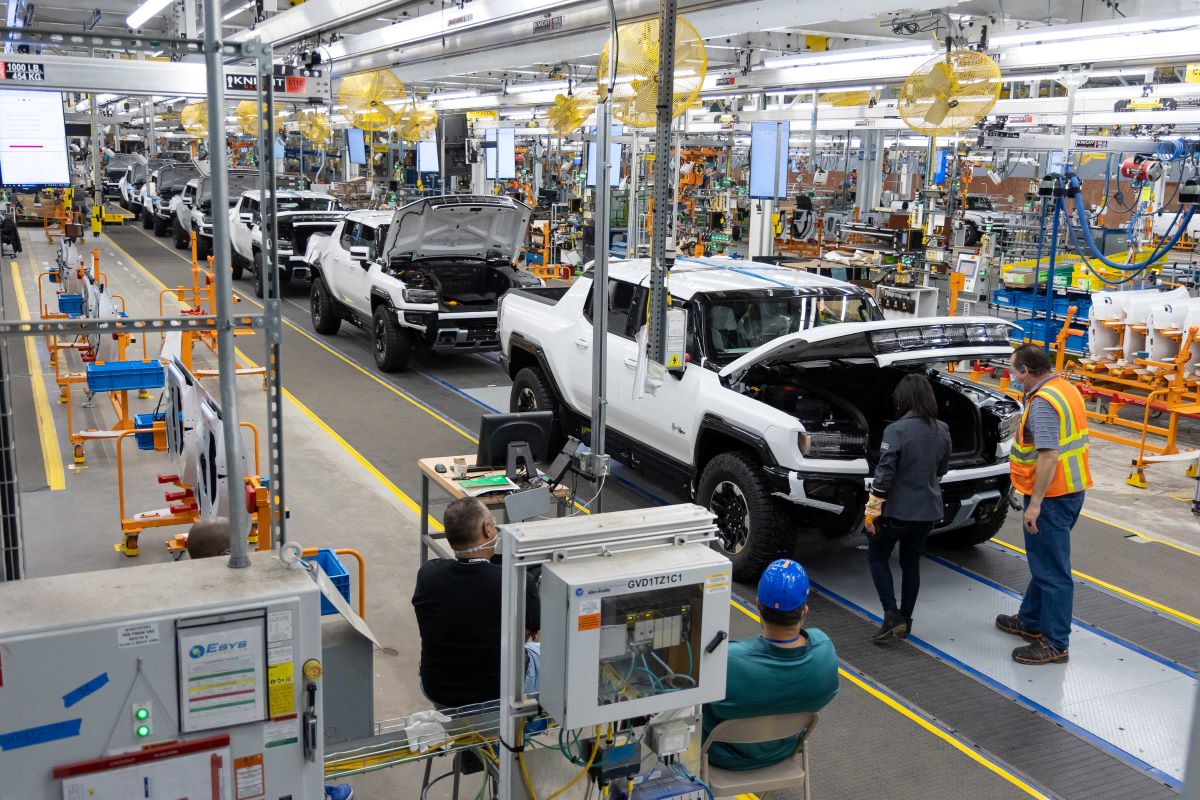
However, GM has already taken workforce actions tied to weaker EV demand. In October, the company said it would eliminate one shift at its Factory Zero electric vehicle plant in Detroit, placing about 1,200 hourly workers on indefinite layoff. It also placed roughly 550 workers at an EV battery plant in Ohio on indefinite layoff.
See also: GM EV Sales Fell 43% in Fourth Quarter After U.S. Tax Credit Expired
The announcement follows a similar move by Ford Motor, which said in December it would take a $19.5 billion charge related to changes in its own electric vehicle strategy.
Electric vehicle demand surged in the United States during the summer and into September as buyers rushed to take advantage of a $7,500 federal tax credit before its scheduled expiration. Industry sales fell sharply in the fourth quarter, both from year-earlier levels and from the record third quarter, according to market data.
See also: General Motors Eyes Faster EV Development as Chinese Automakers Set the Pace
Despite the pullback, GM has said it is not abandoning electric vehicles entirely. “Electric vehicles remain our North Star,” Chief Executive Mary Barra told investors in October, while adding that it had become clear that sales of vehicles powered by internal combustion engines “will remain higher for longer.”


