
Germany’s Baden-Württemberg region has launched a research initiative to develop silicon-based anode materials aimed at significantly increasing the energy density of lithium-ion batteries, the project partners said on Monday.
The project, known as FACILE, brings together four regional partners including the Centre for Solar Energy and Hydrogen Research Baden-Württemberg (ZSW). The consortium is “focusing on proven processes from paper and nonwoven production, combined with state-of-the-art industrial coating techniques from semiconductor technology and photovoltaics,” the group said.
See also: Hydrohertz Debuts Multi-Zone Battery Valve to Cut EV Charging Times and Boost Range
FACILE aims to boost practical anode-side energy density by up to 250%, targeting at least 1,000 milliampere hours per gram. Traditional graphite anodes store up to 370 mAh/g, while silicon offers a theoretical capacity of 4,200 mAh/g. Silicon’s instability during charging cycles—caused by significant volume expansion and contraction—has so far limited its inclusion in commercial EV batteries.
“The great challenge is that silicon’s volume changes markedly during charging and discharging,” ZSW said. “Unless suitable countermeasures are taken, this soon causes cracks and peeling on the anode, which can result in battery failure.”
See also: EU Confirms Funding for Five Battery Cell Projects After Porsche Unit Withdraws
To avoid these issues, the partners plan to develop silicon anodes on fibre-based, electrically conductive nonwoven substrates rather than coated metal foils. The flexible nonwoven structures are designed to absorb silicon’s volume changes and improve battery durability and sustainability.
“FACILE shows how industry and science in Baden-Württemberg can jointly cover the entire value chain for lithium-ion batteries, from material development to cell production,” said Markus Hölzle, Executive Board member and Director of ZSW in Ulm. He added that the project aims to create “powerful, durable, and sustainable batteries – and make important contribution to strengthening the region’s competitive stance.”
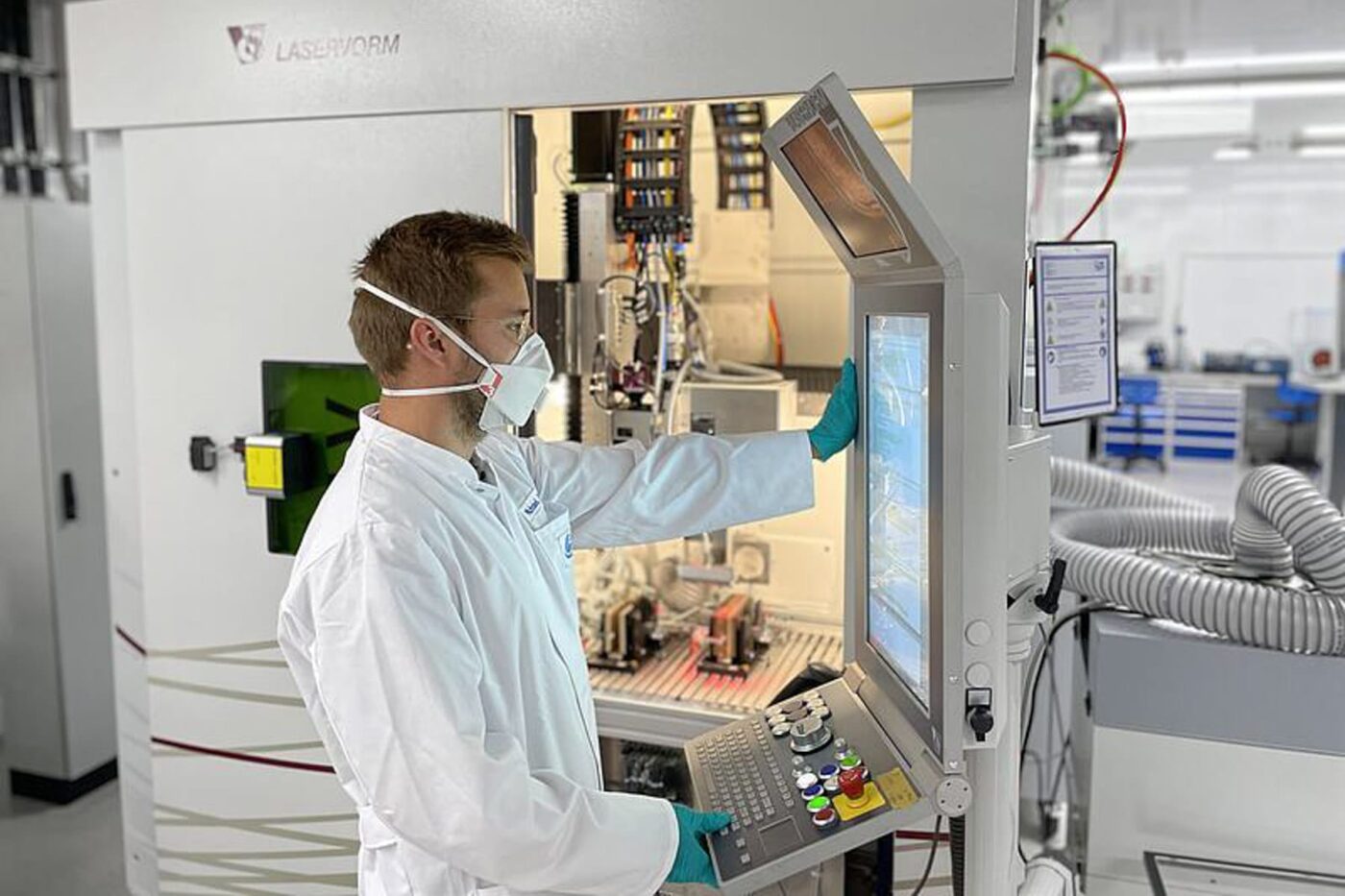
The ZSW is currently testing the fibre-based anodes in small cells and plans to scale the process to full-size EV battery formats at its pilot cell manufacturing facility.
Centrotherm International AG is coordinating the initiative and developing a high-throughput system for silicon coating. Phoenix NonWoven GmbH & Co. KG is supplying the specialised nonwoven materials, while ISC Konstanz and researchers at the University of Konstanz are examining material interfaces and conducting analyses.
The project began on 1 July 2025 and is funded with €1.28 million from the Baden-Württemberg Ministry of Economic Affairs, Labour and Tourism. It will run until June 2027.