

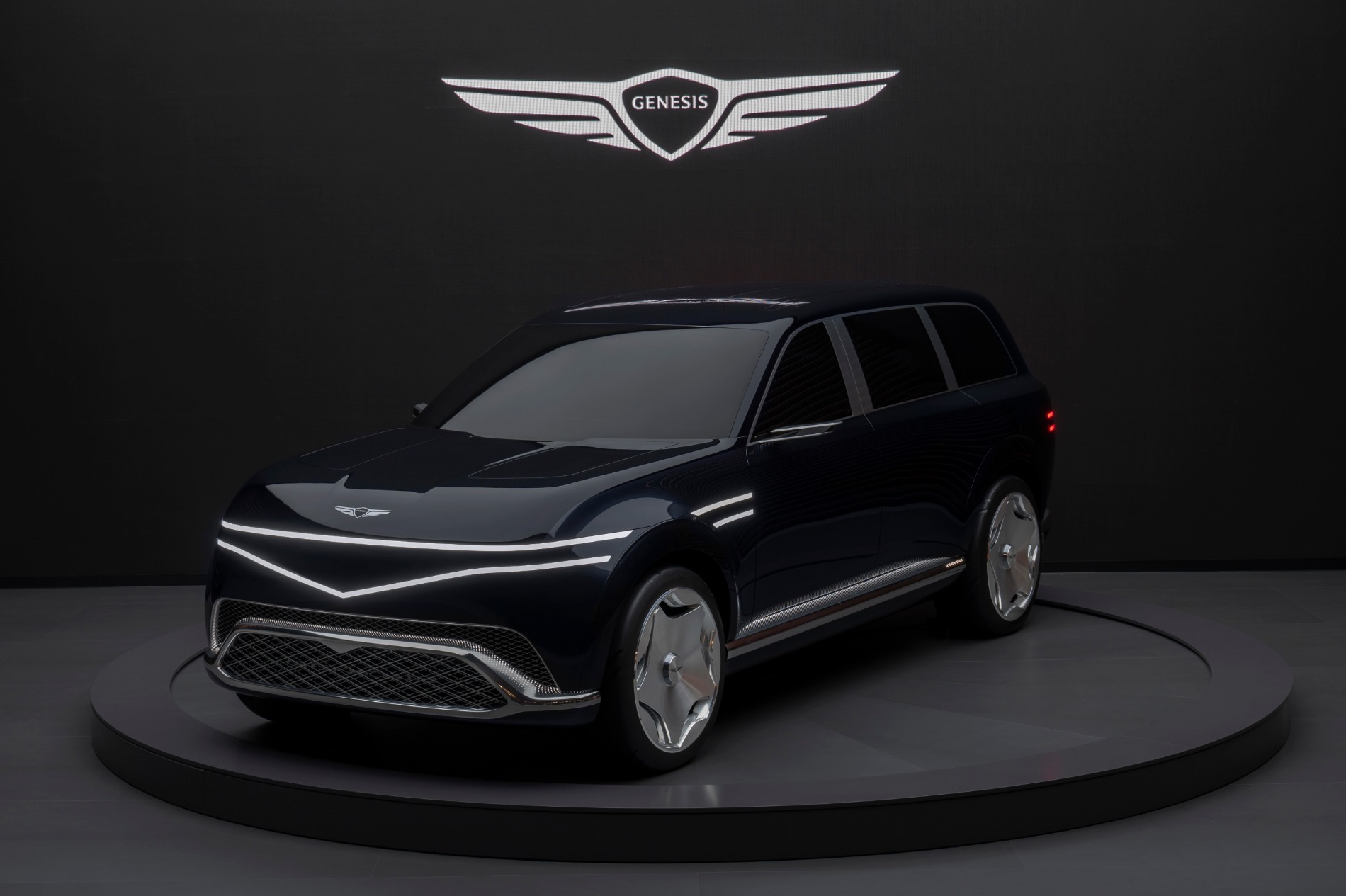
Genesis has delayed the launch of its flagship GV90 electric SUV until the second half of 2026, pushing back the arrival of what the automaker has described as its most ambitious and luxurious model to date, according to South Korean media reports.
The full-size electric SUV, billed by Genesis as an “ultra-luxe” offering, had originally been slated to enter production at Hyundai Motor Group’s Ulsan plant by the end of last year, with sales expected to begin in early 2026. Hyundai’s product development roadmap released last May had already shifted mass production to June 2026, and a new report by The Korean Car Blog now says the timeline has slipped further.
See also: Genesis Reveals Price, Performance Details for GV60 Magma EV
The latest delay is attributed to unresolved technical challenges and recent management changes across Hyundai Motor Group and Genesis. In December, former Porsche and BMW executive Manfred Harrer was promoted to president and head of research and development at Hyundai Motor Group, while Genesis appointed Sean Lee as its new global head.
Lee is expected to steer Genesis as it expands into new segments, including high-performance vehicles under its Magma sub-brand, ultra-luxury flagship SUVs and additional powertrain options such as hybrids and extended-range electric vehicles. The GV90 is central to that strategy and is intended to set a new benchmark for the brand’s design, technology and comfort.
See also: Genesis Off-Road Electric SUV Spotted Testing, Differs From Concept Design
The model is expected to debut several firsts for the group, including Hyundai’s next-generation Pleos infotainment system and operating software, as well as the new eM electric vehicle platform, which is set to replace the current E-GMP architecture. Hyundai has previously said the new platform will deliver a 50% improvement in driving range and enable Level 3 autonomous driving capability.
Industry sources said Genesis is seeking to ensure the GV90 meets its positioning as a technological and luxury flagship, even if that requires additional development time. Some premium features, such as coach doors that appeared on early prototypes, may be postponed or reserved for higher trims as the company looks to streamline initial production.