


Geely is developing a 1,000-volt electrical architecture for electric vehicles as the Chinese automaker works to reduce charging times. The company is moving beyond the 800-volt systems increasingly used in its current EVs and has already deployed charging points with peak outputs of up to 1,500 kW.
Geely Moves Toward 1,000-Volt EV Systems
Geely is increasingly using 800-volt technology across its current electric vehicle lineup. The high-voltage architecture extends beyond the battery to components including electric motors, power electronics, onboard chargers and wiring.
Geely Plans Solid-State Battery Vehicle Trials From 2027 With 1,000 Km Range Target
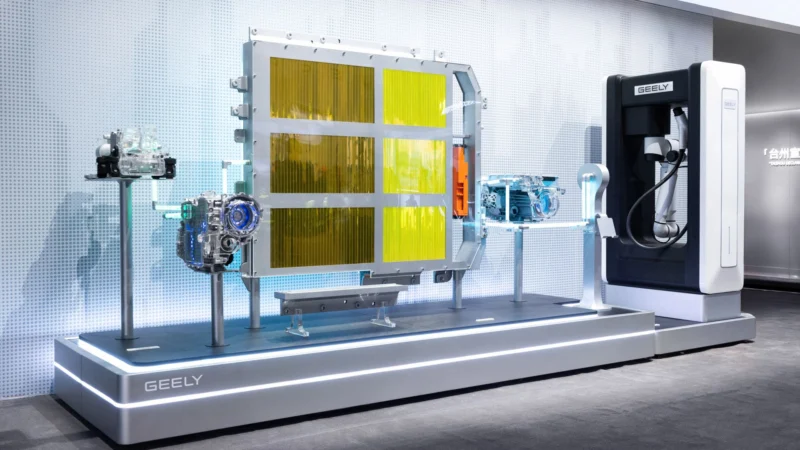
The company is now developing a 1,000-volt architecture along with electric drive systems capable of operating at higher voltages. Geely has not yet disclosed detailed specifications for the new system.
The development is intended to further shorten charging times as the company builds an EV ecosystem capable of supporting higher charging power.
Lynk & Co Demonstrates High-Speed Charging
Geely’s current charging technology has already produced short charging times in testing. A Lynk & Co 01 electric saloon recently charged from 10% to 80% in 5 minutes and 32 seconds.
The same vehicle took 8 minutes and 42 seconds to charge from 10% to 97%.
Some reports have described the model as using a 900-volt architecture. However, according to CarNewsChina, the 95 kWh battery has a nominal voltage of 772.8 volts, placing it within the 800-volt system category.
Geely Plans European Production of Higher-Priced Models at Volvo Plants From 2028
During testing, the Lynk & Co 01 briefly reached a peak charging power of 1,100 kW at a fast-charging station operated by Geely’s Zeekr brand. At a BYD Flash Charging Station, the vehicle reached a maximum of 430 kW.
The 1,100 kW figure represents peak charging power rather than the level maintained throughout the charging session. Actual charging performance also depends on factors including the battery’s charging curve and thermal management.
Geely Has Installed 1.5 MW Charging Points
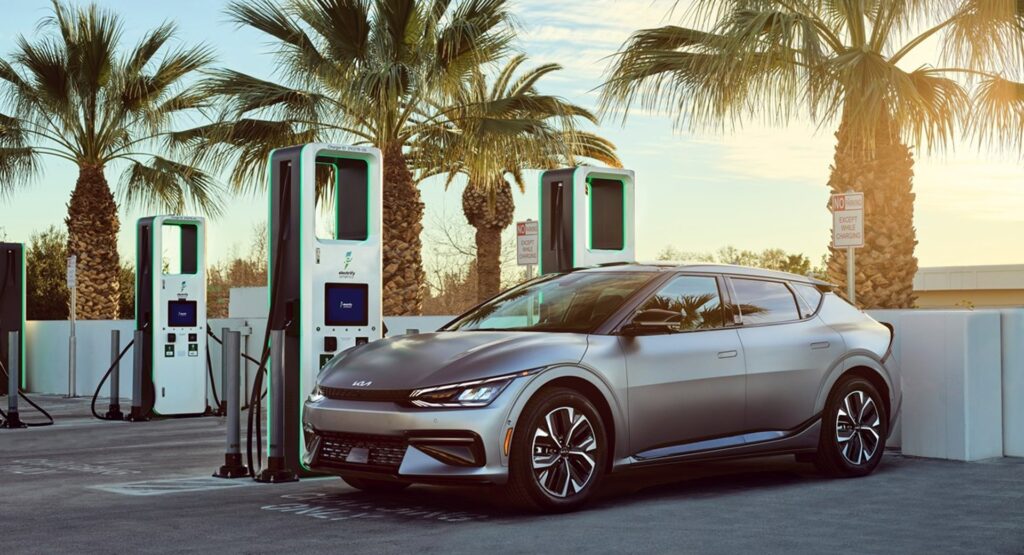
Geely has already expanded its charging infrastructure to support higher-power EV charging. In March, the group said it had installed more than 2,100 Zeekr charging points, each capable of delivering peak output of up to 1,500 kW.
Li Shufu Steps Down as Geely Auto CEO as Company Reshapes Leadership
Current production vehicles cannot fully utilize the maximum output of these charging points. Geely’s planned 1,000-volt architecture could help narrow the gap between vehicle charging capabilities and the power available from its charging infrastructure.
However, a higher system voltage alone does not guarantee 1.5 MW charging. The battery, thermal management system and charging curve must also be designed to accommodate very high charging power.
The duration for which a vehicle can sustain high charging power is also important when assessing real-world charging performance.
Geely Enters High-Power Charging Race
Geely’s planned 1,000-volt system puts the company in competition with other Chinese manufacturers developing high-voltage architectures and megawatt-level charging.
Ford and Geely Plan European Manufacturing Joint Venture at Spain Plant
BYD introduced its 1,000-volt Super e-Platform in 2025 and is already using the technology in production vehicles including the Han L EV and Tang L EV. Its redesigned Blade Battery supports charging rates of up to 10C and charging power exceeding 1,000 kW.
The Han L EV is reported to be capable of adding around 400 kilometres of CLTC range in five minutes.
BYD has also developed its Megawatt Flash Charger, which can technically deliver up to 1,360 kW. The highest charging output requires two cables to be connected to the vehicle simultaneously. BYD previously announced plans to install more than 4,000 of the charging systems, including a planned rollout in Europe.
Battery manufacturer CATL is also developing higher-power charging technology. Its second-generation Shenxing battery is expected to support charging at up to 1.3 MW and add up to 520 kilometres of CLTC range in five minutes.
Geely Develops Solid-State Battery Technology
Geely is also pursuing higher-energy-density battery technology alongside its work on high-voltage charging.
Geely Launches Updated Xingyuan EV With Lower Starting Price in China
The company plans to begin testing its first vehicles equipped with solid-state batteries from 2027. For its most advanced variant, Geely has targeted energy density of up to 500 Wh/kg and driving ranges exceeding 1,000 kilometres.
The company has not indicated that these solid-state batteries will immediately enter widespread series production, meaning their broader commercial deployment remains further away.