





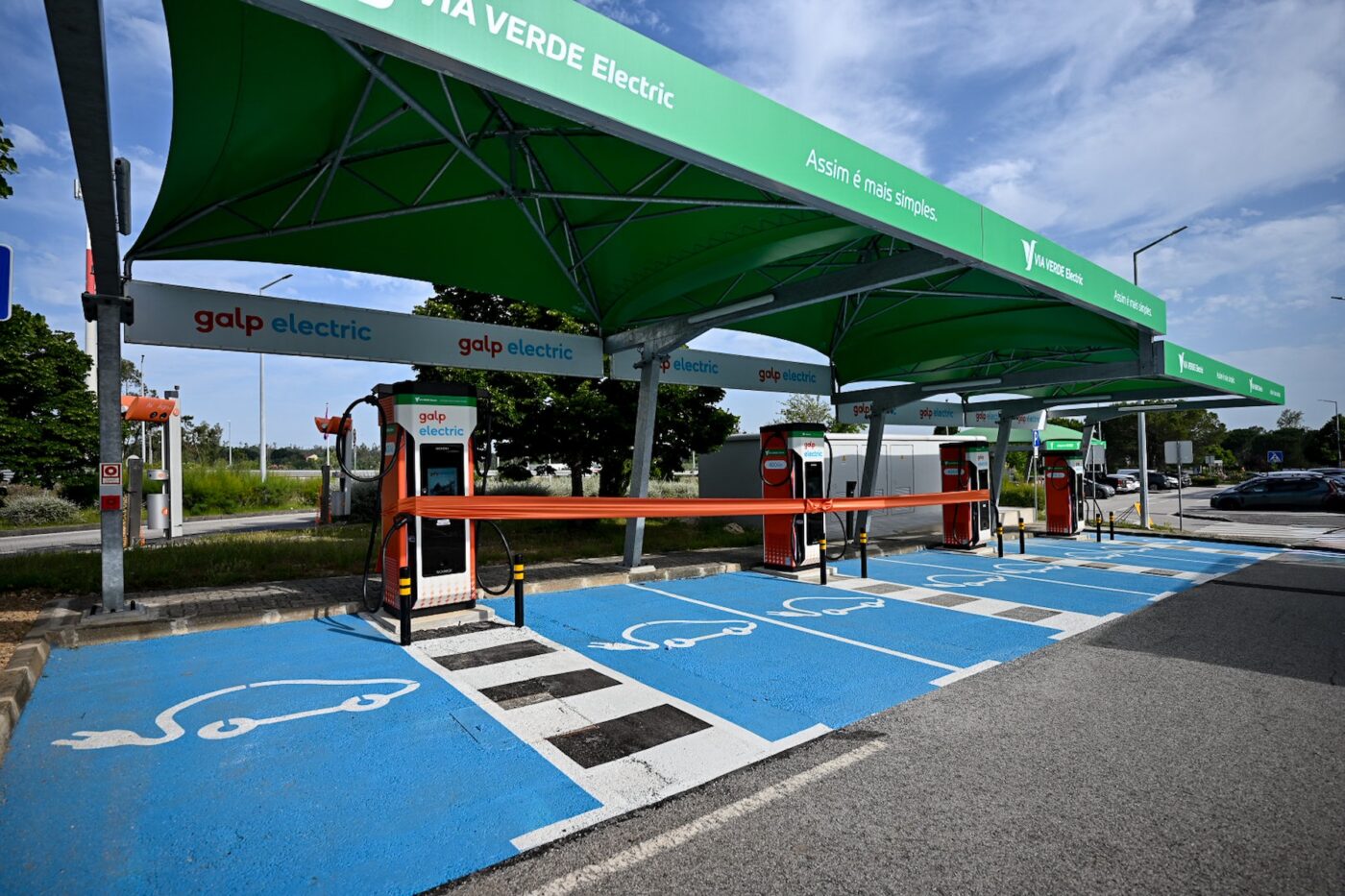
Portuguese energy company Galp has completed a nationwide fast-charging corridor connecting Porto in northern Portugal with the Algarve in the south, marking a significant milestone in the country’s electric vehicle infrastructure expansion.
The project was finalized with the opening of a new fast-charging hub in Pombal, located near the A1 motorway. The completed corridor now spans approximately 550 kilometres along the A1 and A2 motorways and features eight charging hubs equipped with a total of 96 high-speed charging points.
Galp said the network is designed to support medium- and long-distance electric vehicle travel while helping address the growing demand for reliable charging infrastructure across Portugal.
Eight Charging Hubs Along Key Transport Routes
The corridor consists of eight strategically located charging hubs distributed along Portugal’s main north-south transport routes.

Earlier in 2026, Galp commissioned four charging hubs with 48 high-speed charging points along the A2 motorway. Additional installations along the A1 have since brought the total to 96 charging points across the network.
Together, the charging hubs provide a combined installed capacity of 20 MW, enabling rapid charging for a growing number of electric vehicles traveling between major population and tourism centers.
Galp described the project as a key step toward creating a seamless charging experience for EV drivers across the country.
Supporting Portugal’s EV Growth
Portugal has emerged as one of Europe’s fastest-growing electric vehicle markets, increasing the need for charging infrastructure capable of supporting longer journeys.
During the inauguration of the Pombal charging hub, Infrastructure Minister Miguel Pinto Luz highlighted the importance of expanding charging networks to match rising EV adoption.
“Electrification is a major challenge that the government is tackling with great commitment, driving it forward across various sectors of mobility and the economy.”
“Portugal is now the sixth European country in terms of electric vehicle adoption, and the infrastructure must keep pace. Therefore, I would like to thank Galp and Brisa for expanding the high-speed charging stations that we are inaugurating here.”
Galp Reinforces Energy Transition Strategy
Galp said the completed corridor reflects its long-term commitment to supporting Portugal’s transition toward cleaner transportation.
João Marques da Silva, Co-CEO of Galp, said the network provides drivers with a reliable charging route connecting the entire country.
“We have completed a corridor that connects the country from north to south with a fast, comfortable, and reliable charging network, supporting the growth of electromobility in Portugal and the needs of our customers.”
“We are pioneers in electromobility, and this investment underscores Galp’s commitment to the energy transition and the competitiveness of the Portuguese economy.”
Siemens Supplies Most Charging Equipment
A significant portion of the charging infrastructure was supplied by Siemens.
According to Siemens Portugal, seven of the eight charging hubs are equipped with the company’s 400 kW Sicharge fast-charging systems.
Each hub features six charging stations with two charging points per station, resulting in 84 of the corridor’s 96 charging points being powered by Siemens technology.
The charging equipment was manufactured at Siemens’ facility in Corroios, Portugal. The company said the plant has produced more than 4,000 charging stations since 2020, supporting both domestic and international deployments.
With the completion of the corridor, Portugal joins a growing number of European countries investing in large-scale fast-charging networks aimed at accelerating electric vehicle adoption and enabling long-distance zero-emission travel.


