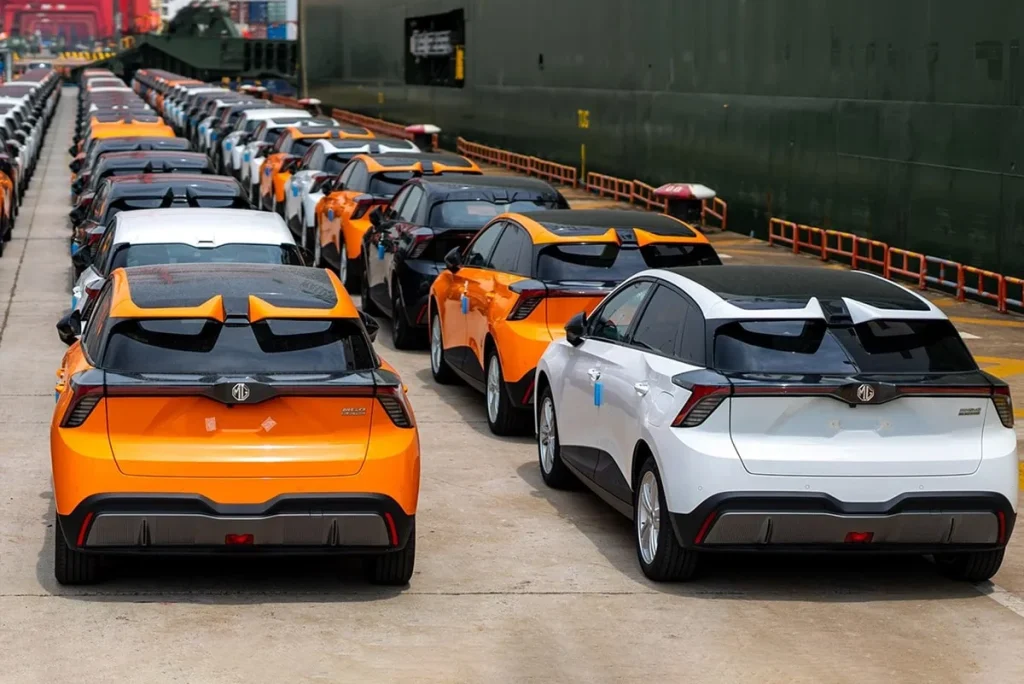


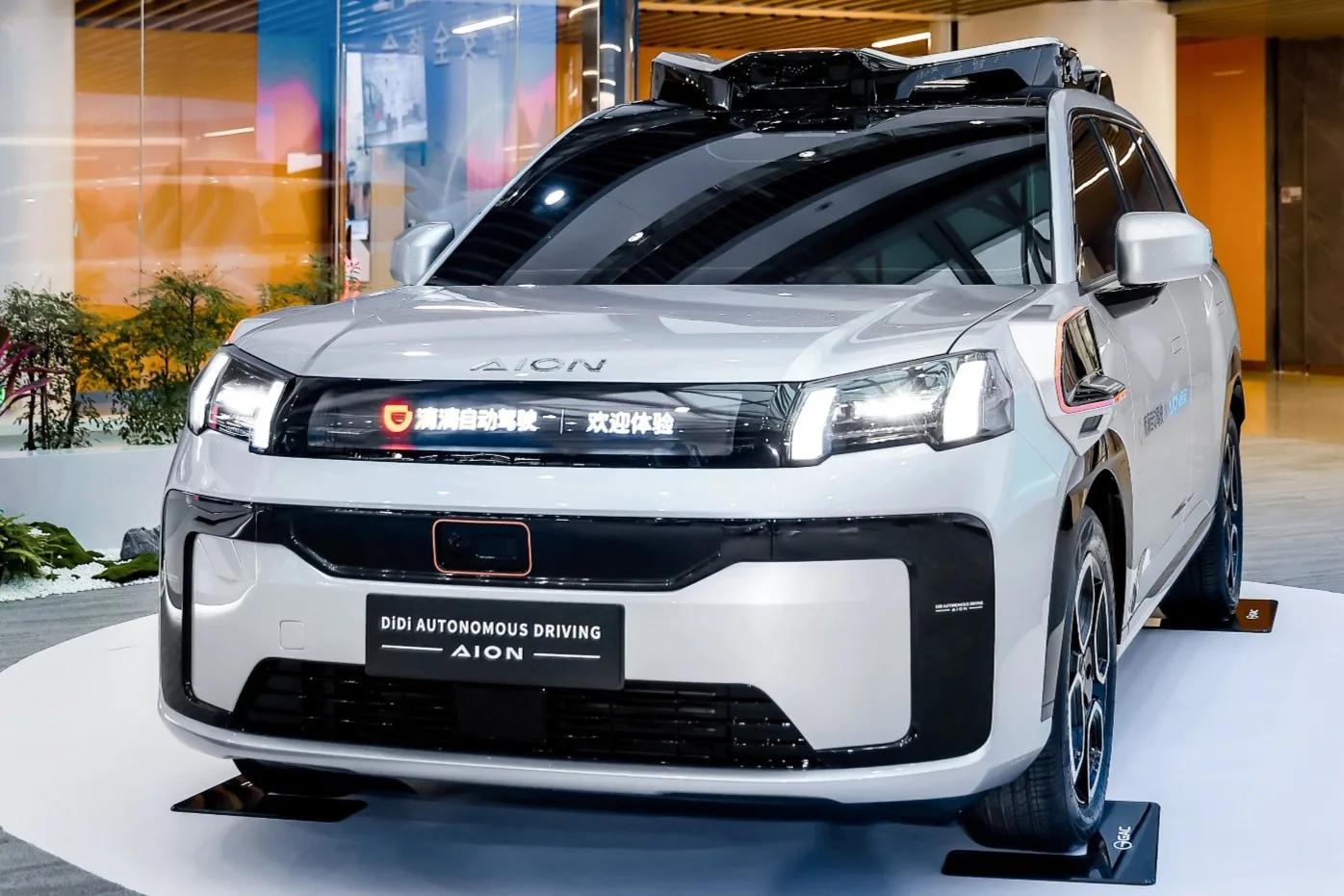
GAC Aion, the electric vehicle brand under Chinese automaker GAC Group, unveiled a new Level 4 autonomous electric vehicle at the Shanghai auto show, developed in partnership with DiDi Autonomous Driving. The model is scheduled to enter production by the end of 2025, with initial demonstrations planned for 2026.
The autonomous vehicle is based on the GAC Aion V’s “T-Rex” variant and integrates DiDi’s latest autonomous driving technologies. The platform includes a total of 10 LiDAR sensors—four of which support long-range detection up to 200 meters—alongside six blind-spot LiDARs offering 360-degree coverage within a 10-centimeter radius. The sensor suite is further complemented by infrared, acoustic sensors, cameras, and 4D millimeter-wave radar, aimed at enhancing performance under diverse weather and road conditions.
See also: Hesai’s AT128 Lidar to Power First L4 Robotaxi by Didi and GAC Aion, Mass Production Set for 2025
At its core, the vehicle is powered by DiDi’s Orca computing platform, which delivers 2,000 TOPS of GPU compute and a 48-core CPU to process real-time driving data. According to DiDi, the system includes multi-layer redundancy measures, such as algorithm-level, software, and hardware fallback mechanisms. These redundancies allow the vehicle to initiate safety strategies in the event of system failure, including the ability to pull over or stop in-lane autonomously.
Despite its Level 4 classification, the vehicle still requires human oversight but can perform most driving tasks without driver input under specific conditions. The EV is primarily designed for use as a robotaxi and will initially operate along predetermined routes.
See also: Didi Seeks Funding for Autonomous Driving Unit at $5 Billion Valuation
The vehicle also features GAC Aion’s “Magazine” battery system, which uses a double-sided cooling structure and passive thermal safety protection. The battery pack is divided into independent thermal compartments designed to isolate issues and prevent thermal propagation in the event of overheating.
Mass production is slated to begin later this year, with deliveries expected by the end of 2025. GAC Aion and DiDi plan to roll out public demonstrations in Guangzhou and Beijing in 2026, and aim to release a Level 4 vehicle for individual consumers in a subsequent phase.