


German industrial group Freudenberg Group has withdrawn from the battery and fuel cell systems business for heavy-duty applications, dissolving its Freudenberg e-Power Systems (FEPS) unit as of January 1, 2026, the company said alongside its annual results.
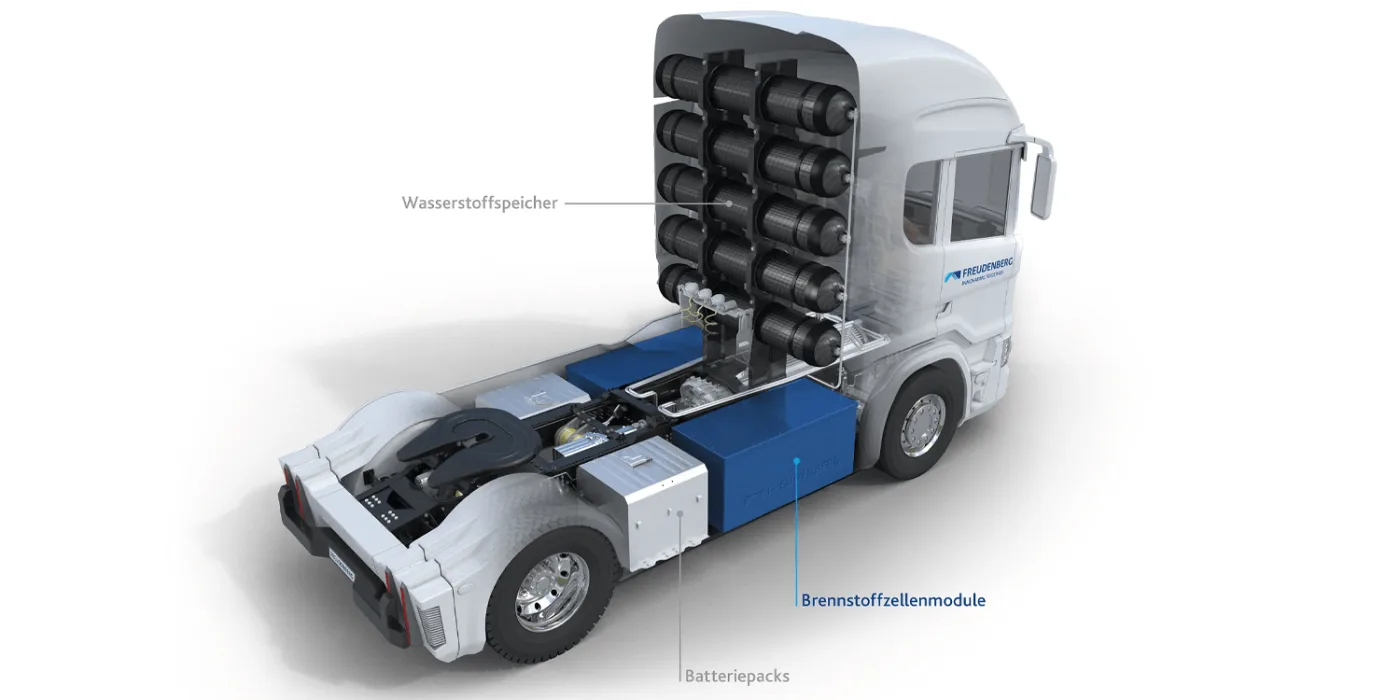
The move marks the end of Freudenberg’s activities in developing and marketing battery cells, modules, systems and complete fuel cell systems. The company will instead retain its hydrogen components business, which will be integrated into its sealing technologies division.
“Ultimately, we decided to discontinue the business involving system integration and modules for fuel cells and batteries. However, we will continue in the components business,” Chief Executive Claus Möhlenkamp told German newspaper Handelsblatt.
Freudenberg e-Power Systems had been active in multiple projects across heavy-duty mobility, including collaborations with ZF on fuel cell systems for trucks and with FlixBus on hydrogen-powered long-distance buses. As recently as mid-2025, the unit introduced a battery system for maritime applications, highlighting its efforts to expand into electrified shipping.
However, the company cited challenging market conditions, particularly in the United States, as a key factor behind the decision. “The market for batteries and fuel cells in the United States developed much more slowly than expected,” Freudenberg said in its annual report, pointing to weak demand, high costs, limited infrastructure—especially for hydrogen—and regulatory uncertainty.
The restructuring affects around 600 employees, primarily in the United States, where battery system production has now been discontinued. Möhlenkamp said the hydrogen business previously based in Germany has also been largely closed, with only the components segment remaining.
“We produced the battery systems in the USA. That has been discontinued. The hydrogen business was based in Germany. We have also closed this, except for the components division,” he said.
Around 70 positions will remain in Munich, where Freudenberg plans to establish a hydrogen competence centre focused on electrolysis and hydrogen production. “There is potential to rebuild jobs there. However, I see this more as a ten-year perspective rather than a three-year one. The fuel cell technology is mature, but the market is not yet ready,” Möhlenkamp added.
The decision follows broader market challenges in 2025, including economic uncertainty, geopolitical tensions and declining demand in key industries such as automotive and machinery, particularly in Europe and North America, according to the company.
Freudenberg employed 50,968 people globally at the end of 2025, down from 52,104 a year earlier, with a significant share of job reductions linked to the closure of the FEPS division.
The group will continue to operate across its core business areas, including sealing and vibration control technologies, filtration, specialty chemicals, medical products and cleaning technologies, while maintaining a more limited presence in e-mobility.


