




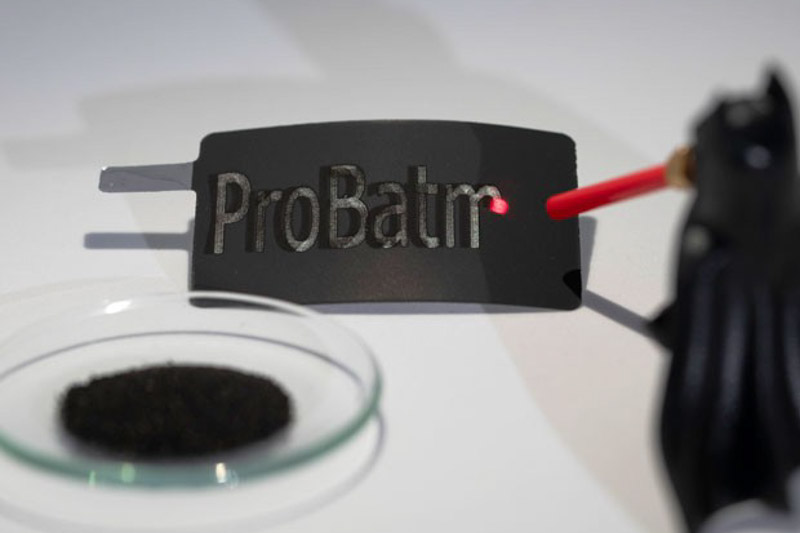
Germany’s Fraunhofer Research and Development Center for Electromobility (FZEB) has launched a new collaborative project aimed at improving the recycling of lithium-ion batteries by directly recovering functional materials from end-of-life cells.
The project, called ProBatman, focuses on developing processes to reclaim cathode materials without breaking them down into basic elements, a method intended to preserve value and reduce environmental impact. The initiative is coordinated by Netzsch-Gerätebau GmbH and involves partners from industry and academia, including BMW and the University of Würzburg.
According to the Fraunhofer Institute for Silicate Research (ISC), direct recycling could offer substantial climate benefits as battery waste volumes grow. The institute said processing the 340,000 tonnes of used batteries expected annually from 2040 onward could “save up to 1.3 gigatons of CO2 equivalents.”
Unlike conventional hydrometallurgical or pyrometallurgical techniques, which dismantle batteries into individual raw materials for reprocessing, direct recycling seeks to recover components in their existing chemical structure. Fraunhofer researchers say traditional methods are becoming less economically viable as modern batteries use smaller quantities of high-value metals such as cobalt and nickel.
See also: Fraunhofer FFB Produces First Lithium-Ion Cell Using Fully European Equipment
The ProBatman project will explore techniques to gently separate active materials from electrodes, remove coatings using inductive and laser-based methods, and recover volatile components and conductive salts. Recovered materials will then be analysed, purified and regenerated for reuse in new batteries.
Researchers plan to optimise each stage of the recycling chain, from safe cell opening to final material processing, with an emphasis on scalability, safety and environmental performance. Life-cycle analysis will be used to evaluate process parameters and identify opportunities for further improvement.
See also: Fraunhofer IWS Launches DRYplatform to Scale Solvent-Free Battery Electrode Coating
The consortium also includes EurA AG and several industrial partners, while additional companies are supporting the effort through technical contributions. The project is funded by the German Federal Ministry of Education and Research and is scheduled to run until June 2028.


