
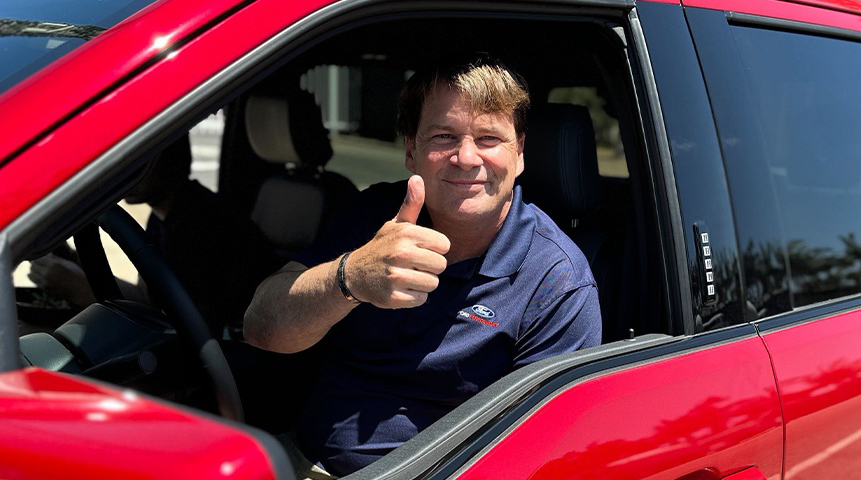
Ford is pivoting its autonomous driving strategy, with CEO Jim Farley confirming that the company will concentrate its artificial intelligence development on Level 3 autonomy — advanced driver assistance for highway driving — rather than pursuing fully autonomous Level 4 or Level 5 robotaxi technology.
“All of our AI deployment for autonomous driving is going there [Level 3] because we think that’s a cooler problem to solve for most average Americans than a robotaxi,” Farley said during a recent episode of The Verge’s Decoder podcast. “Even though the robotaxi is a really cool problem – I love being in a Waymo – we think that highway miles are a bigger societal opportunity.”
The statement marks a significant change in direction for Ford, which previously explored autonomous vehicle ventures and even considered developing its own robotaxi platform. Earlier this year, Ford Pro CFO Navin Kumar discussed the possibility of partnering with Waymo — the Alphabet-owned leader in robotaxi technology — during the Deutsche Bank Global Auto Industry Conference. Farley also suggested that Ford’s commercial vehicles might one day support robotaxi operations through such collaborations.
However, Farley emphasized that Ford will not rush to be the first automaker to release a Level 3 system. “The number one priority is to not be the first one to do eyes-off, Level 3 highway driving,” he said. “It’s to be the best, most reliable, and the safest — the one you want to use for you and your loved ones.”
See also: Ford CEO Jim Farley: Level 3 Autonomous Driving for Passenger EVs Expected in Two Years
Back in June 2024, Farley stated that Ford was “getting really close” to achieving Level 3 capability. The latest remarks suggest that while the automaker continues to advance its semi-autonomous technology, it is prioritizing refinement and safety over speed to market — aiming to position itself as a trusted leader in next-generation driver assistance systems rather than a competitor in the robotaxi race.