



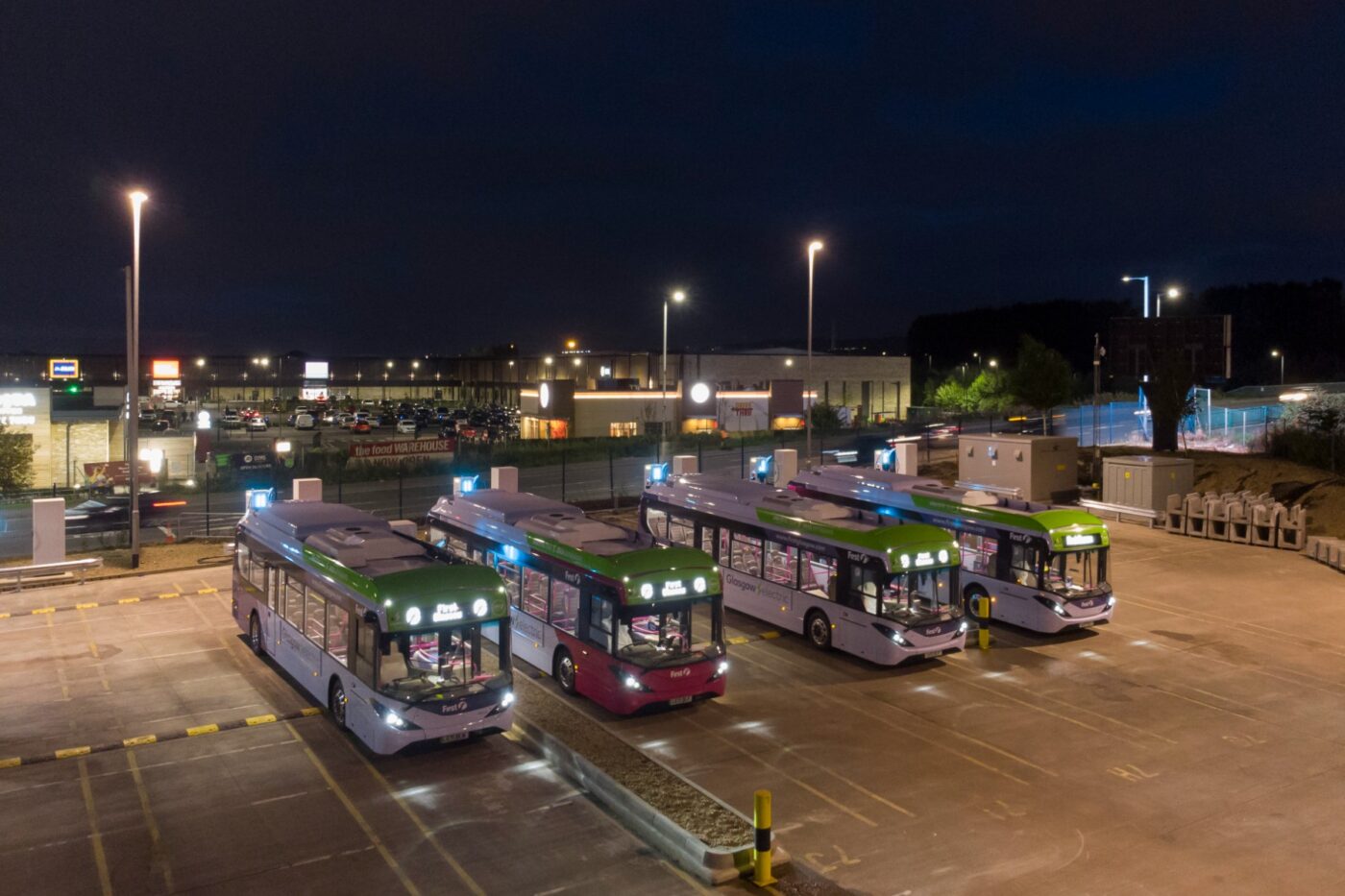
First Bus has launched a smart charging trial for electric buses in Glasgow aimed at coordinating vehicle charging with periods of surplus renewable electricity generation.
The trial, described as the first of its kind for electric buses in the United Kingdom, is being carried out in partnership with Optimo Energy and will later expand to First Bus’s depot in Great Yarmouth, Norfolk.
See also: First Bus Launches Fully Electric Fleet in Essex With £25.8 Million Investment
The initiative uses Optimo Energy’s platform to optimise charging schedules based on real-time grid conditions while ensuring buses remain ready for daily operations.
Charging electric buses during periods of high renewable energy production can help reduce pressure on the electricity grid by absorbing excess generation and lowering demand during peak periods.
Scotland’s large but intermittent wind energy generation makes it a suitable environment for such trials.
See also: First Bus Orders 17 Battery-Electric Buses From Alexander Dennis for Bath
First Bus currently operates more than 1,400 electric vehicles, making it one of the largest electric bus operators in the UK.
Daniel Homoki-Farkas, chief executive and co-founder of Optimo Energy, said electric transport fleets could play a larger role in supporting energy system flexibility.
“Electric fleets like First Bus’s represent a significant opportunity to support the UK’s transition to a more flexible energy system,” Homoki-Farkas said.
See also: First Bus to Launch Battery Storage Site in Hampshire to Power 1,200 Electric Buses
“By intelligently managing when vehicles charge, operators can respond to real-time grid needs, helping to reduce renewable energy curtailment, lower system costs, and unlock new value from existing infrastructure,” he added.
First Bus said the trial will also examine whether bus depots can participate in electricity flexibility markets, potentially creating new revenue opportunities while supporting the country’s broader decarbonisation goals.
Although the project currently focuses on smart charging, the initiative could also lay groundwork for future vehicle-to-grid, or V2G, capabilities.
See also: First Bus Launches ‘First Charge’ to Expand EV Charging Access Across UK
V2G technology would allow electric buses not only to consume electricity but also to return stored energy to the grid during periods of high demand.
Electric bus fleets are viewed as suitable candidates for such systems because they operate on predictable schedules and use large battery packs.
The UK has increasingly prioritised battery-electric transport technologies in recent years as part of broader efforts to reduce emissions from public transportation.
See also: First Bus to Begin Battery-Electric Conversions of Wrightbus Streetdecks with KleanDrive
Scotland’s combination of extensive bus usage, growing electric bus adoption and high renewable energy generation has positioned it as a testing ground for smart charging and grid-balancing technologies.


