
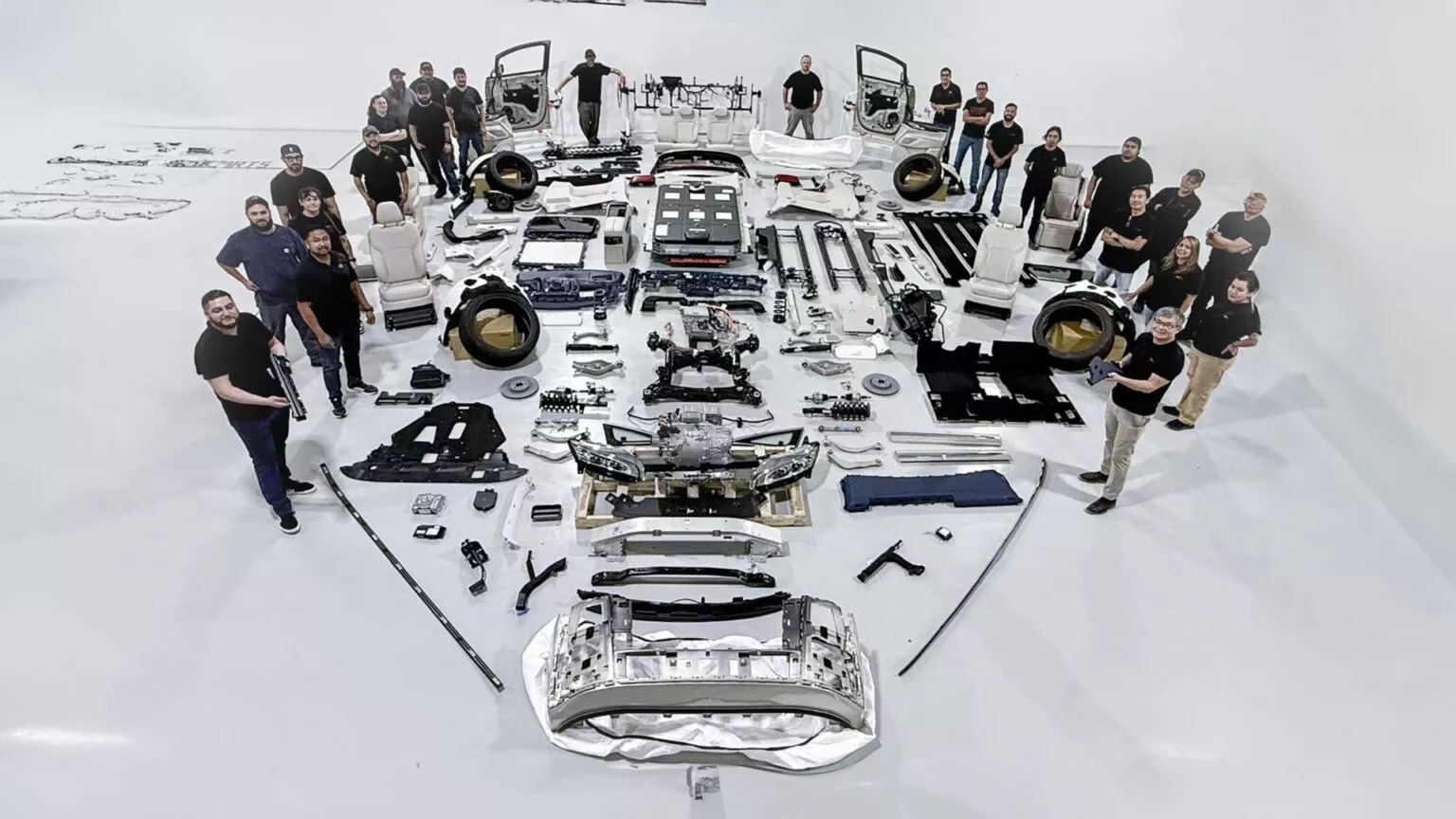
Faraday Future has launched trial production of its latest model, the FX Super One MPV, as the electric vehicle startup seeks to reposition itself in the market with a shift away from super-luxury vehicles. The development marks a notable step for a company that has faced years of financial and operational hurdles.
Unveiled in July in Los Angeles, the FX Super One MPV is designed to compete with high-end SUVs like the Cadillac Escalade. The minivan is being built on the same underpinnings as the Wey Gaoshan minivan from China’s Great Wall Motors but will feature a significantly reworked design with extensive artificial intelligence integration. Faraday Future said the vehicle will incorporate its proprietary “Super EAI F.A.C.E.” system—short for Front AI Communication Ecosystem—designed to enhance interaction between the vehicle and other road users through a display integrated into the front fascia.
Despite the company’s ambition, trial production remains a preliminary phase far from full-scale manufacturing. The automaker stated that this stage will focus on validating its manufacturing processes, determining optimal workflows, and defining quality benchmarks. Faraday Future noted that additional engineering, crash testing, and validation still need to be completed before the FX Super One MPV can be offered to consumers.
Since its founding over a decade ago, Faraday Future has built only 16 production vehicles. The company now hopes to chart a new course through strategic partnerships and tech-driven design. “It’s a screen that aims to interact with other road users in a way never before possible,” the company said of the F.A.C.E. system.
While the FX Super One MPV marks an attempt at reinvention, analysts note the vehicle still faces a long development timeline, and production-scale viability remains uncertain.