
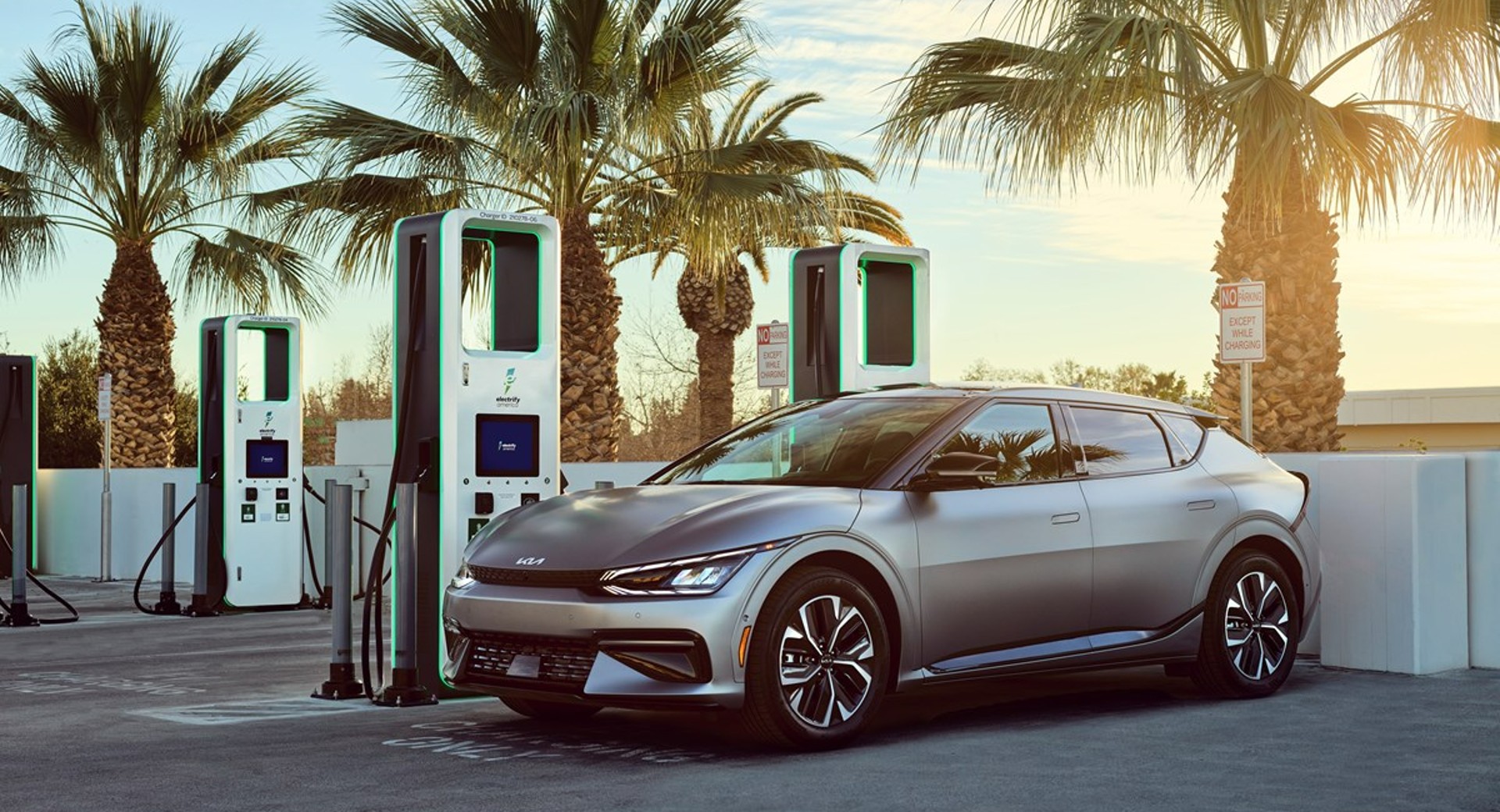
Reliability at public electric vehicle (EV) charging stations in the United States has improved, with failed charging attempts falling to the lowest rate in four years, according to the J.D. Power 2025 U.S. Electric Vehicle Experience (EVX) Public Charging Study. However, dissatisfaction over charging costs and payment systems has grown, highlighting ongoing challenges in the sector.
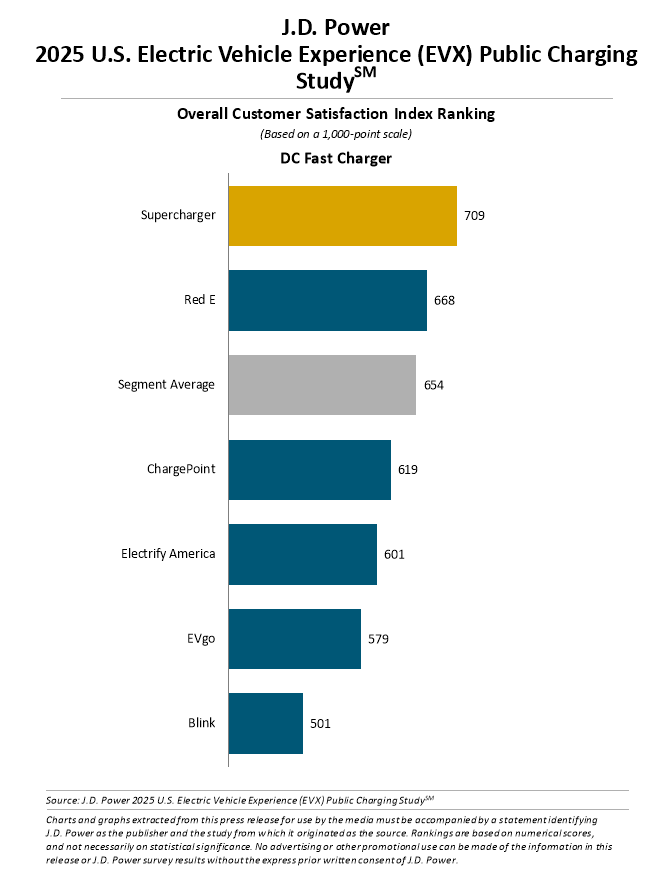
The study found that only 14% of EV owners experienced a non-charging visit in 2025, down from 19% in 2024, reflecting advancements in charger uptime and reliability. Despite this improvement, overall satisfaction scores declined slightly, with DC fast chargers rated 654 on a 1,000-point scale and Level 2 chargers at 607, primarily due to complaints over cost and payment processes.
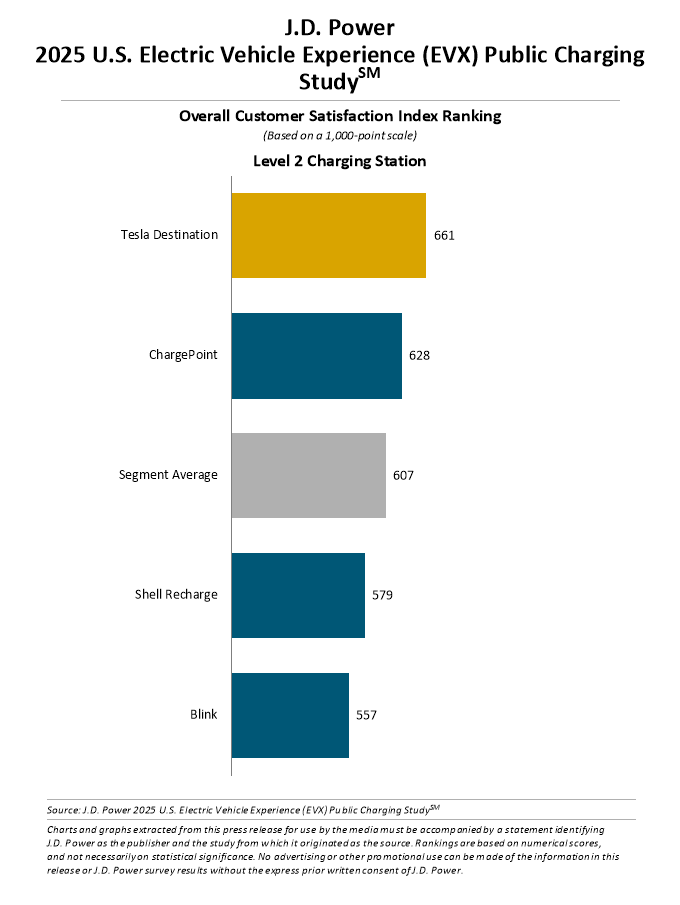
Tesla’s charging network continued to lead the survey, with Tesla Superchargers scoring 709 and Tesla Destination chargers at 661. Emerging OEM networks, including Mercedes-Benz Charging Network, Rivian Adventure Network, and Ford Charge, matched Tesla’s DC fast charger score but remain limited in geographic reach. Third-party DC fast charger providers scored lower at 591, reflecting the complexity of serving a broader customer base.
Regional differences were evident, with the Pacific region reporting the highest rate of failed charging visits at 21%, compared with just 7% in the East South Central region. Urban centers also saw variation, with Seattle and Los Angeles exhibiting the highest unsuccessful charging attempts, while San Francisco and Denver reported longer wait times at certain stations. Out-of-service chargers accounted for 60% of failed visits.
First-time EV owners generally reported higher satisfaction than veteran users, suggesting that expectations among experienced owners may be influencing overall perceptions of charging networks.
The J.D. Power study, conducted in collaboration with PlugShare, surveyed 7,428 battery electric and plug-in hybrid vehicle owners between January and June 2025. Analysts said that while expanding DC fast charging remains a priority, improvements in reliability, ease of use, and cost management are equally critical to support the growing EV market.