



A new European research project, FULL-MAP, has been launched to accelerate the development of next-generation sustainable batteries using artificial intelligence and automated technologies. Coordinated by the Free University of Brussels and supported by over 30 institutions, the four-year initiative is funded through the EU’s Horizon Europe programme.
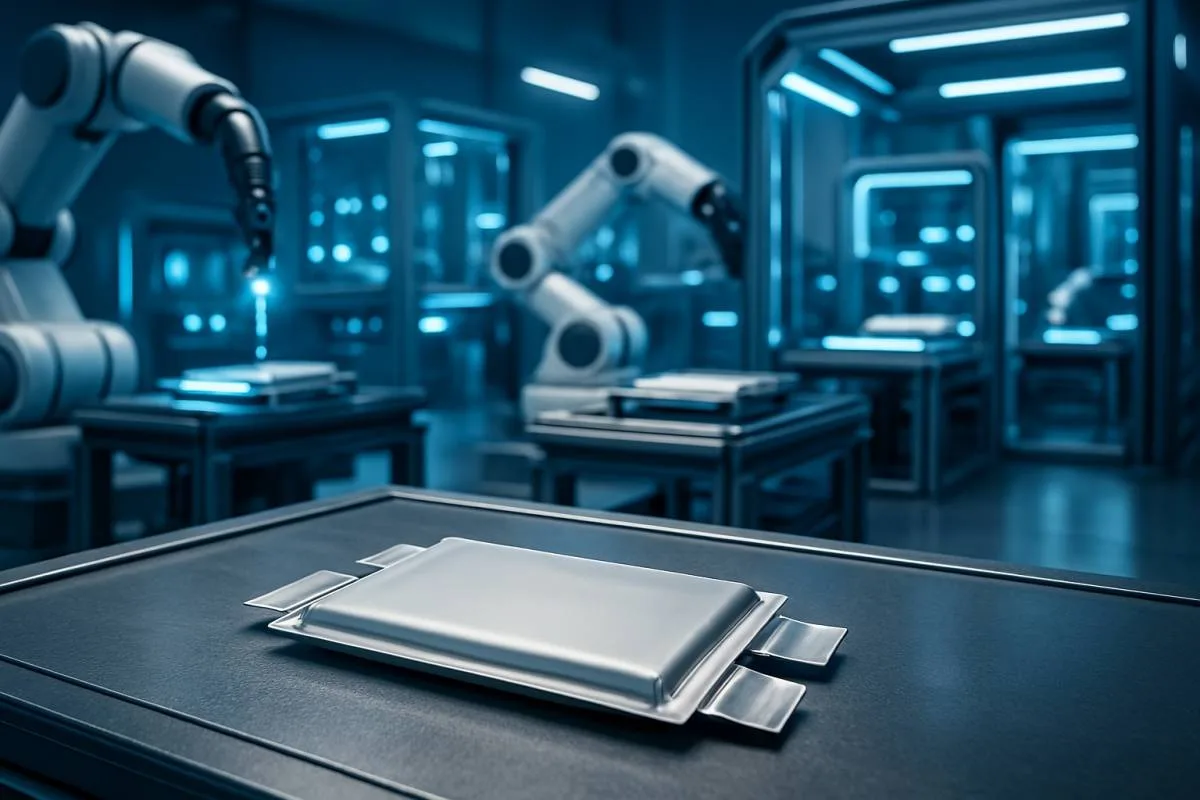
The FULL-MAP project, short for “FULLy integrated, autonomous & chemistry agnostic Materials Acceleration Platform for sustainable batteries,” seeks to radically transform battery R&D by integrating digitalization, AI, machine learning and robotic automation into a unified research infrastructure. It aims to reduce the development time of battery materials and interfaces by combining high-throughput characterization and autonomous synthesis with predictive modelling.
“With FULL-MAP, we are initiating a new era in battery development,” said Emina Hadzialic, an expert at the Austrian Institute of Technology (AIT), a key partner in the project. “By closely linking data, simulation and AI, we are creating a research infrastructure that radically accelerates the discovery and optimization of battery materials.”
According to the project’s organizers, FULL-MAP will cover the full lifecycle of battery innovation — from the discovery of novel materials to cell-level testing. One of its first goals is the creation of an interoperable data framework that facilitates structured collection and reuse of battery-related data. This will be supported by a suite of AI-driven simulation tools designed to predict and optimize battery material properties, targeting a 25% increase in prediction accuracy and a 40% improvement in property forecasting.
The research is expected to bolster the EU’s competitiveness in the global battery market and strengthen the region’s innovation ecosystem. Partners include leading universities, technology firms, and research centres from across Europe. The project officially began in February 2025.
Source: ait.ac.at, battery2030.eu


