



New electric car registrations in Germany rose to a record 545,142 units in 2025, marking a 43.2% increase from the previous year and lifting battery-electric vehicles (BEVs) to nearly one-fifth of the country’s passenger car market, according to official data and new analysis from market researcher Dataforce.
Figures from the Federal Motor Transport Authority (KBA) show BEVs achieved a market share of 19.1% in 2025, up from 13.5% in 2024, despite the overall passenger car market remaining broadly flat at around 2.9 million registrations. Dataforce said the rebound was driven primarily by fleet customers, while demand from private buyers also recovered after a sharp slowdown following the abrupt end of purchase incentives in late 2023.
See also: Mazda Brings China-Built CX-6e Electric SUV to Europe, Starting at €49,990 in Germany
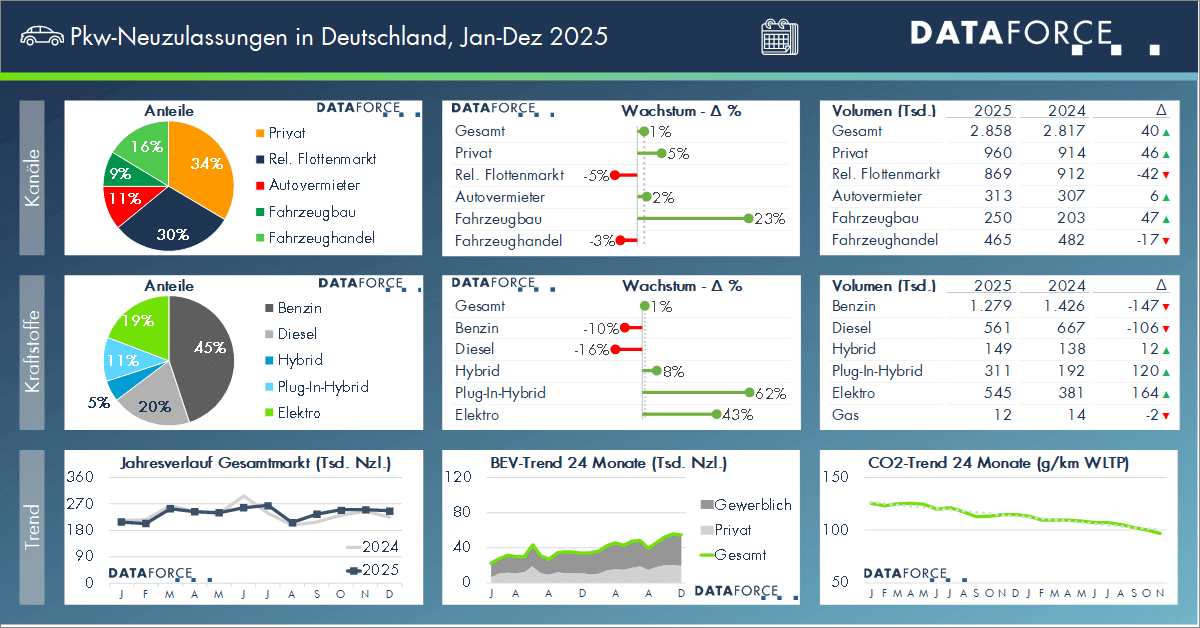

“The fleet market remains the most important growth engine for electric cars, with sales reaching a new all-time high,” Dataforce said, noting that 207,000 BEVs were registered in fleet channels last year, up 38% year on year. In November, electric cars became the most popular drivetrain among fleet buyers for the first time, although full-year fleet growth slightly lagged the overall BEV market expansion.
Private demand also strengthened, with around 195,000 electric cars registered by individual buyers in 2025, a 43% increase compared with 2024. Dataforce described this as a return of “genuine demand,” even though volumes remained below the 2022 peak, when subsidies helped push private BEV purchases to 237,000 units.
See also: EV Charging Firms Form New E-Mobility Germany Industry Association
At the same time, so-called tactical registrations by manufacturers, rental companies and dealers rose further. Dataforce estimates that around 143,000 BEVs were registered through these channels in 2025, reflecting manufacturers’ efforts to balance production levels and meet CO₂ targets. Across all drivetrains, self-registrations by manufacturers rose 23% year on year, with electric models accounting for a large share of that increase.
Looking across powertrains, plug-in hybrids recorded the fastest growth in 2025, up 62%, while conventional hybrids grew by 8%. Sales of petrol and diesel cars fell by 10% and 16%, respectively, leaving internal combustion engine vehicles at about two million registrations. “That is half a million fewer than in 2020 and 1.5 million fewer than in 2019,” Dataforce analysts said, highlighting the scale of the structural shift underway.
See also: Accurec Opens New Lithium Recovery Facility in Germany to Boost EU Battery Recycling
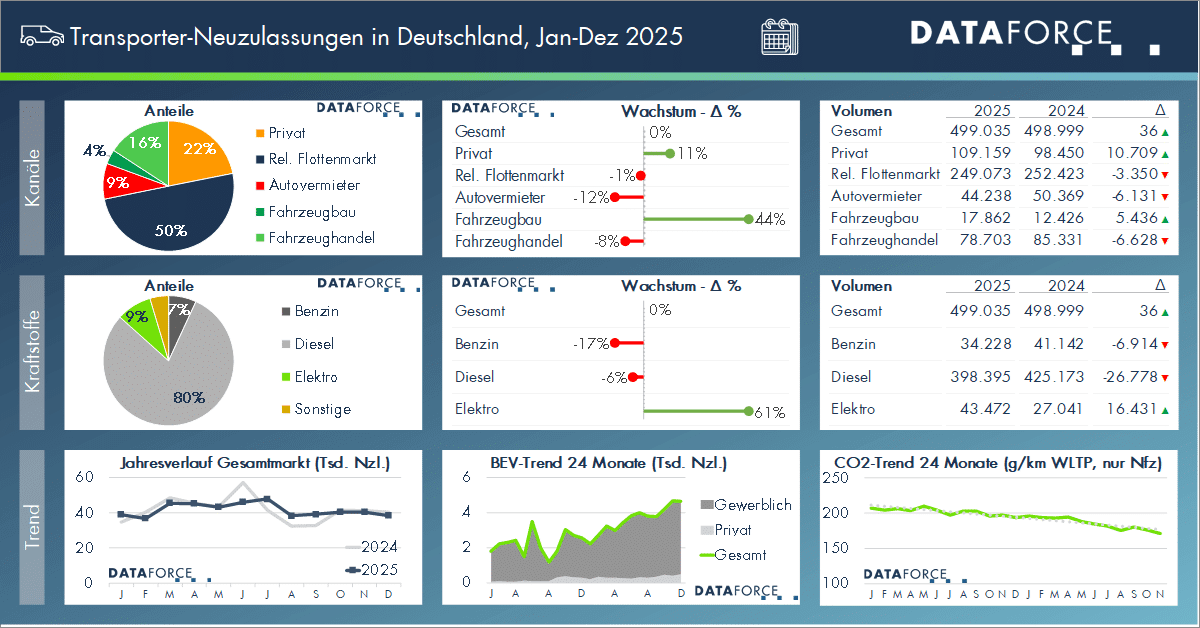
Electric vans also gained momentum, with registrations rising 62% to 43,472 units, accounting for 9% of the German light commercial vehicle market. Around two-thirds of electric vans were registered by fleet customers, Dataforce said.
“After a weak start to the year, both the passenger car and van markets stabilised by mid-year and were able to match or slightly exceed the previous year’s results,” Dataforce said, adding that the ongoing transition away from combustion engines would “continue to reshape the industry for years to come.”


