



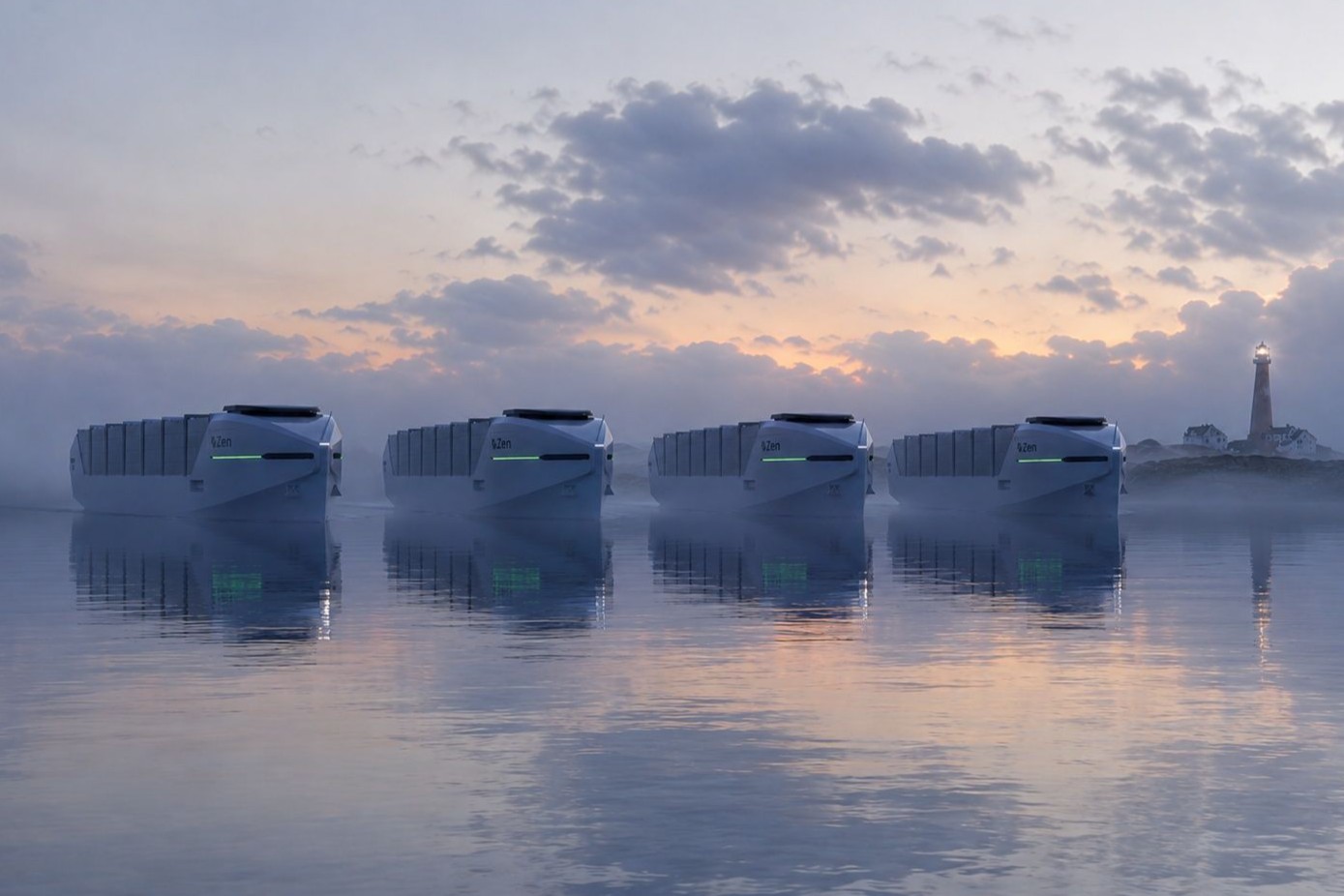
Norwegian shipping company Eitzen Group has ordered two fully electric container vessels and secured financing support for two additional ships as part of its strategy to develop one of Europe’s first large-scale electric container shipping networks.
The project is backed by the Norwegian government enterprise Enova, which has awarded NOK 200 million (€18.2 million) to Eitzen Avanti, a subsidiary of Eitzen Group, to support the construction of the latest vessels.
Large Battery-Electric Container Ships
Each vessel will be equipped with a battery system exceeding 100 MWh, making them among the largest battery-powered container ships currently planned for commercial service.
The ships are expected to achieve a sailing range of between 500 and 600 nautical miles (approximately 926 to 1,111 kilometres) on a single charge.

While the range is not sufficient for long-haul intercontinental trade routes, it is well suited to short-sea shipping operations within Northern Europe.
According to Eitzen subsidiary Zen, the vessels will be capable of sailing between Oslo and Rotterdam without requiring intermediate charging stops.
Built for Northern European Trade
The vessels will be constructed by Zhejiang Dongpeng Shipbuilding & Repairing Co. in China.
Each ship will have capacity for approximately 990 standard containers and is intended for deployment on regional trade routes across the North Sea and surrounding European waters.
The first vessels are expected to support the development of a dedicated green shipping corridor connecting key Northern European ports.
Building an Electric Shipping Ecosystem
Beyond vessel construction, Zen is developing a broader ecosystem designed to support battery-electric shipping operations.
The company plans to combine electric vessels with charging infrastructure, battery systems, energy management platforms, fleet software and future autonomous technologies.
According to Zen, this integrated approach could transform how container shipping networks are designed and operated.
“We are not just building electric ships,” said Fridtjof C. Eitzen, Co-Founder and CEO of Zen.
“We are creating the infrastructure that makes electromobility in shipping indispensable.”
Focus on Digital and Autonomous Operations
The company believes electric propulsion, digital fleet management and autonomous technologies will enable a new generation of standardized shipping networks.
The concept includes remote vessel management, optimized energy use, smart charging systems and future autonomous operating capabilities.
By integrating vessels and infrastructure into a single platform, Zen aims to improve operational efficiency while reducing emissions from regional shipping activities.
Continued Support from Enova
The latest funding follows a similar Enova grant awarded in 2025.
At that time, the Norwegian agency provided NOK 200 million to support two battery-electric container vessels that are understood to share the same design as the newly funded ships.
With the additional financing now secured, Eitzen Group has effectively expanded the project to four vessels.
According to Enova, the first electric container ship in the program is expected to enter service in 2029.
Advancing Maritime Decarbonization
The initiative reflects growing efforts within the maritime sector to reduce emissions from short-sea shipping and regional freight transport.
Battery-electric propulsion is increasingly being viewed as a viable solution for routes where vessels can operate within predictable distances and access charging infrastructure at ports.
If successful, Eitzen Group’s project could serve as a model for future electric shipping corridors in Europe and demonstrate the commercial viability of large-scale battery-powered container transport.
Source: MaritimeMagz