
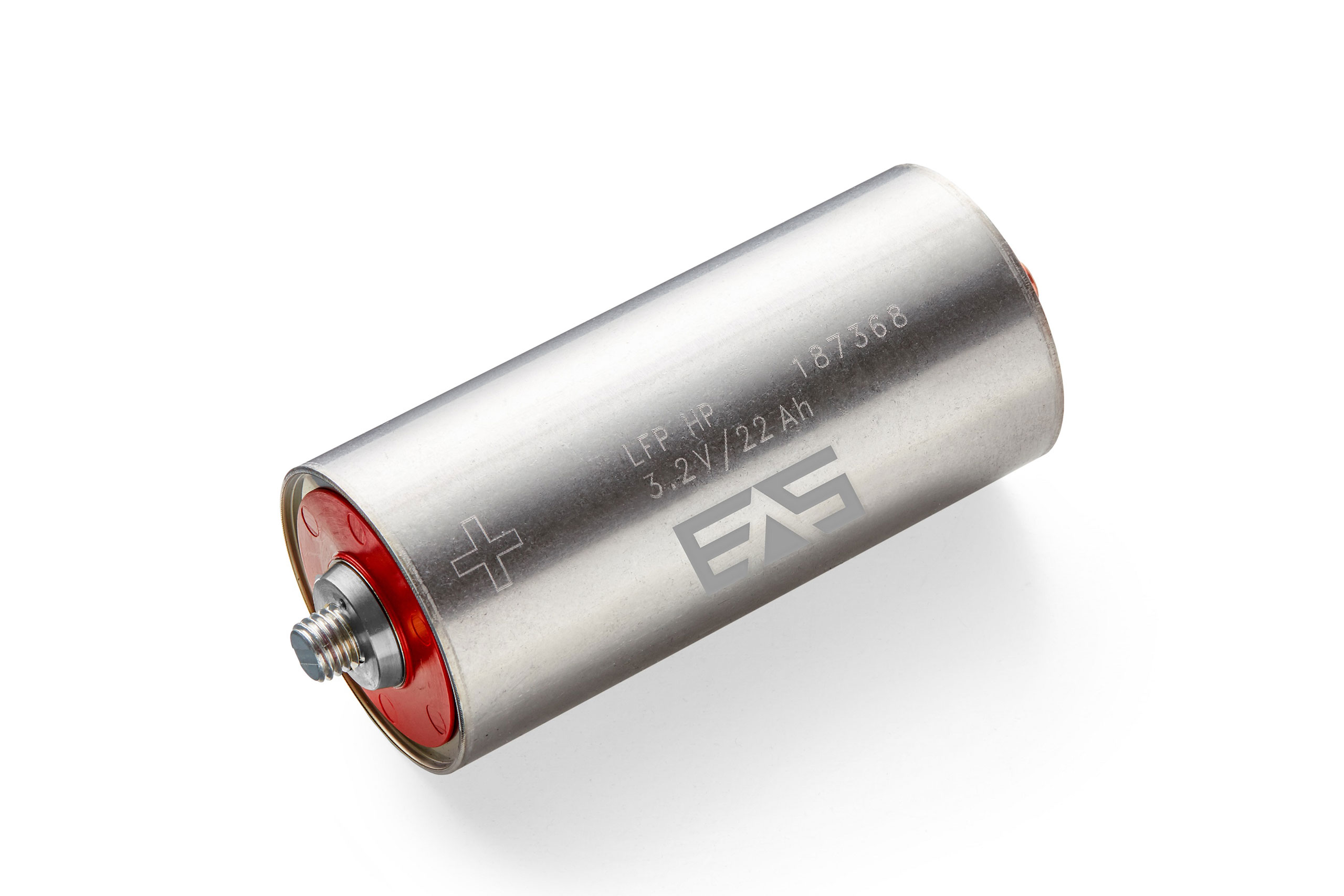
EAS Batteries has started commercial sales of its UHP-601300-LFP-22 cylindrical lithium iron phosphate (LFP) battery cell, which incorporates Asahi Kasei’s Acetolyte electrolyte technology. The companies said the new cell delivers 60% higher continuous discharge power compared with LFP cells using conventional electrolytes.
The launch follows the signing of a licensing agreement between EAS Batteries and Asahi Kasei approximately four months earlier, with serial production of the cell beginning in March 2026.
Higher Conductivity Improves Power Output
According to the companies, the Acetolyte electrolyte developed by Asahi Kasei features high ionic conductivity, helping to reduce internal resistance and improve battery performance, particularly under demanding operating conditions and temperature extremes.
The 22 Ah cell is rated to provide 2,550 W/kg during continuous discharge and 3,760 W/kg in a two-second pulse discharge. The companies said the battery can achieve 2,400 charge-discharge cycles at a 5C/5C rate and 100% depth of discharge while maintaining 80% of its original capacity.
Development Expands to Larger Cell Formats
EAS Batteries and Asahi Kasei are also developing the electrolyte technology for the 46xxx cylindrical cell format. Prototype cells intended for low-voltage electric vehicle battery applications are already available, with a commercial launch planned later in 2026.
The companies said they have agreed to sublicense the combined technology to global automotive manufacturers and battery producers as part of Asahi Kasei’s broader licensing strategy. The Japanese company is targeting cumulative profit of approximately JP¥10 billion (US$63 million) from licensing activities by around 2030.
Partnership Advances Commercialization Efforts
Michael Deutmeyer, Managing Director of EAS Batteries, said the commercialization of the new cell represents a significant step in the companies’ ongoing collaboration.
“The successful commercialisation of our new cell featuring Asahi Kasei’s Acetolyte marks another important milestone in our strategic partnership,” Deutmeyer said.
“Our collaboration on the new 46xxx cell format is also progressing smoothly, underscoring the strength of our joint development approach and our ability to accelerate innovation from concept to market readiness.”