





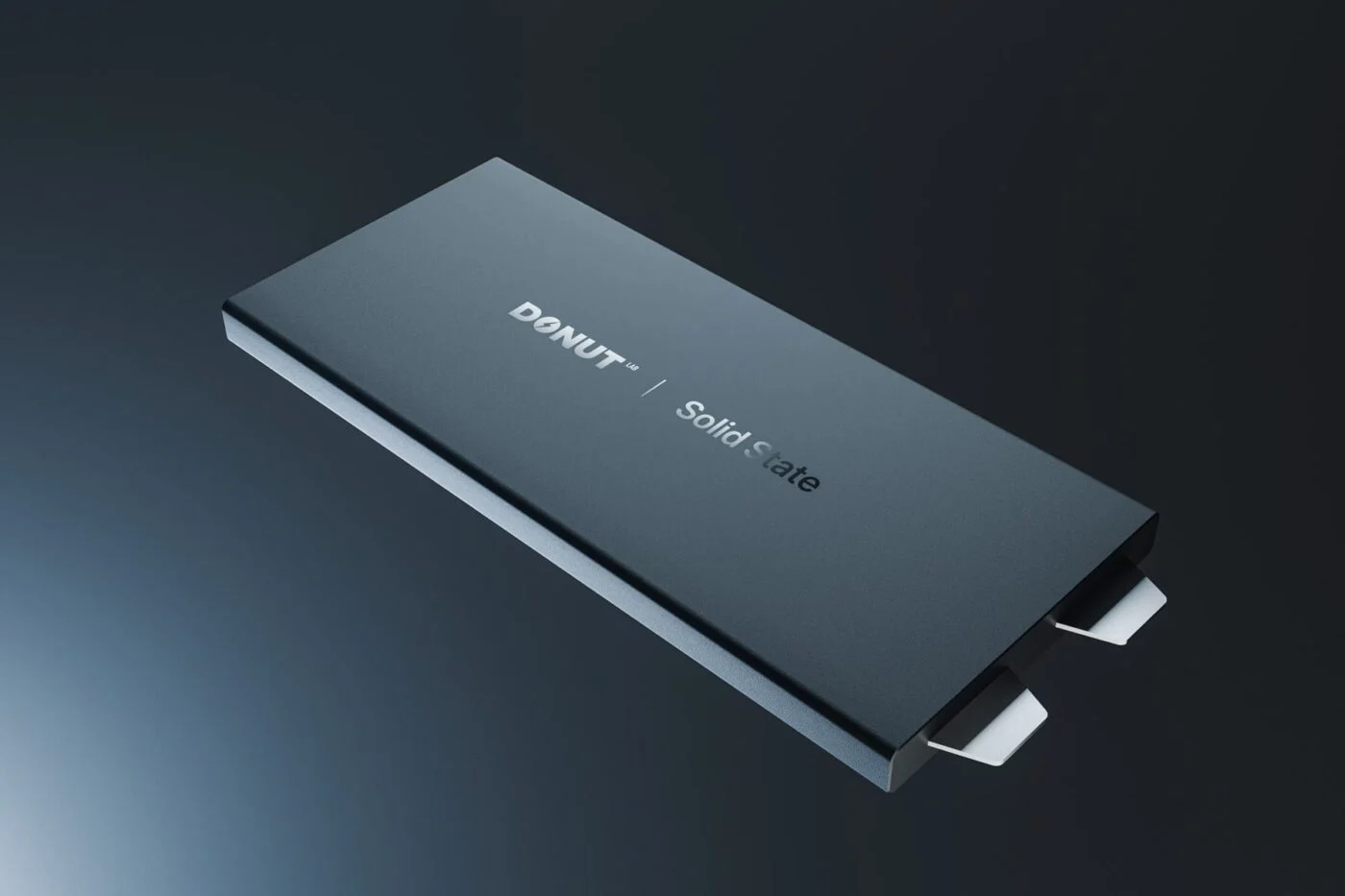
Finnish startup Donut Lab has released the first independent findings on its solid-state battery following scrutiny of the technology’s ambitious claims made at the CES trade show in Las Vegas.
At the event, the company presented specifications including an energy density of 400 Wh/kg, a full charge time of five minutes and a lifespan of 100,000 cycles—figures that drew skepticism from industry experts. Critics noted that major gains in energy density and charging speed typically come at the expense of durability.
To address doubts, Donut Lab commissioned VTT Technical Research Centre of Finland to conduct third-party testing. Initial results focus on charging performance, with further validation planned as part of the company’s “I Donut Believe” campaign.

According to VTT, tests were conducted on a 26 Ah solid-state cell under two high-rate charging conditions: 5C and 11C. In the 5C tests, the battery reached 80% state of charge in about 9.5 minutes and full charge in roughly 12 to 13.5 minutes, depending on cooling conditions. Under the more aggressive 11C regime, the cell achieved 80% charge in 4.5 to five minutes and full charge in just over seven minutes.
These results fall short of the company’s initial claim of a complete charge in five minutes but demonstrate unusually fast charging compared with conventional lithium-ion batteries. VTT noted that real-world battery packs with active thermal management could potentially deliver higher performance than the passive laboratory setup used in the tests.
“The measurements show that the Donut battery allows remarkably high charging speeds even without active cooling,” the company said in a statement, adding that the cell requires no special compression and can operate with passive cooling, simplifying module design.
However, thermal limits were observed during testing. In one trial with cooling applied on only one side, the test had to be paused when the cell surface temperature reached 90°C between roughly 80% and 90% charge, before resuming after cooling.
VTT concluded that the cell successfully sustained high-rate charging while retaining nearly all stored energy during discharge, reporting that “100% of the charged capacity was available” after 5C charging and about 98.4% to 99.6% after 11C charging.
Donut Lab said additional independent results covering other performance claims, including energy density and lifespan, will be released in stages over the coming weeks.


