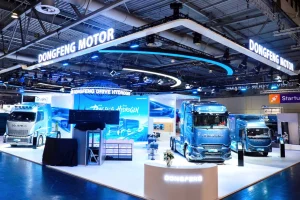


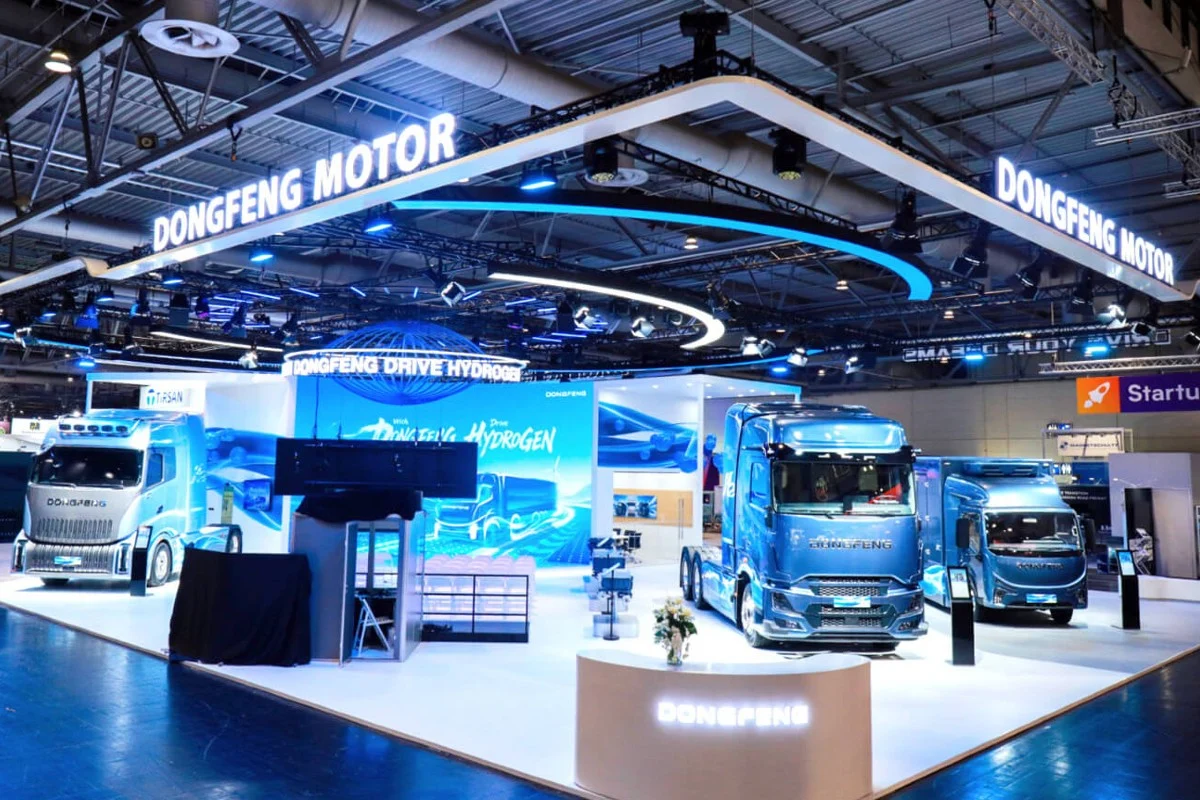
Chinese automaker Dongfeng has presented three hydrogen fuel cell electric truck models at IAA Transportation 2026 in Hanover, all based on its T1 hydrogen-electric platform. The lineup includes long-haul tractor units and a refrigerated truck, with the company’s largest 400-kW fuel cell system supporting a claimed real-world range of up to 1,700 kilometres.
Three Trucks Based On T1 Platform
Dongfeng is displaying three fuel cell electric vehicles based on the T1 platform. The DONGFENG-1 is a 6×2 tractor unit designed for long-haul transportation and equipped with large hydrogen storage capacity.
The smaller DONGFENG-2 uses a 4×2 tractor configuration, while the DONGFENG-3 is a hydrogen-powered truck with a refrigerated box body aimed at urban and regional transport applications.
Dongfeng said the T1 platform is based on four main characteristics: low energy consumption, reduced weight, fast refuelling and safety. The company previously stated that its hydrogen trucks can consume about 7 kg of hydrogen per 100 km.
For a 49-tonne tractor unit, Dongfeng has cited a vehicle weight of 8.8 tonnes. The company also states that hydrogen refuelling can be completed in around 15 minutes and that the platform can provide up to 1,700 km of range.
400-KW Hydrogen Fuel Cell System
Dongfeng is also showcasing fuel cell systems with outputs of 120 kW, 150 kW and 400 kW. The company is positioning the 400-kW system for long-haul applications.
According to Dongfeng, the system has an efficiency of 58%, a gravimetric power density of 1,350 W/kg and a service life of 33,000 hours.
The manufacturer introduced the 400-kW system, known as Hydrogen Core, in May. Dongfeng described it as a hydrogen fuel cell platform developed in China using metal bipolar plates and said it had completed a 10,000-hour durability test under China’s new national standards.
The 150-kW system is intended for medium- and large-size buses as well as medium- and heavy-duty trucks, dump trucks and tractor units. The 120-kW system is designed for light buses, light commercial vehicles and passenger cars, with applications including 4.5-tonne refrigerated vehicles and light trucks in the eight-tonne class.
Dongfeng is also displaying a hybrid system incorporating a hydrogen internal combustion engine.
Focus On Global Partnerships
Dongfeng said around 10,000 vehicles in China are already operating with its proprietary fuel cell technology. The company has developed fuel cell powertrains for several decades and currently offers fuel cell stacks ranging from 20 kW to 400 kW.
The vehicles shown at IAA Transportation are primarily intended to demonstrate Dongfeng’s existing fuel cell technology and operational experience rather than represent an immediate European market launch.
The company said it is seeking international partners as it expands its presence outside China.
Tang Jing, Deputy General Manager of Dongfeng’s Commercial Vehicle Business Unit, said:
“Hydrogen represents one of the key pathways for commercial vehicles to achieve zero-carbon emissions across all-scenario applications and the full life cycle.”
Tang said Dongfeng is seeking cooperation with companies, research institutions and other industry participants internationally.
“We are ready to join hands with industrial-chain partners, well-known research institutions and other industry peers worldwide.”
He said the company aims to jointly develop core technologies, establish industry standards, share industrial-scale production capacity and expand global markets.
“So as to foster a more open, collaborative and prosperous global hydrogen-fuel commercial-vehicle ecosystem.”
The IAA Transportation presentation gives Dongfeng an opportunity to demonstrate its fuel cell vehicle portfolio and seek potential partnerships as it explores international commercial vehicle markets.