
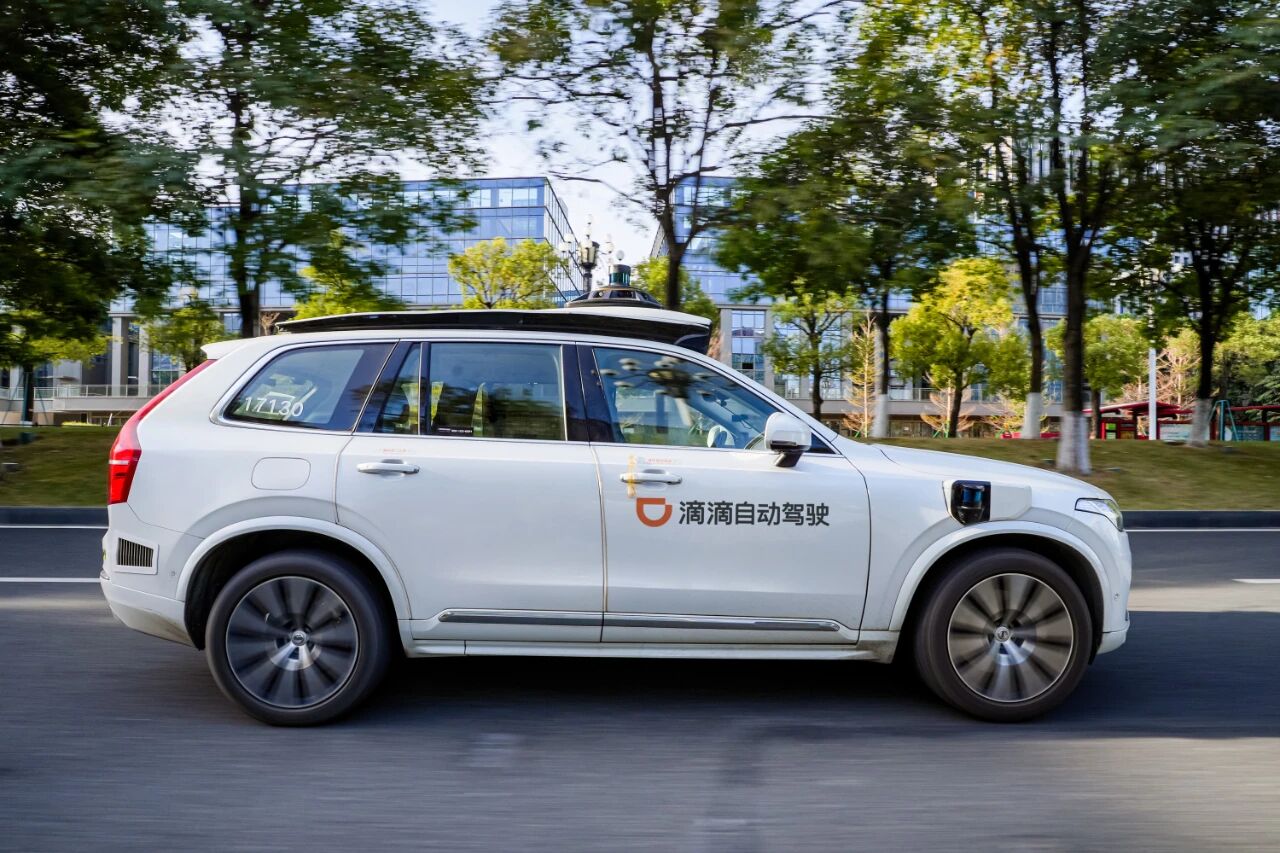
DiDi Autonomous Driving has launched round-the-clock, fully driverless ride-hailing trials in designated pilot zones in the southern Chinese city of Guangzhou, marking a step toward commercial-scale deployment of autonomous transport services.
The service began operating on Dec. 1 in Guangzhou’s Huangpu district, a major residential and commercial area with high daily travel demand. Users ordering rides through the DiDi app may now be matched with a vehicle operating without an in-car safety driver, following the company’s earlier deployment at the 15th National Games, where it provided autonomous shuttle services around key venues.
See also: DiDi Forms Strategic Partnership with ADIO to Support Autonomous Mobility Development in Abu Dhabi
As one of Guangzhou’s designated urban innovation partners, DiDi’s autonomous driving division has been integrated into the city’s broader smart-mobility development strategy. The shift to continuous public operations signals a transition from limited, event-based demonstrations toward regular use in everyday transport scenarios.
The pilot service covers key locations including metro stations, schools, shopping centres, office parks and residential communities, and runs 24 hours a day. Users can request a fully driverless vehicle through the autonomous driving section of the DiDi app or allow the platform to assign either a human-driven or driverless vehicle through mixed dispatch, depending on traffic, distance and real-time supply and demand.
See also: DiDi to Launch All-Electric Premium Service ‘DiDi Premier’ in Mexico City
Passengers assigned a driverless vehicle can unlock doors via the app or automatically upon approaching the car. During trips, riders may change destinations or request stops at safe locations, while a built-in screen provides one-touch access to remote customer support. DiDi said it will gather feedback during the trial to refine operational processes and improve the in-car experience.
The company received its remote, safety-operator-free road testing permit for connected autonomous vehicles in November 2022 and has since expanded testing in complex urban environments. According to DiDi, its driverless fleet has demonstrated “stable performance across demanding conditions — including rush-hour congestion, low-light nighttime environments, glare at dusk and rainy-weather operations,” as it prepares for wider deployment.