
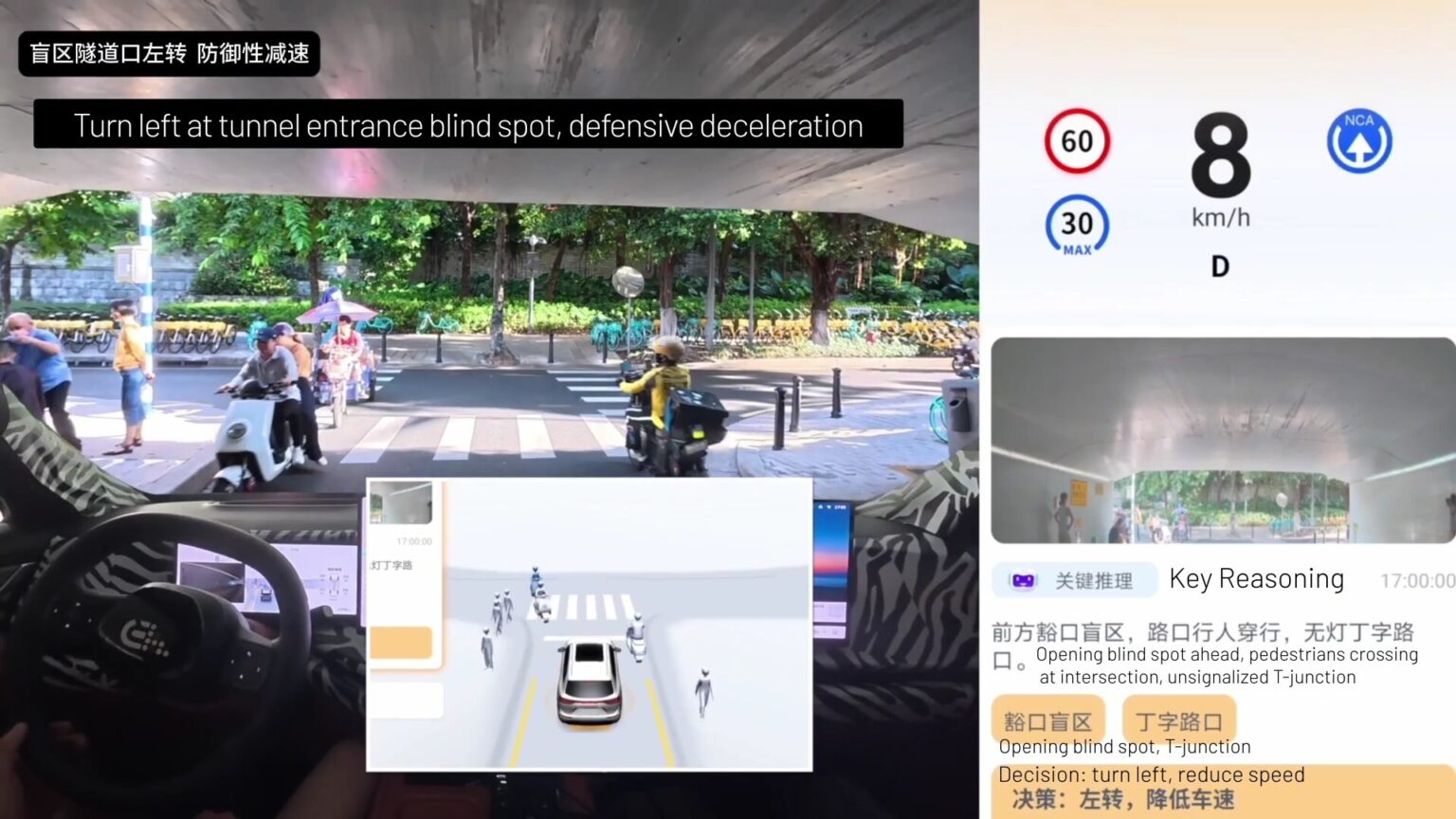
DeepRoute.ai on Tuesday introduced its mass-production-ready IO 2.0 autonomous driving platform at the IAA Mobility 2025 show in Munich, saying the system is powered by an advanced VLA (vision-language-action) model aimed at improving safety and adaptability across global markets.
The company said IO 2.0 supports both LiDAR-equipped and pure-vision configurations and is compatible with multiple automotive-grade chips, allowing carmakers to deploy assisted and automated driving features across different segments. DeepRoute.ai added it has supplied systems for more than 100,000 passenger cars and plans to leverage mass-produced vehicles to expand its robotaxi business.
As part of a dual-track international strategy, DeepRoute.ai is pushing into Europe, Japan and South Korea while helping domestic partners accelerate intelligent vehicle offerings abroad, the company said.
“Our VLA-powered platform combines intelligence with adaptability, making it especially ready for Europe’s roads,” said Maxwell Zhou, CEO of DeepRoute.ai.
DeepRoute.ai said its VLA model integrates multimodal vision, language and action, with chain-of-thought reasoning for temporal and causal inference. The company said the approach is designed to improve interpretability and deliver traceable decision-making, while drawing on large-language-model capabilities for a broad knowledge base and continual learning.
The platform’s modular architecture also includes features such as spatial understanding, logic explanation, OCR and voice control, which the company said enable proactive responses in higher-risk scenarios including blind curves and complex intersections through early deceleration and rerouting.