


Daimler Buses is planning its third public charging location for electric buses in Hamburg, following sites in Cologne and Munich. The new facility at Hamburg’s Central Bus Terminal will initially feature four charging stations with power outputs of up to 600 kW and will be accessible to electric buses regardless of manufacturer.
The project is being developed by Daimler Buses Solutions GmbH, a wholly owned subsidiary of Daimler Buses. A lease agreement with ZOB Hamburg GmbH has been signed with approval from the municipal owner, while an application for a building permit has also been submitted. Daimler Buses aims to commission the Hamburg charging site in 2027.
Hamburg Site Planned for Long-Distance Bus Operations
The charging facility will initially include four charging points, with the potential to expand to eight. Construction will involve civil engineering work, high-voltage power connections and a transformer before the charging equipment is installed.
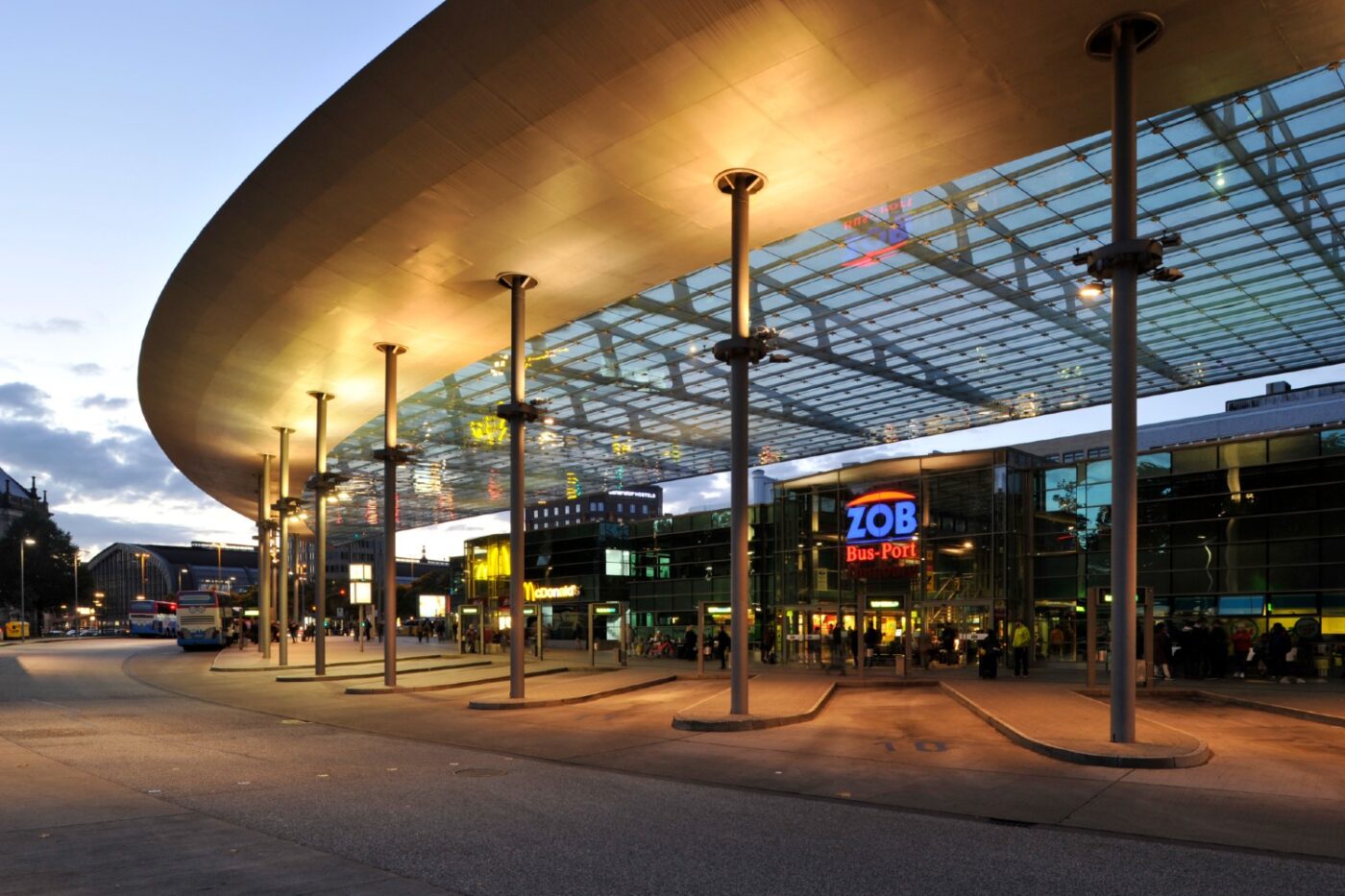
Daimler Buses selected the Central Bus Terminal because of its high level of bus traffic. The company says ZOB Hamburg handles more than 80,000 bus movements each year, making it one of Germany’s largest long-distance bus hubs.
Central bus stations can also provide scheduled dwell times that allow excursion and coach buses to recharge while passengers use existing facilities such as restrooms and food services.
Charging Available Across Bus Brands
The Hamburg facility is intended to support operators running electric buses from different manufacturers, particularly on longer routes where access to public charging infrastructure can be a constraint.
“Public charging infrastructure for electric buses is a key enabler of the electrification of excursion and coach travel. With our charging projects in Cologne, Munich, and Hamburg, we aim to provide an important boost for the use of electric buses on key travel routes across Germany. Buses can charge where they already stop according to schedule. This makes integration into existing operations easier and helps our customers use electric buses efficiently and economically,” said Steffen Germ, CEO of Daimler Buses Solutions.
Daimler Buses also expects the charging network to support the rollout of its Mercedes-Benz eIntouro electric intercity bus. The model has been available to order since spring 2025, with the first customer vehicles scheduled for delivery in the coming weeks.
Daimler Expands Public Charging Activities
Daimler Buses has experience in charging infrastructure through its parent company Daimler Truck, which participates in the Milence joint venture developing charging infrastructure for heavy-duty vehicles along motorways and freight corridors.
Daimler Buses Solutions was established in 2023 and has primarily supported urban bus operators with charging infrastructure planning, construction and turnkey deployment. The company is now extending this activity to publicly accessible charging locations.
Daimler Buses Solutions will finance and operate the Hamburg charging facility, working with external companies during construction. The company plans to recover its investment through electricity sales and will provide maintenance and technical operations through its own service team after commissioning.
Cologne and Munich Projects
The Hamburg project follows public e-bus charging initiatives in Munich and Cologne. Munich’s Central Bus Terminal uses four charging stations with outputs of up to 600 kW, providing a model for the planned Hamburg installation.
In Cologne, Daimler Buses is participating in a pilot project led by NRW.Energy4Climate and the City of Cologne. Four public fast-charging points for electric buses are planned at the Buspark Köln facility on Kuhweg, near the Rhine and Niehl Port.
The three projects form part of Daimler Buses’ broader effort to expand public charging infrastructure for electric intercity and coach operations, although the company has not disclosed a specific target for the number of public charging points it plans to operate by 2030.
Infrastructure Supports Future Electric Coaches
Daimler Buses has said the Mercedes-Benz eIntouro is suited to shorter intercity and excursion routes, while broader deployment of battery-electric coaches on longer journeys will require additional public charging infrastructure.
The company plans to add battery-electric coaches to its portfolio by the end of the decade, followed by hydrogen fuel-cell coaches as series-production models.
“For a broader deployment of battery-electric intercity and coach buses, including services to more distant tourist destinations, however, a further expansion of public charging infrastructure is required,” said Till Oberwörder, CEO of Daimler Buses.


