




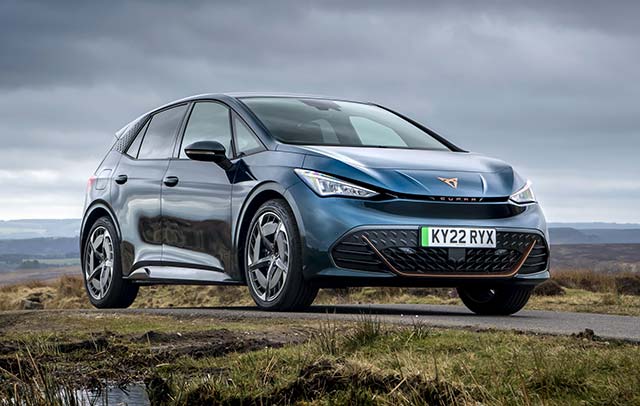
Cupra, the performance sub-brand of Spain’s Seat, has postponed its planned launch in the United States until after 2030, citing shifting market conditions and regulatory uncertainty surrounding electric vehicles. The decision also halts ongoing discussions with U.S. dealership group Penske Automotive.
The announcement was included in parent company Seat’s second-quarter financial report, where the delay was described as a strategic move amid evolving industry dynamics. Cupra had originally intended to enter the U.S. market around 2030, with plans to establish a retail footprint through a partnership with Penske, first revealed in November 2024.
Seat attributed the decision to a reassessment of demand projections and broader market challenges rather than the recent departure of Cupra’s former CEO, Wayne Griffiths, who had been a key advocate for the U.S. expansion.
“We’re not stopping, just postponing our US launch and will continue to monitor market developments in the coming years to determine the best timing and approach, aligned with the brand’s long-term vision,” said Sven Schuwirth, Seat’s Chief Sales Officer.
Cupra’s delay follows mounting uncertainty over the future of EV incentives in the United States, where the rollback of federal tax credits under President Donald Trump has cast doubt on long-term electric vehicle adoption. While a temporary uptick in demand is expected before the tax credit expires in September, broader concerns remain about infrastructure support and regulatory direction.
In the first half of 2025, Cupra reported 167,600 vehicle deliveries, up 33.4% from the same period last year. By contrast, Seat’s deliveries dropped 21.4% to 135,000 units. Combined, the two brands saw a marginal year-on-year increase to 302,600 units. Seat also reported a 105.3% rise in electric vehicle deliveries, though it did not break out Cupra’s EV numbers separately.
Seat described H1 2025 as “challenging” due to rising product costs, changing sales composition, and growing competitive pressure. Earnings were further hit by EU tariffs on the China-built Cupra Tavascan and reduced output at the Martorell plant, which is being retooled for future EVs, including the Cupra Raval and Volkswagen ID.2.


