





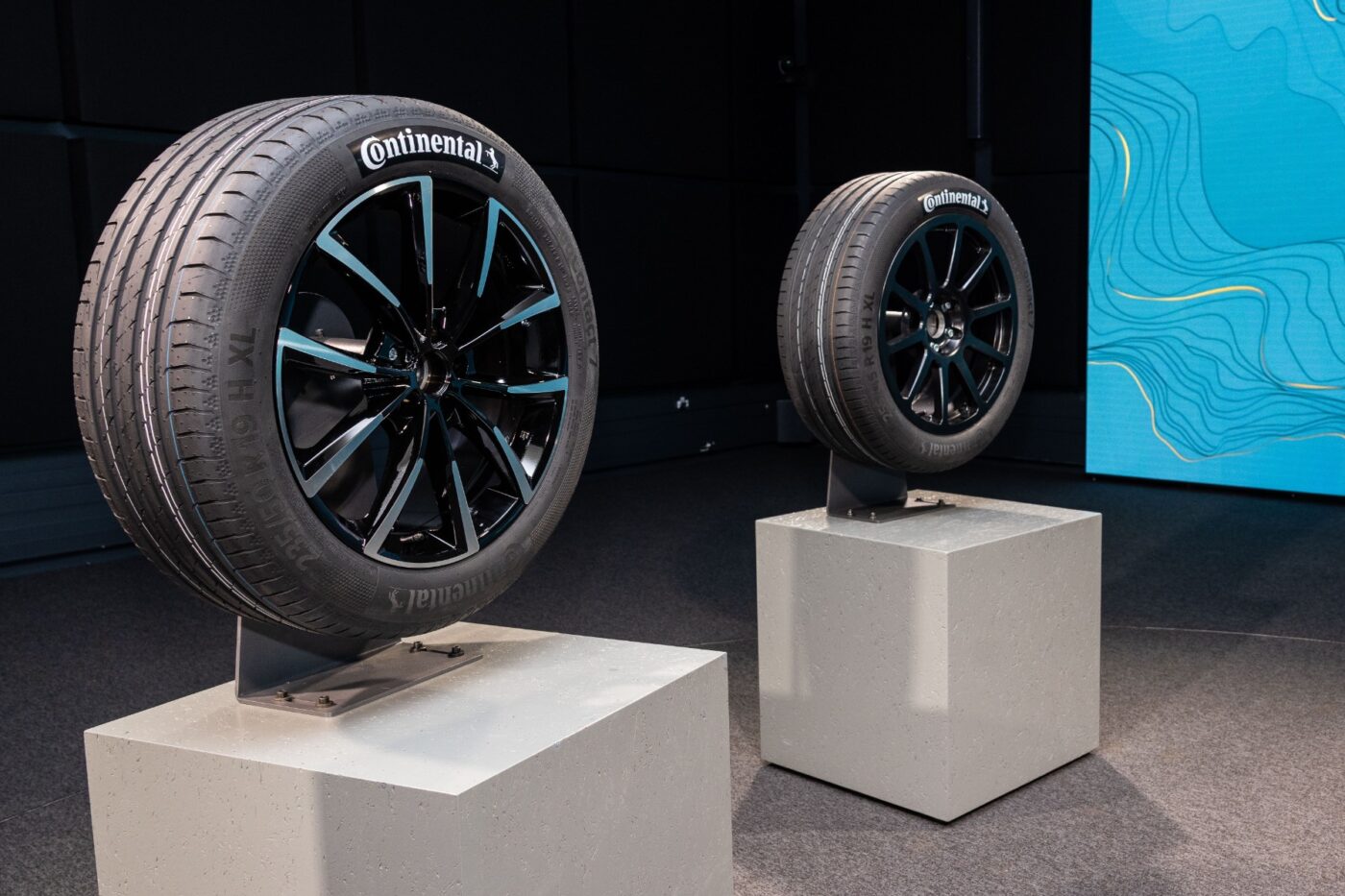
Continental has developed a new ultra-low rolling resistance tire for Renault that could extend the driving range of electric vehicles by up to 30 kilometers on a single charge.
The project is part of a strategic collaboration between the German tire manufacturer and Renault Group aimed at improving vehicle efficiency and reducing energy consumption in future electric models.
According to Continental, the specially developed tire delivers rolling resistance up to 35% lower than the threshold required to achieve the European Union’s highest tire efficiency rating, Grade A.
Based on EcoContact 7 Technology
The new tire builds on Continental’s EcoContact 7, a summer tire introduced for electric vehicles in 2025.
Engineers customized the design specifically for Renault’s innovation team, incorporating a modified tread compound, optimized tire structure and redesigned sidewall construction.
The combination of these changes significantly reduces energy losses caused by tire deformation and road friction while maintaining the safety and performance characteristics required for everyday driving.
Up to 30 Kilometers of Additional Range
Continental estimates that a vehicle with a standard driving range of 500 kilometers could gain approximately 30 additional kilometers through the use of the new tire technology.
The improvement is equivalent to around a 6% increase in driving range without requiring changes to the vehicle’s battery capacity or powertrain.
The company highlighted that reducing rolling resistance is one of the most effective ways to improve vehicle efficiency.
Importance of Rolling Resistance
According to Continental, rolling resistance accounts for approximately 20% to 30% of a vehicle’s total energy consumption, regardless of whether it is powered by an electric drivetrain or an internal combustion engine.
Lower rolling resistance reduces the amount of energy lost as tires flex and interact with the road surface, helping vehicles travel farther using the same amount of energy.
For battery-electric vehicles, the benefit translates directly into improved range and lower energy consumption.
Balancing Efficiency and Safety
While reducing rolling resistance is important, tire manufacturers must also ensure that efficiency gains do not compromise safety.
Continental emphasized that tires must continue to provide strong grip, stable handling and effective braking performance in a wide range of driving conditions.
The company said the project demonstrates how targeted tire engineering can contribute to vehicle efficiency without sacrificing driving dynamics or safety standards.
Collaboration Focused on Future EVs
Dr. Christian Strübel, Continental’s specialist for passenger-car tire rolling resistance, said the partnership is designed to help improve the efficiency of Renault’s next-generation electric vehicles.
“Together with Renault Group, we are improving the efficiency of its new electric vehicles. Our tailor-made tires have very low rolling resistance, which significantly increases range,” Strübel said.
Renault Group Vice President of Innovation Nicolas Champetier described low rolling resistance as a key factor in extending EV driving range.
“With Continental, we have a strong partner by our side. Thanks to our long-standing collaboration in original equipment, we can jointly develop solutions that have the potential to deliver real added value for our customers,” Champetier said.
The development highlights the growing role that tire technology can play in improving electric vehicle efficiency as automakers seek additional ways to maximize range without increasing battery size.


