
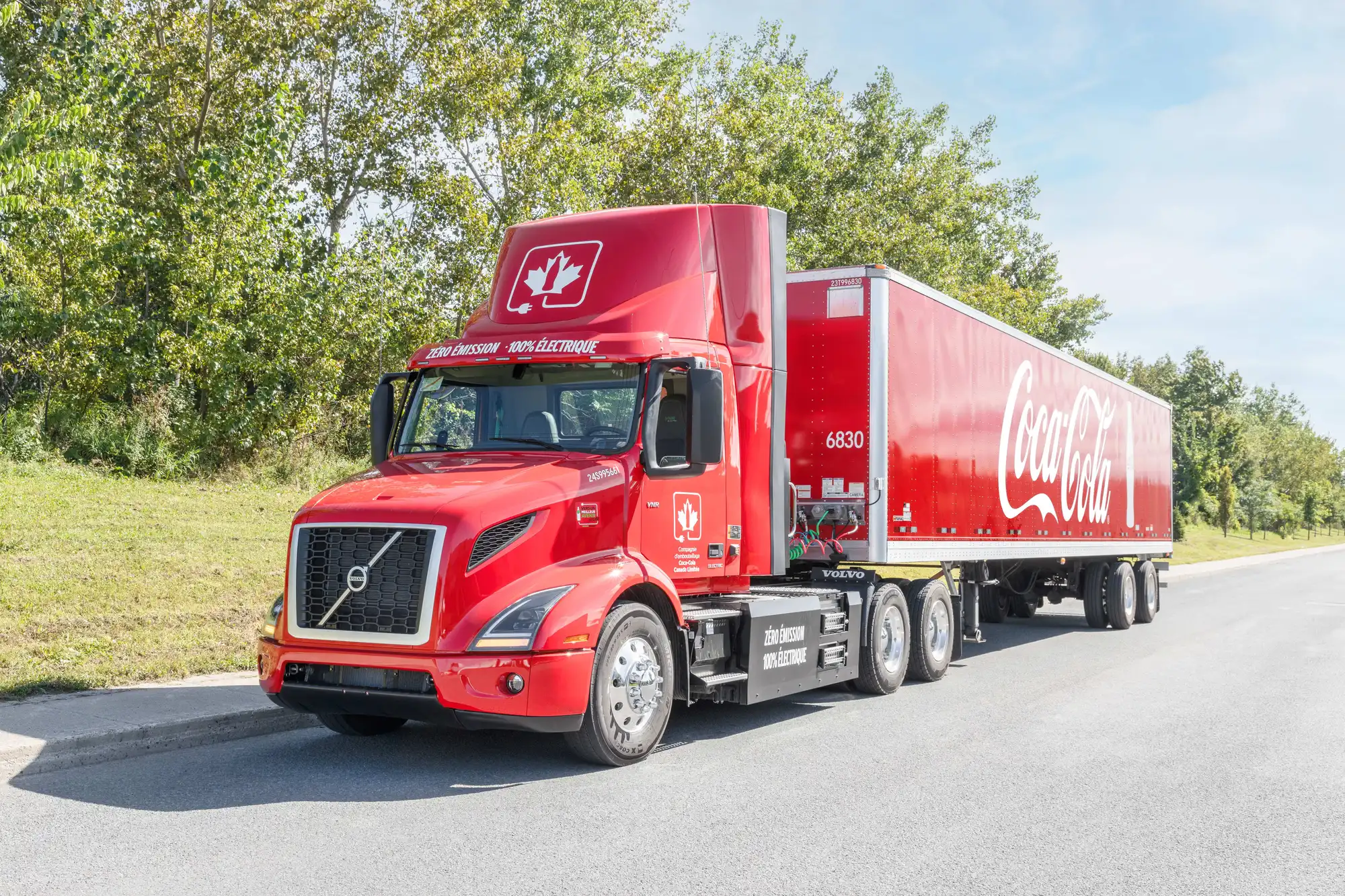
Coke Canada Bottling is expanding its electric vehicle fleet with the addition of new battery-electric trucks from Volvo Trucks North America, bringing the total number of electric units in operation to 40.
The move builds on a pilot programme launched in 2023 in Montreal, where the company began integrating electric vans, on-road trucks and yard tractors into its logistics operations. The newly added Volvo VNR Electric trucks will be deployed on local and regional delivery routes, which the company said are well suited for electrification due to their predictable duty cycles.
The vehicles are equipped with a six-battery configuration, enabling a range of up to 440 km on a single charge. Coke Canada Bottling said the trucks are designed to complete several daily round trips between distribution centres and customer locations, supporting urban and regional delivery needs while maintaining operational efficiency.
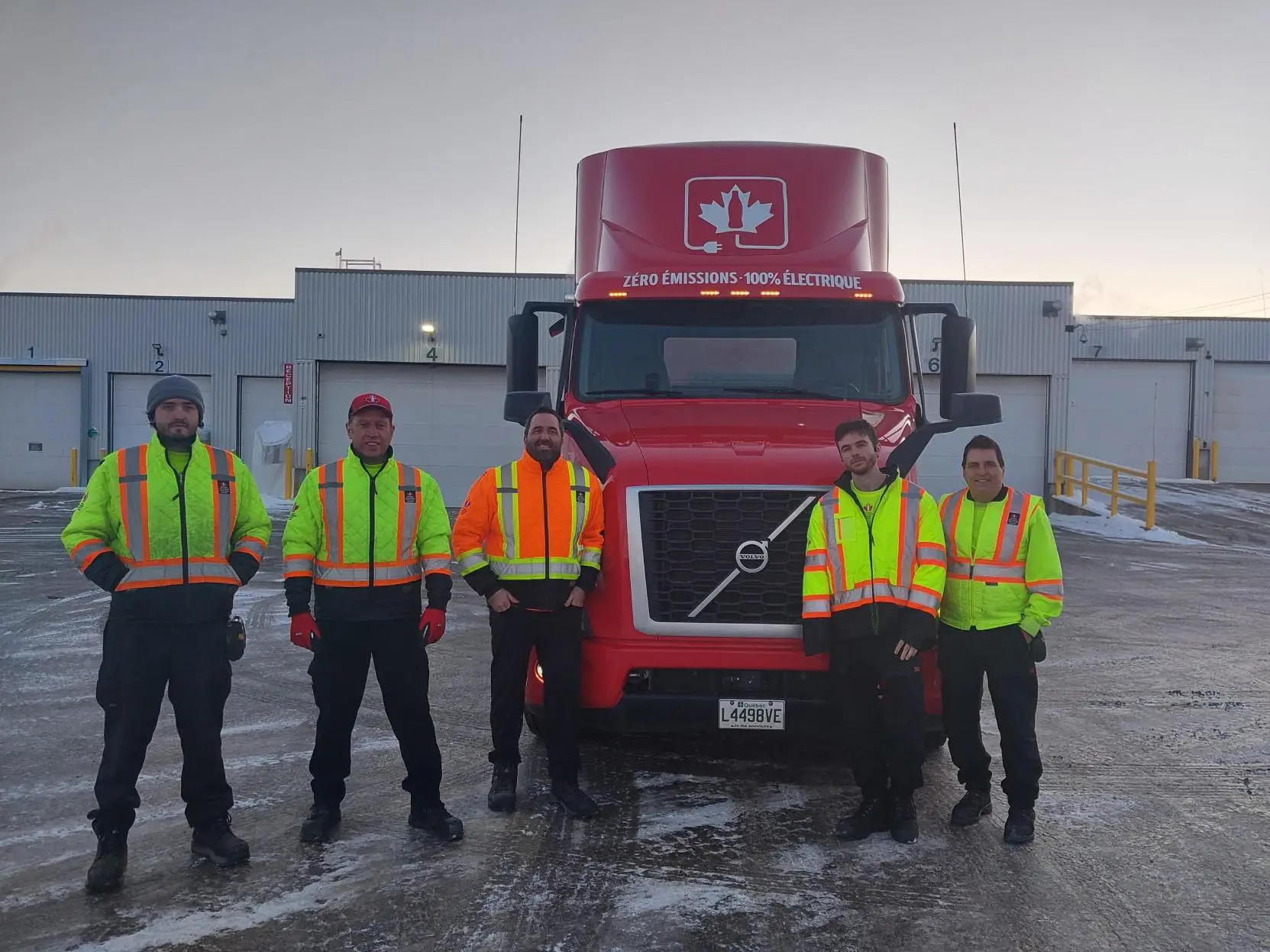
To support the fleet expansion, the company has invested in charging infrastructure across multiple regions. This includes the installation of three-port 180 kW Heliox Flex chargers—one in Quebec City and two in Vancouver—providing a total of nine dispensers. These additions complement three 150 kW DC chargers with nine dispensers installed at its Montreal depot in 2023 as part of its initial agreement with Volvo.
Linking the expansion to its sustainability goals, Tony Chow, President of Coke Canada Bottling, said the initiative is part of broader efforts to reduce emissions across operations.
“This expansion marks an exciting evolution for our growing fleet of electric vehicles. We’re pleased to be adding seven new Volvo trucks to service our customers across the Lower Mainland and the Quebec City region,” Chow said. “This is one of the ways we’re taking action to reduce carbon emissions across our business while continuing to meet and exceed the expectations of our customers.”
Matthew Blackman, Managing Director for Canada at Volvo Trucks North America, said the rollout demonstrates how early pilot learnings can translate into scaled deployment.
“Coke Canada Bottling has taken what they learned early on and turned it into a practical, multi-region deployment. When you see electric trucks running predictable, high-frequency routes like these, it shows how well the technology fits into everyday fleet operations,” Blackman said.
The expansion reflects what the company describes as a steady, experience-driven approach to electrification, using operational data from its Montreal pilot to guide broader adoption across regions.
Beyond Canada, Coca-Cola bottling operations are also advancing fleet electrification in other markets. In November 2025, Toll Group and Coca-Cola Europacific Partners announced plans to replace diesel vehicles with 12 Volvo FE Electric trucks for delivery operations in Australia.