

Chinese battery manufacturer CATL has launched a strategic partnership with logistics firm STO Express to promote fleet electrification, focusing on reducing costs and improving efficiency in long-haul transport.
The agreement, signed in Ningde, Fujian province, will cover green logistics, vehicle electrification, charging and battery swap networks, and full life-cycle battery management. The initiative targets high fuel costs in mainline logistics, a persistent challenge in the express delivery sector.
CATL said it is working with automakers to develop customized electric heavy-duty trucks, optimizing battery capacity, layout and weight. On a 400-kilometer route between Shanghai and Ningbo, electric trucks can reduce energy costs by about 0.8 yuan ($0.116) per kilometer, with overall savings of 0.3 to 0.5 yuan per kilometer after accounting for depreciation.
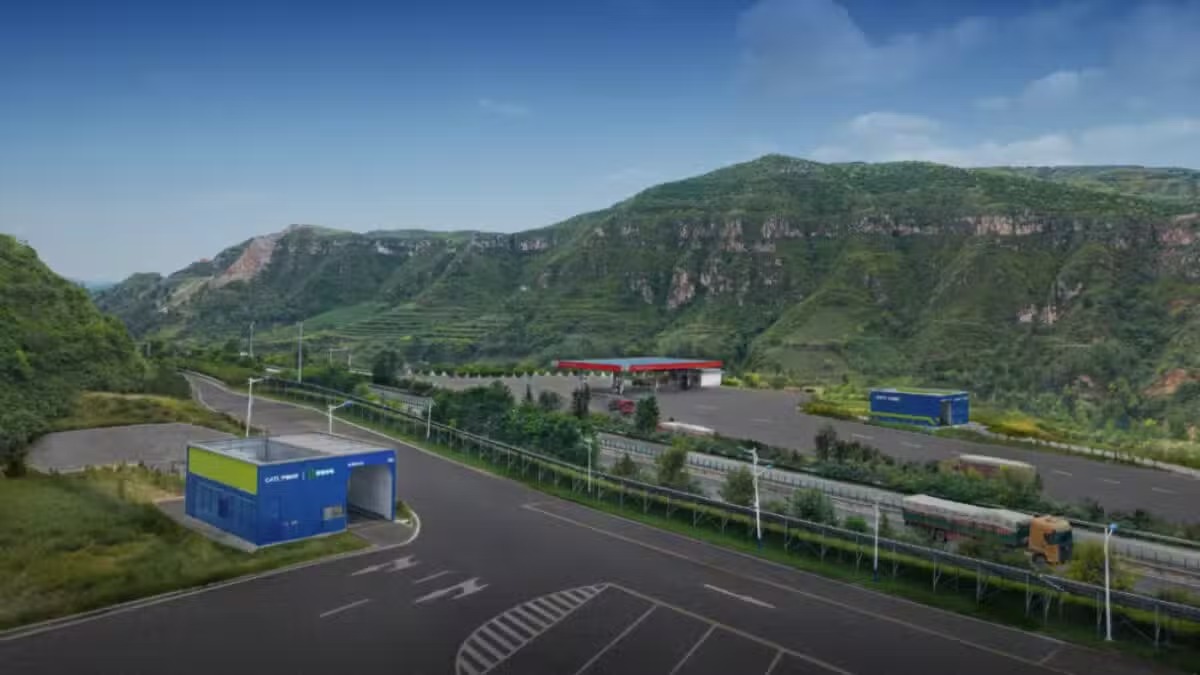
To support operations, CATL is accelerating the rollout of charging and battery swap infrastructure. The company has deployed more than 300 battery swap stations under its Qiji Energy brand and plans to expand to over 900 stations nationwide by the end of 2026. The network is concentrated in major economic regions aligned with STO Express’s logistics routes.
Separately, CATL signed an agreement with Jiangxi Yichun Transportation on April 2 to electrify more than 160 rural and township buses. The company said earlier deployments in Yichun have reduced fuel costs by more than 60% per kilometer.
CATL has also been expanding partnerships beyond road transport. In March, it signed a cooperation framework agreement with China Oilfield Services Limited to develop electrified offshore support vessels using battery-electric and hybrid propulsion systems.
The company continues to report strong financial and market performance. It said net profit rose 42.28% year-on-year to 72.2 billion yuan ($10.4 billion) in 2025, while revenue increased 17.04% to 423.7 billion yuan.
CATL has also entered cooperation discussions with Rio Tinto to explore electrification and low-carbon technologies in mining. The agreement includes work on electrification strategies, circular supply chains and new business models.
According to data from SNE Research, CATL remained the world’s largest EV battery supplier in 2025, with installations reaching 464.7 GWh and a global market share of 39.2%. Together with BYD, the two companies accounted for more than 55% of global battery installations.