
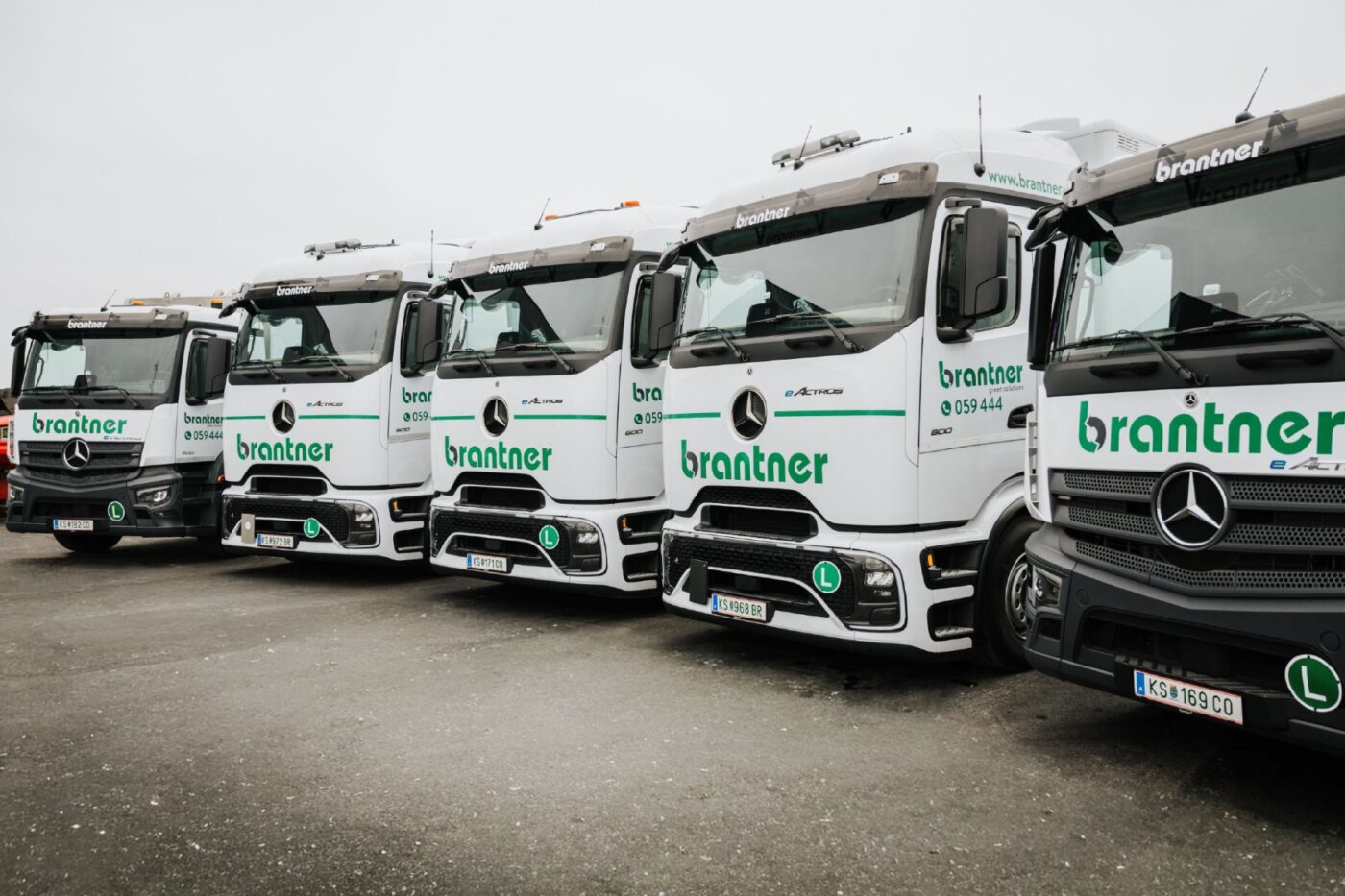
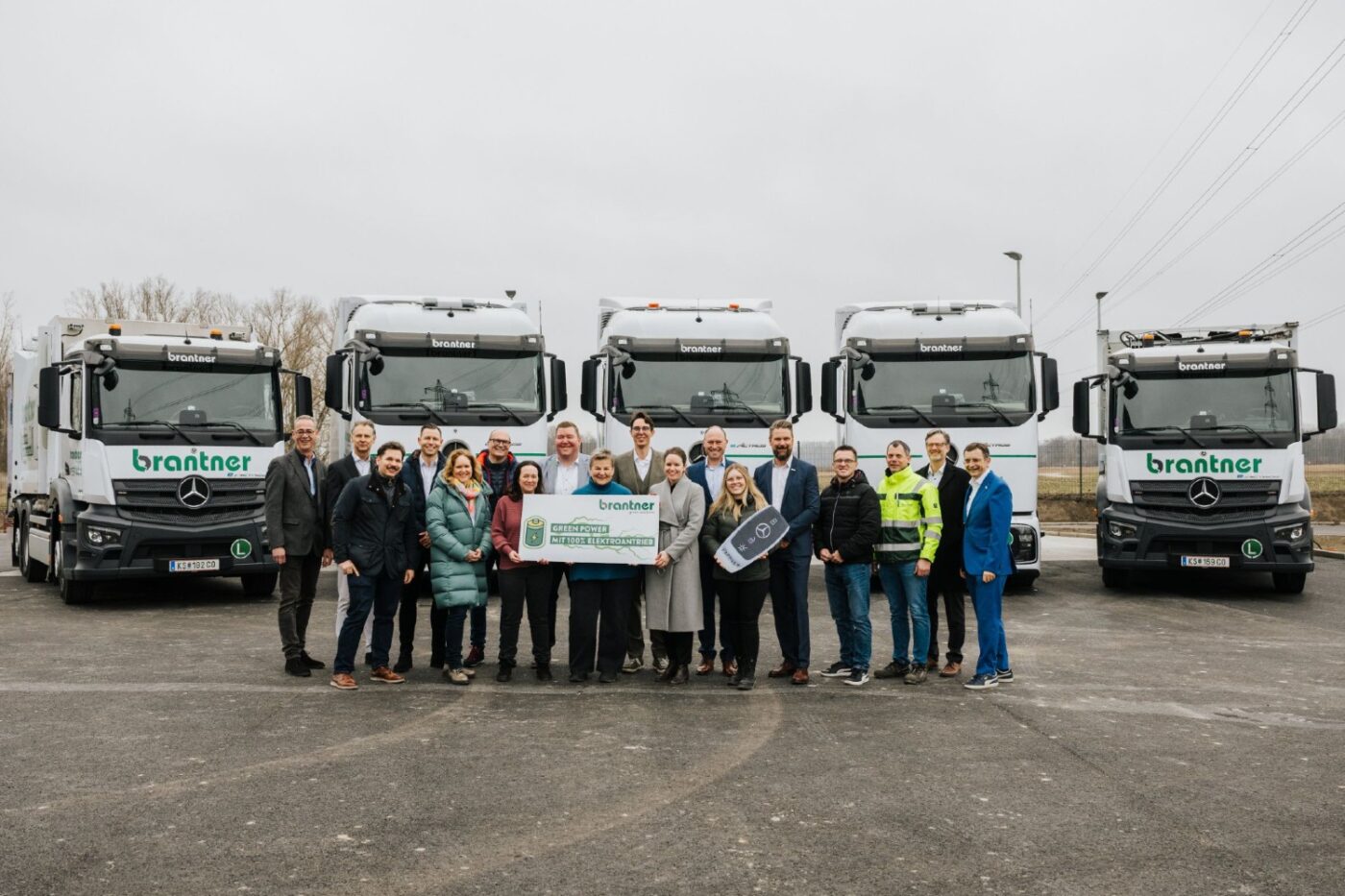
Austrian waste management company Brantner Green Solutions has replaced 13 diesel trucks with battery-electric vehicles supplied by Mercedes-Benz Trucks, creating what it describes as the largest electric truck fleet in Austria’s waste collection sector.
The vehicles, delivered to the firm’s headquarters in Krems an der Donau, include a mix of Mercedes-Benz eActros 300 and Mercedes-Benz eActros 600 models configured as tractor units, refuse compactors, and box trucks. The company said the trucks have been fully integrated into daily operations since early 2026, serving municipalities and commercial customers across the region.
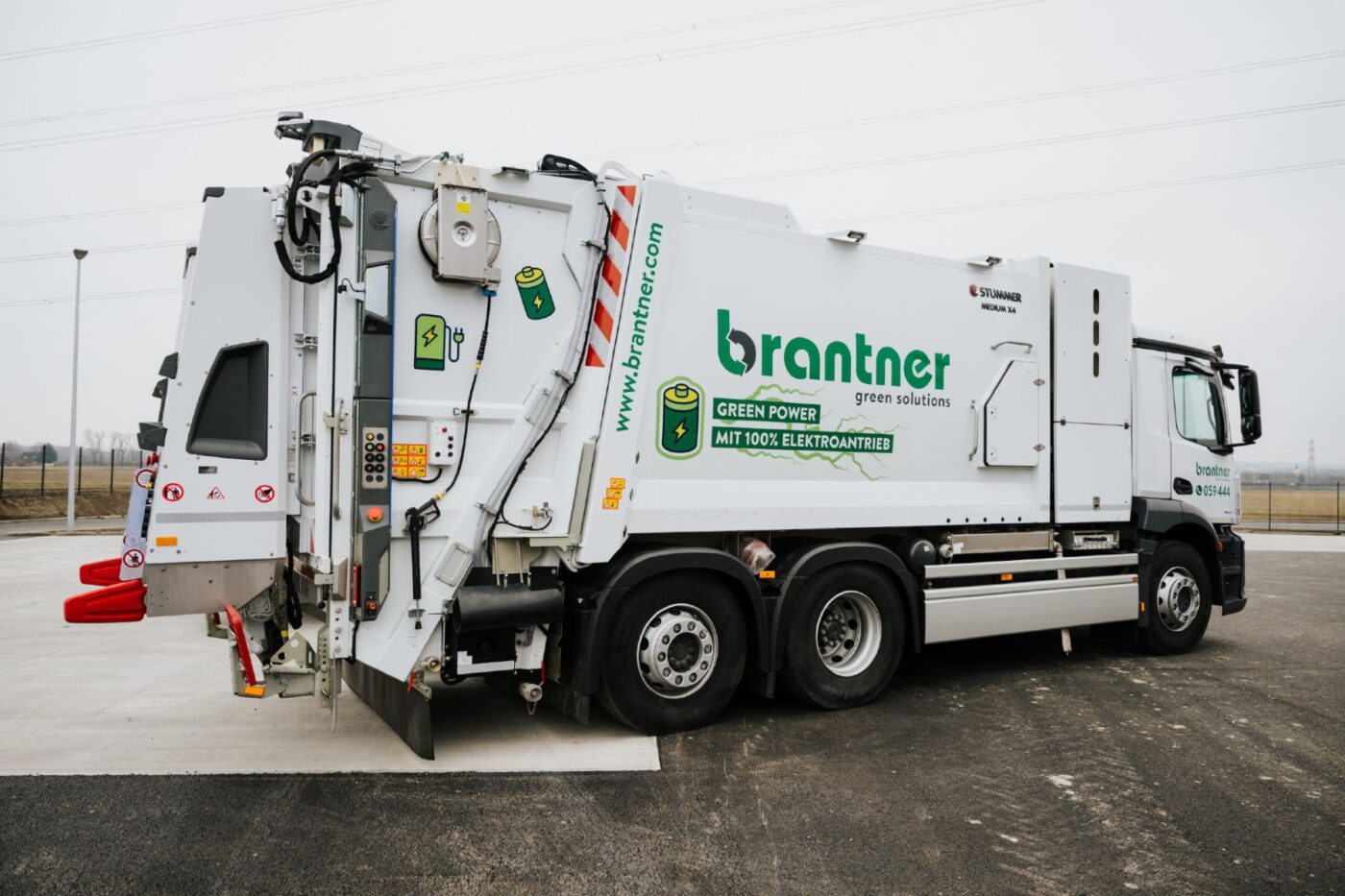
Josef Scheidl, managing director of Brantner Green Solutions, said the move demonstrates the viability of electric propulsion for heavy-duty applications. “This not only reduces our CO₂ emissions but also encourages other companies to take a step in the right direction,” he said.
Founded in 1936, the Brantner Group remains family-owned and operates across five European countries with thousands of employees. Its waste management division runs multiple sorting facilities, landfills, composting plants, and a biogas facility, relying heavily on refuse collection vehicles. The company plans to expand electrification further, with 11 additional electric trucks expected to join the fleet in the coming years.
To support the transition, Brantner analysed route data to identify operations best suited to battery-electric vehicles, focusing on routes that maximise range, which can reach up to 550 kilometres. The trucks are charged at a dedicated depot hub built by the company, where full charging takes up to seven hours.
Additional high-power charging sites are under development in several locations across Lower Austria, including Krems and Hagenbrunn, with further facilities planned in Traiskirchen, Wulkaprodersdorf, and Hohenruppersdorf. The company has also installed rooftop photovoltaic systems at multiple sites to supply part of the electricity demand.
Energy generation is coordinated through the Brantner Energy Community, a regional citizen energy initiative established in 2024 that combines solar and hydropower production. Brantner said the scheme had achieved a self-sufficiency rate of 64% by April 2025.
The company stated that most of the investment in vehicles and charging infrastructure was financed internally, supplemented by government support. Funding was provided through the ENIN programme administered by the Austrian Research Promotion Agency as part of Austria’s efforts to reduce transport emissions.