
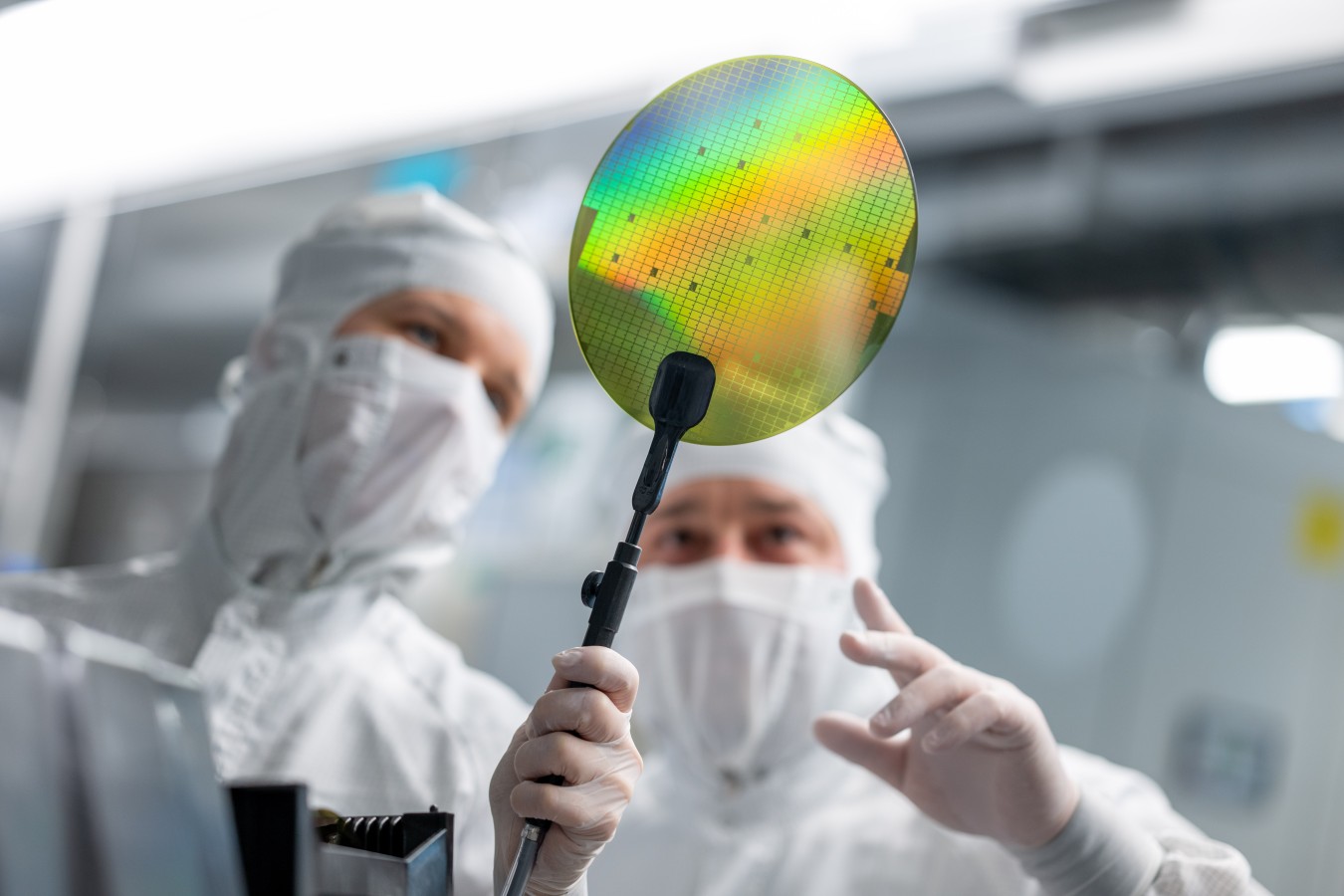
Bosch has secured a funding agreement with the U.S. Department of Commerce worth up to $225 million under the CHIPS and Science Act to support the expansion of its semiconductor manufacturing operations in Roseville, California.
The federal funding will contribute to Bosch’s planned investment of up to $2 billion at the site, where the company is establishing a production facility for silicon carbide (SiC) semiconductors used primarily in electric vehicles.
According to Handelsblatt, Bosch acquired the Roseville facility from TSI Semiconductors in 2023 and has since been converting it into a dedicated manufacturing plant for silicon carbide chips. Pilot production is already underway, while commercial manufacturing is expected to begin later this year.
Roseville Facility Targets High-Volume SiC Production
The California facility will manufacture and test silicon carbide chips on 200-millimetre wafers, enabling higher production efficiency by increasing the number of chips produced per wafer.
Bosch said the project forms part of its broader strategy to significantly expand its global silicon carbide semiconductor production capacity to meet growing demand from the automotive industry.
Silicon carbide semiconductors have become increasingly important for electric vehicles because they operate more efficiently than conventional silicon chips, particularly in high-voltage and high-temperature applications. Their use helps reduce energy losses in power electronics, improving vehicle range, charging performance and overall energy efficiency.
Bosch recently introduced its third-generation silicon carbide chips, which the company says deliver up to 20% higher power density in a more compact package. Since launching its first-generation SiC chips in 2021, Bosch has supplied more than 60 million units worldwide.
Federal and State Support Strengthen U.S. Expansion
In addition to the federal funding, Bosch will receive another $25 million in grants from the State of California to support the Roseville expansion.
The agreement provides greater certainty for Bosch’s long-term semiconductor operations in the United States as the company continues investing in domestic manufacturing capacity. Overall, Bosch plans to invest approximately $7.5 billion across its U.S. operations by 2031.
The funding also reflects continued efforts by U.S. policymakers to strengthen domestic semiconductor production and reduce dependence on overseas supply chains for critical technologies.
EV Growth Drives Demand for Power Semiconductors
The investment comes as demand for advanced power semiconductors continues to rise alongside the expansion of 800-volt electric vehicle platforms, higher charging capacities and increasingly powerful electric drivetrains.
Governments and manufacturers in both the United States and Europe are investing in semiconductor production to improve supply chain resilience and strengthen domestic technology capabilities.
In Europe, initiatives such as the Moore4Power research project, led by Infineon, are focused on developing next-generation power semiconductors for electric vehicles and charging infrastructure while supporting long-term industrial competitiveness.