



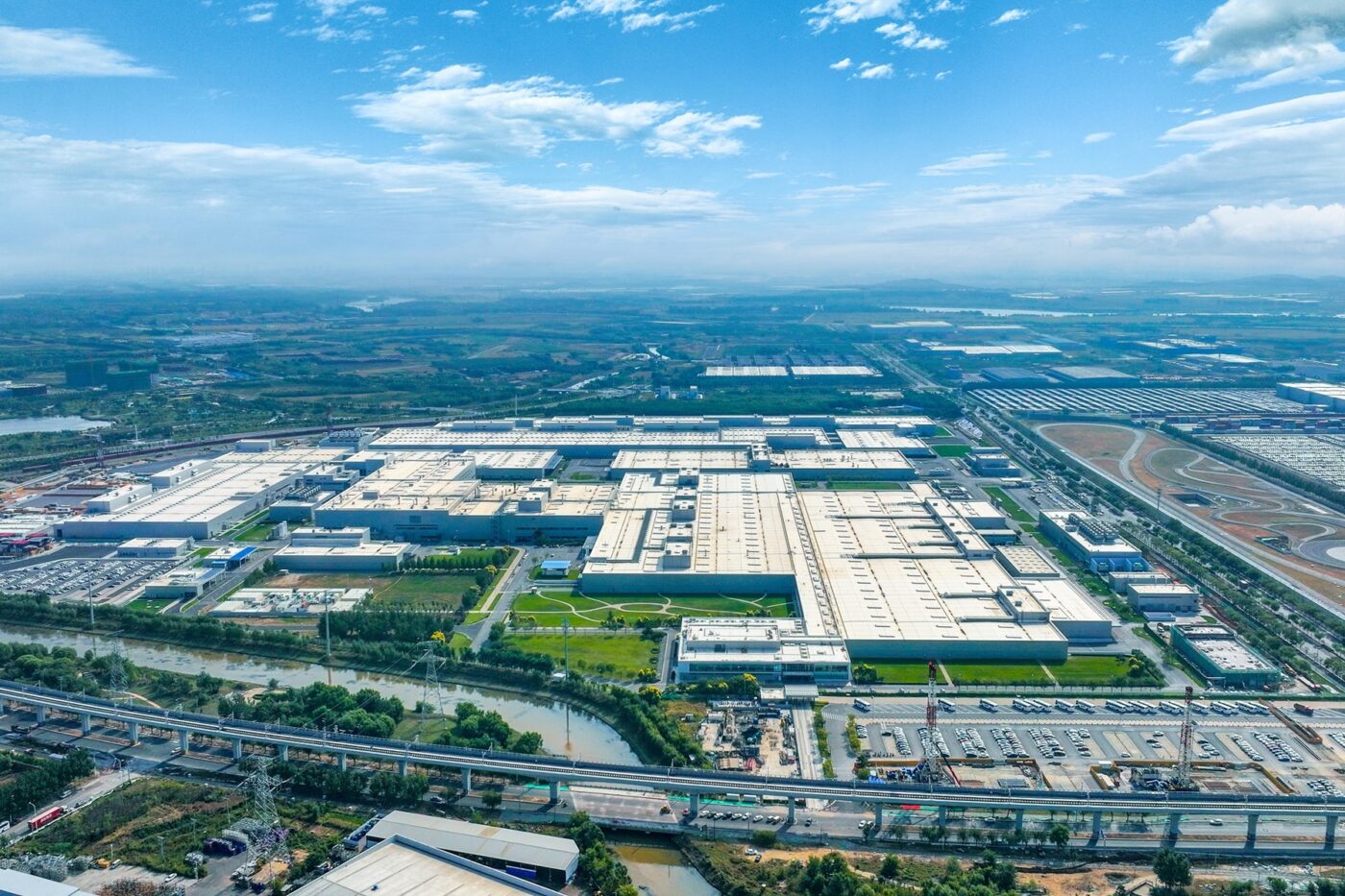
BMW Group has started series production of its sixth-generation high-voltage batteries for the Neue Klasse at its Shenyang facility in northeastern China. The site is the third location in the automaker’s new battery production network, following facilities in Debrecen, Hungary, and Irlbach-Straßkirchen, Germany.
The batteries will power Neue Klasse models manufactured in China for the local market. Producing them close to vehicle assembly operations is intended to reduce transportation distances and inventory costs in a market where electric vehicle price competition is intense.
“The high-voltage battery is a key component of our all-electric vehicles and one of the BMW Group’s most important technologies for the future,” said Dr. Raymond Wittmann, BMW Group board member for production.
He added that the Shenyang operation reflects the company’s strategy of manufacturing close to its markets while maintaining common production standards and quality requirements.
Gen6 Battery Technology
BMW’s Gen6 battery system uses large cylindrical cells measuring 4.6 centimetres in diameter, available in two heights: 9.5 cm and 12 cm. Compared with the previous generation, BMW says the cells deliver more than 20% higher energy density, while charging performance and range can improve by up to 30%.
The battery adopts a cell-to-pack design, placing cells directly into the battery housing rather than first assembling them into separate modules. The approach reduces intermediate components and weight while creating additional space for cells.
A BMW-developed control unit called the Energy Master manages power distribution and battery functions, including monitoring cell temperature and state of charge.
Automated Assembly and Quality Control
At Shenyang, cells are inspected and connected to cooling components to form clusters. These assemblies are then laser-cleaned and welded to an electrical contact system before a foaming process secures the components mechanically.
The battery housing is subsequently closed, sealed and riveted. Each unit receives an Energy Master before undergoing end-of-line inspection.
BMW said quality control is particularly important because each battery pack contains numerous individual cells and welds. The production line uses real-time monitoring of laser welds, digital twins and AI-supported testing methods.
Shenyang Production Network
BMW and Liaoning Province formalised plans to prepare the Shenyang site for Neue Klasse production through a letter of intent in April 2024, involving investment equivalent to approximately €2.5 billion.
With annual capacity of 830,000 vehicles as of 2024, Shenyang is BMW Group’s largest production site. It comprises the Dadong, Lydia and Tiexi plants and is operated by the BMW Brilliance Automotive joint venture.
Pre-series production of the long-wheelbase BMW iX3 for China began at the site in December 2025. The model is part of BMW’s Neue Klasse rollout and is already available for pre-order in China.
BMW’s battery production network is also expanding in North America, with series production at facilities in Woodruff, South Carolina, and San Luis Potosí, Mexico, expected to begin in the coming months.
Long-Wheelbase iX3 Awaits Deliveries
The start of battery production supports preparations for the Chinese-market long-wheelbase iX3. Prices announced at the Chengdu Auto Show ranged from 269,900 yuan for the iX3 30L to 339,900 yuan for the iX3 50L xDrive.
According to CnEVPost, initial deliveries were planned for November 2026. CarNewsChina, citing business outlet 36Kr, reported that larger delivery volumes might not reach customers until 2027, with quality testing of new technologies cited as a factor in the timeline.
The Shenyang battery launch adds localised battery manufacturing to BMW’s Chinese Neue Klasse production plans, linking battery assembly more closely with vehicle production for the domestic market.


