

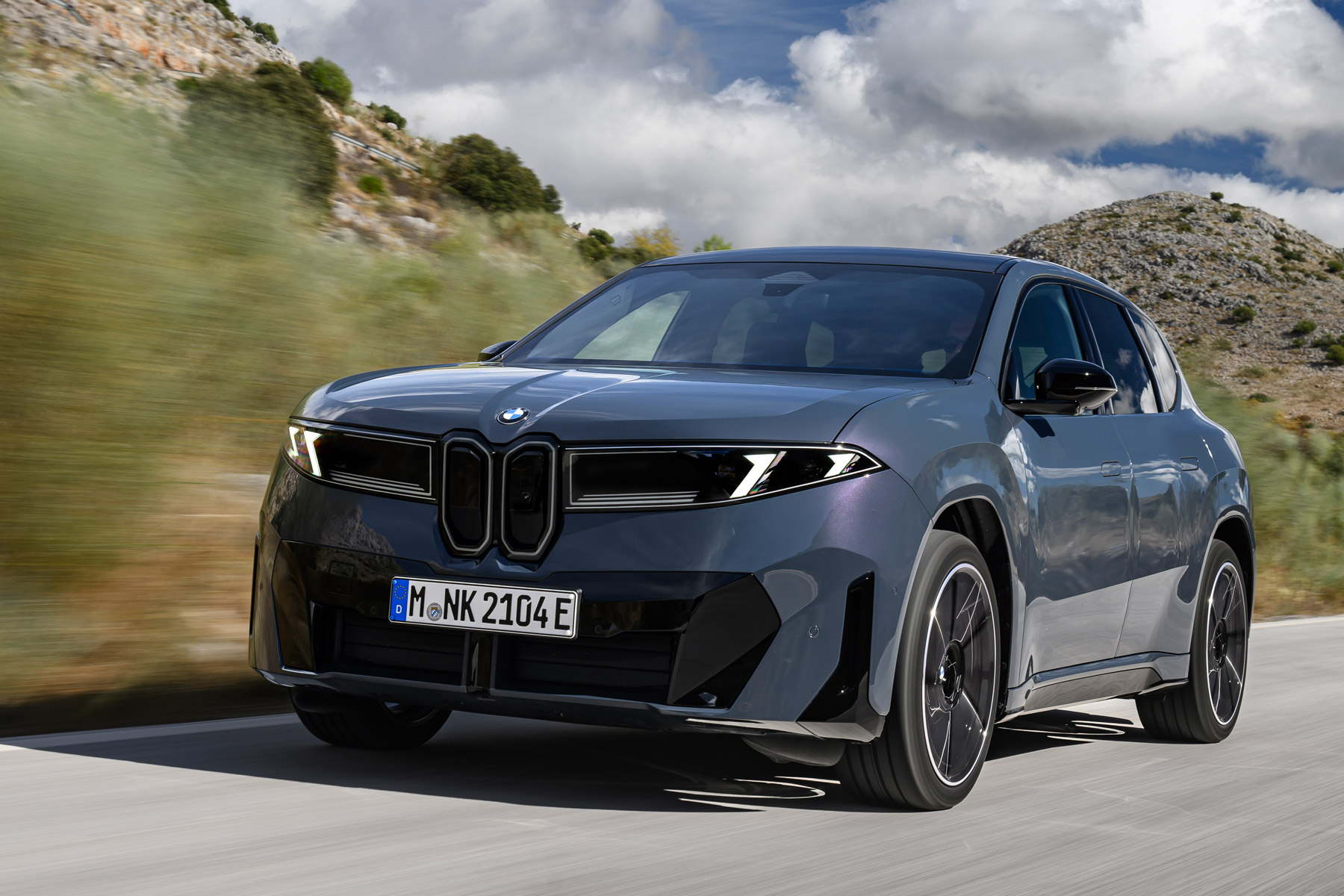
BMW has launched the new iX3 in South Korea, introducing the first series-production vehicle built on the company’s Neue Klasse architecture and marking the debut of several next-generation technologies designed to improve electric vehicle performance, charging, and software capabilities.
The electric SUV arrives with BMW’s sixth-generation eDrive powertrain, an 800-volt electrical system, and a certified driving range of up to 611 kilometres under South Korean testing standards.
First Production Model on Neue Klasse Platform
The iX3 is the first BMW production vehicle to be based on the automaker’s Neue Klasse electric vehicle architecture, which is expected to underpin a broad range of future battery-electric models.
For the South Korean market, BMW is offering the vehicle exclusively in the iX3 50 xDrive configuration. The model is equipped with a dual-motor all-wheel-drive system delivering 469 horsepower and 65.8 kgm of torque.
BMW says the SUV can accelerate from 0 to 100 kph in 4.9 seconds.
New Battery Technology Improves Range and Efficiency
At the core of the iX3 is BMW’s sixth-generation eDrive system, featuring a newly developed high-voltage battery that uses cylindrical battery cells.
According to the company, the updated cell chemistry and packaging increase energy density by 20% compared with the previous generation while improving both charging performance and driving range by approximately 30%.
BMW has adopted a cell-to-pack battery design, integrating battery cells directly into the pack rather than using traditional module structures.
The battery pack is also incorporated into the vehicle body structure through what BMW calls a “Pack to Open Body” concept, a design intended to reduce weight, improve structural rigidity, and enhance overall vehicle efficiency.
800-Volt Architecture Enables Ultra-Fast Charging
The iX3 is BMW’s first electric vehicle to utilize an 800-volt architecture.
In South Korea, the system supports DC charging rates of between 350 kW and 400 kW. BMW says the battery can be charged from 10% to 80% in approximately 21 minutes.
A ten-minute charging session can provide up to 250 kilometres of additional driving range under Korean certification standards. Under the WLTP test cycle, BMW says the same charging period can add as much as 372 kilometres of range.
The company lists a certified Korean driving range of up to 611 kilometres on a single charge, while the WLTP range reaches up to 805 kilometres.
New Software Architecture Debuts
Beyond the powertrain, the iX3 introduces BMW’s latest software and vehicle control system.
The vehicle uses four high-performance computing units, referred to by BMW as “Superbrains,” to independently manage driving dynamics, advanced driver assistance systems, infotainment functions, and core vehicle operations.
BMW says the computing architecture delivers up to 20 times greater processing capability than previous vehicle generations.
At the centre of the driving system is the new “Heart of Joy” control unit, which integrates steering, braking, acceleration, and regenerative braking functions into a single coordinated platform.
According to BMW, the system is designed to improve response times, vehicle stability, traction control, and energy recovery efficiency.
Panoramic iDrive Introduced
The iX3 also debuts BMW Panoramic iDrive, a new cockpit and user interface concept.
The system features BMW Panoramic Vision, which projects key driving information across the entire width of the windscreen between the A-pillars.
Additional display technologies include a 3D head-up display and a central touchscreen positioned at a 17.5-degree angle toward the driver.
Pricing and Deliveries
BMW Korea is offering the iX3 in three trim levels: SE, M Sport, and M Sport Pro.
Pricing starts at 79.9 million won (approximately €45,600) for the SE variant and rises to 91.9 million won (approximately €52,400) for the M Sport Pro model.