
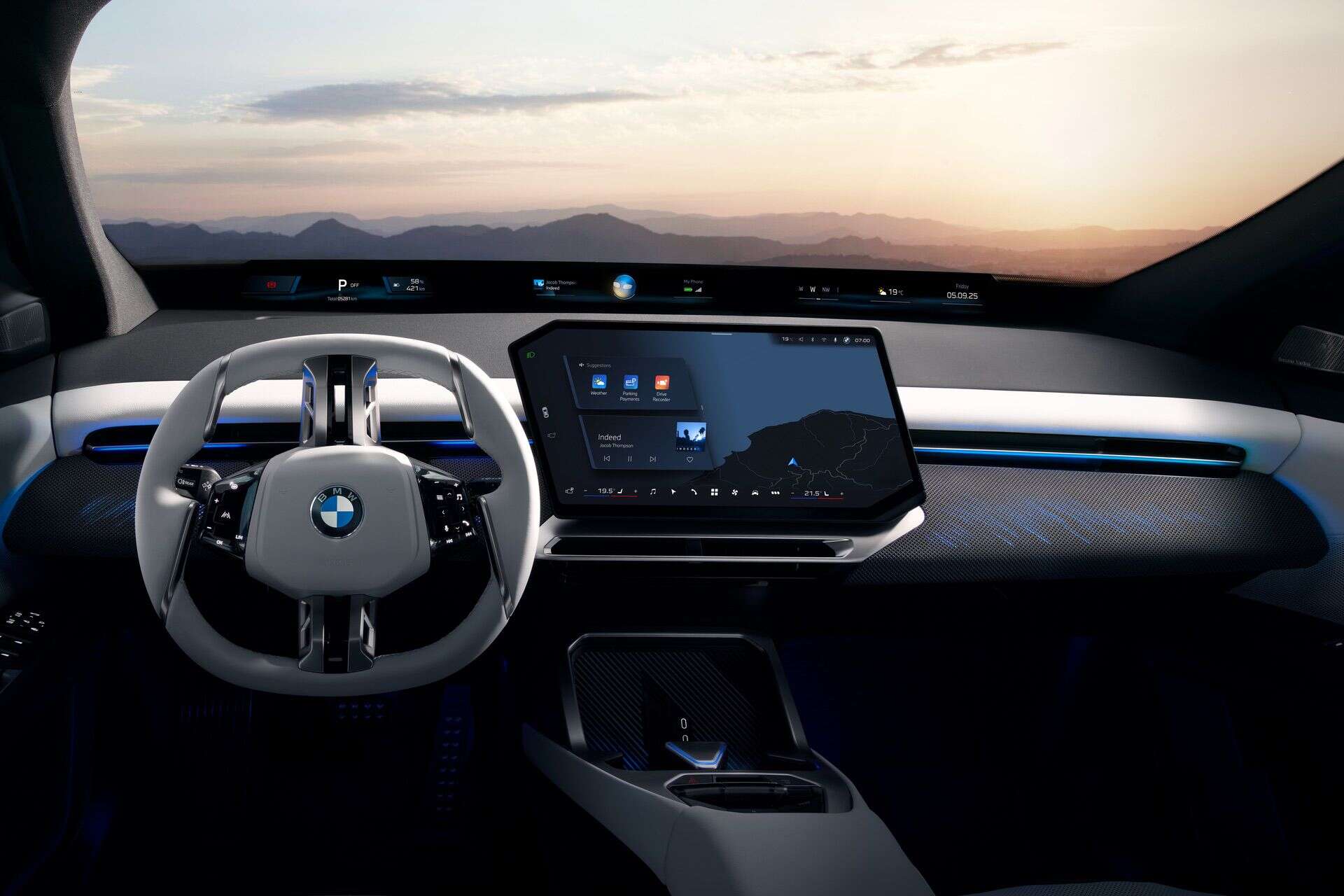
BMW design chief Adrian van Hooydonk said recent interior concepts from Ferrari support the view that a mix of physical controls and digital interfaces remains relevant in vehicle design.
In an interview with Top Gear, van Hooydonk referenced the Ferrari “Luce” interior concept, developed by designers Jony Ive and Marc Newson. He described the design as consistent with expectations for designers approaching automotive interiors with a technology-oriented perspective, while still retaining physical inputs alongside screens.
The Ferrari concept has drawn attention due to Ive’s background at Apple, where he helped define minimalist, screen-centric product design. Observers say the inclusion of physical controls in the Luce interior suggests a more balanced approach when adapting such design philosophies to vehicles.
BMW has maintained that certain functions benefit from tactile controls, particularly those that drivers may need to operate without diverting attention from the road. The company continues to include selected physical buttons and switches in its vehicles, alongside touchscreens and voice-based systems.
At the same time, some users have indicated that newer BMW models rely more heavily on digital interfaces, with functions such as climate control and media adjustments increasingly integrated into touchscreen menus.
BMW has said its approach is guided by usage data collected from its global vehicle fleet. In September 2025, Stephan Durach said the company evaluates how drivers interact with controls before determining which functions remain physical. “We have ten million cars out there,” Durach said. “The decision of ‘what we’re taking out, what we’re keeping,’ was based on statistical user data.”
Other automakers are taking varied approaches to the same issue. Rivian Automotive has emphasized software-driven interfaces, focusing on touchscreens and voice controls. “The challenge with physical buttons is they’re fixed and limit flexibility,” said Wassym Bensaid, adding that physical inputs would remain limited.
Meanwhile, Kia has indicated it will continue integrating digital features while retaining physical buttons for key functions, aiming to balance usability with technological development in its future models.