



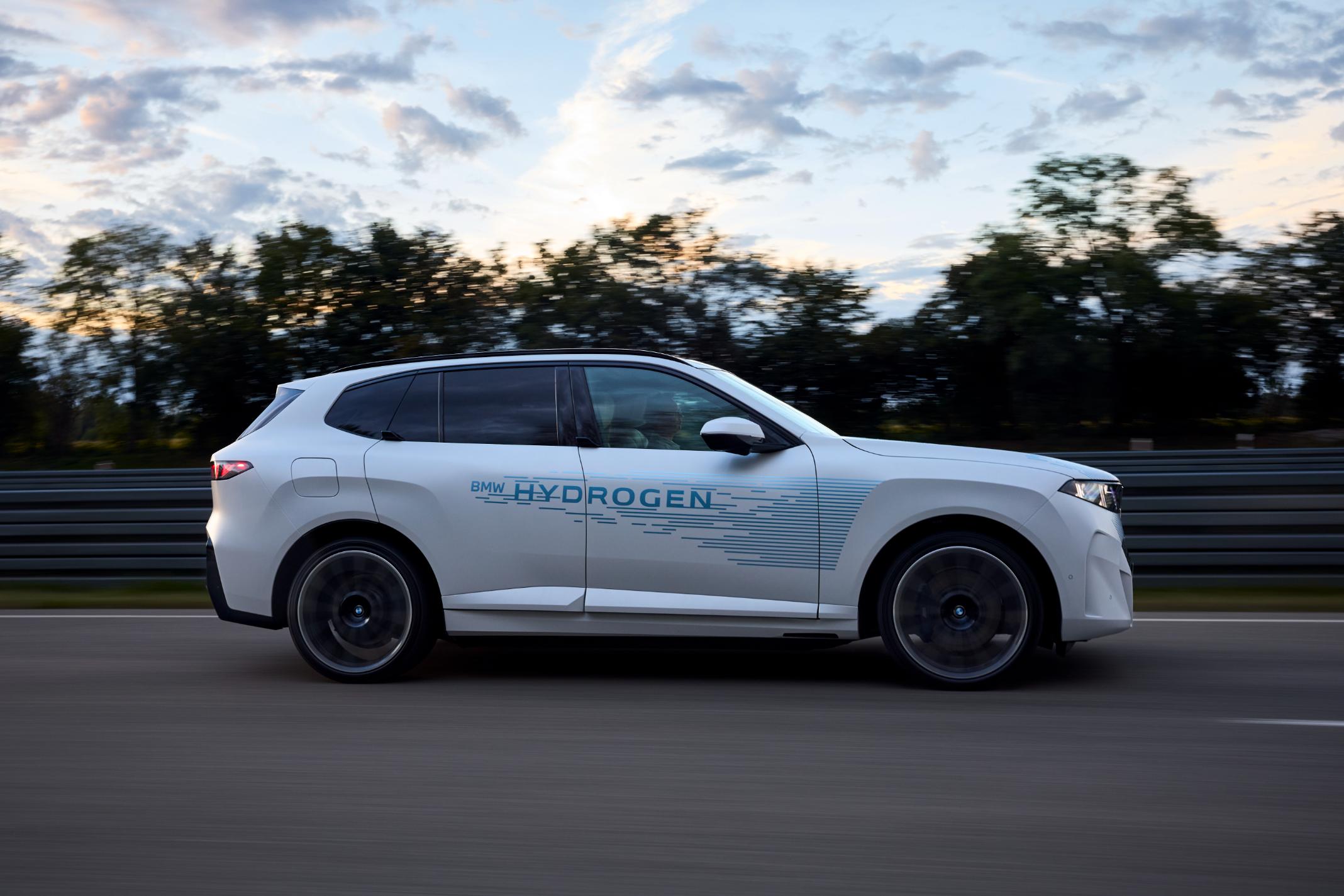
BMW has begun testing prototypes of the next-generation iX5 Hydrogen, with the hydrogen fuel-cell SUV scheduled to enter the market in 2028 as part of a five-powertrain strategy for the new-generation X5.
The new BMW iX5 Hydrogen is based on the fifth-generation X5, internally designated G65. BMW unveiled the new X5 at the end of June and confirmed that the model would be offered with fully electric, petrol, diesel, plug-in hybrid and hydrogen fuel-cell powertrains.
The first four versions are expected to reach the market in 2027, while the hydrogen-powered iX5 is planned for 2028.
BMW Expands Hydrogen Testing
BMW has already gained practical experience with hydrogen-powered SUVs through a test fleet of 100 converted fourth-generation X5 models, internally known as the G05. The vehicles were built at BMW’s Spartanburg plant in the United States and equipped with fourth-generation fuel-cell systems.
The company used the fleet to gain operational experience with hydrogen technology and provide selected journalists with opportunities to test the vehicles.
BMW has now moved development to the next-generation iX5 Hydrogen. Prototype vehicles are undergoing a comprehensive testing programme, including trials at the company’s test facility in Aschheim near Munich.
The programme is focused on integrating the fuel-cell system, high-voltage battery and electric drivetrain while continuing to refine the vehicle’s driving characteristics.
“Our ambition for the BMW iX5 Hydrogen is clear: a true BMW – with Sheer Driving Pleasure. A perfectly coordinated overall system is crucial for this. Current testing demonstrates how the fuel cell system, high-voltage battery and electric drive train are already successfully integrated and how systematically we are developing the technology towards series production,” said Josef Hochreiter, Head of Hydrogen Vehicles at BMW Group.
Prototype Assembly Prepares Fuel Cell Production
BMW has also entered a new prototype assembly phase for its third-generation fuel-cell system. The process is intended to establish the conditions required for robust and efficient manufacturing processes and support the transition toward future series production.
Series production of the fuel-cell systems will ultimately take place at BMW Group Plant Steyr in Austria.
The prototype assembly process is designed not only to manufacture individual components but also to generate manufacturing experience that can be transferred to the teams responsible for future series production.
“Prototype assembly is about much more than manufacturing individual components. Each phase helps us optimise processes, gain experience and systematically share this knowledge with the teams in Steyr. In this way, we are laying the foundation for the next steps on the road to industrialisation,” said Claudia Stephan, Head of Technology Development and Fuel Cell Prototype Assembly at BMW Group.
Industrialisation Moves Forward In Steyr
The start of the new assembly phase marks another development milestone on BMW’s path toward industrialising its hydrogen fuel-cell technology.
BMW has already installed the first test benches and manufacturing equipment at Plant Steyr. Employees are being trained in stages as the company prepares the facility for future production.
The knowledge gained through prototype assembly and training will provide the basis for additional industrialisation activities and the subsequent production ramp-up.
At the same time, preparations for industrialisation and future series production of the fuel-cell system are underway at Steyr.
At BMW’s Landshut plant, pre-series production of the central control unit for the hydrogen powertrain, known as the “Energy Master,” has already commenced.
€273 Million Supports Hydrogen Powertrain Development
BMW’s hydrogen programme forms part of its broader strategy to remain technology-open, maintaining several propulsion technologies rather than committing exclusively to battery-electric vehicles.
The company has secured €273 million in public funding through the HyPowerDrive project for development and industrialisation of the fuel-cell electric powertrain and tank system for passenger cars, including the BMW iX5 Hydrogen.
The German Federal Ministry of Transport is providing €191 million through the IPCEI Hy2Move programme. The state of Bavaria is providing an additional €82 million. The funding is administered by Projektträger Jülich and coordinated by NOW GmbH.
The funding supports BMW’s development of the fuel-cell powertrain and hydrogen tank system as the company works toward series production.
BMW Targets Sub-Five-Second Acceleration
BMW said the current testing programme is designed to ensure that the hydrogen powertrain can deliver its full performance capability while further improving the driving dynamics expected from the brand.
The automaker is targeting performance comparable with the fully electric BMW iX5, including an intended 0-to-100 km/h acceleration time of less than five seconds.
The iX5 Hydrogen is also expected to offer a driving range of up to 750 kilometres under the WLTP testing cycle.
BMW’s hydrogen system combines a fuel cell with a high-voltage battery and electric drivetrain. The company is continuing to test how these components operate together as an integrated powertrain ahead of series production.
Hydrogen Adds Another Electric Powertrain Option
BMW continues to position hydrogen as a complementary technology alongside battery-electric vehicles.
The company argues that fuel-cell technology can provide an additional option for applications where long range, short refuelling times and versatility are important.
The BMW iX5 Hydrogen is targeting up to 750 kilometres of WLTP range, while BMW says hydrogen refuelling can take less than five minutes. The vehicle will deliver fully electric driving while using hydrogen as the energy source for its fuel-cell powertrain.
BMW’s approach therefore maintains multiple drivetrain options across the X5 family, with the iX5 Hydrogen joining battery-electric, petrol, diesel and plug-in hybrid versions.
Hydrogen Faces Infrastructure Challenge
BMW’s hydrogen strategy comes as the company expands its battery-electric range while continuing to develop combustion-engine and plug-in hybrid models.
The planned range of up to 750 kilometres will be a key characteristic of the iX5 Hydrogen, although the role of hydrogen passenger vehicles remains uncertain as battery-electric charging infrastructure continues to expand.


