


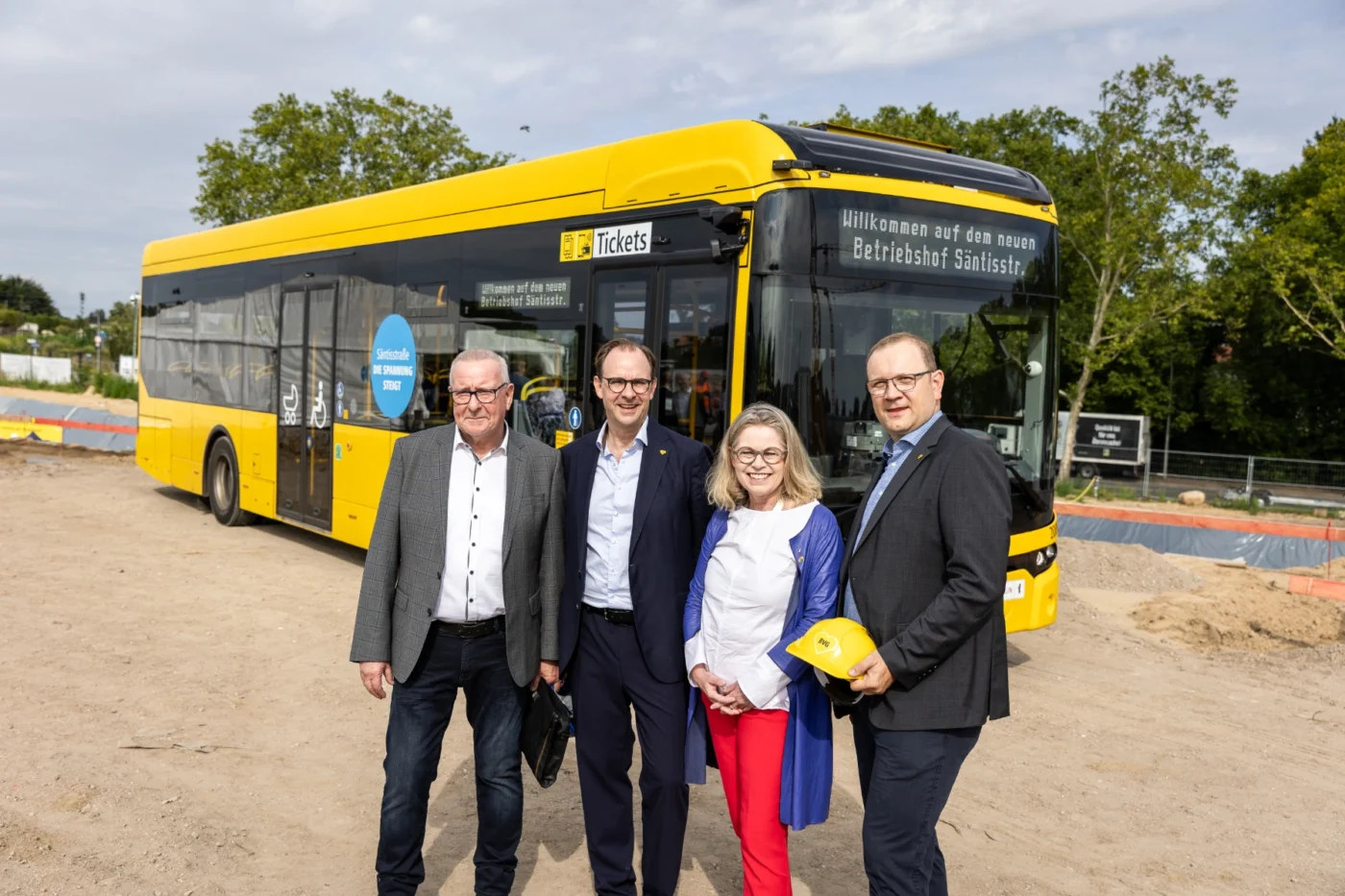
Berlin’s public transport operator BVG has begun construction of a new electric bus depot in Marienfelde, part of the city’s broader effort to expand zero-emission public transport infrastructure. The site on Säntisstraße is scheduled for completion in 2027 and will accommodate up to 220 electric buses.
The new depot will include two workshop halls, an administration building, and 209 overnight charging points capable of up to 150 kW, along with nine ultra-fast charging stations offering up to 450 kW. BVG also plans to install a transfer station, inverter stations, and charging masts to support future electric double-decker buses. The project will create space for approximately 180 staff and is designed to ensure stable and efficient e-bus operations.
The contract for the project was awarded in early 2024 to ARGE BVG Säntis, a consortium of ZECH Bau SE and SBRS GmbH. SBRS, a subsidiary of Shell Deutschland GmbH, brings expertise in high-capacity charging systems for electric vehicles. The partnership combines construction and charging infrastructure capabilities backed by energy sector experience.
Alongside the Marienfelde site, BVG is also developing a second electric bus facility on Köpenicker Landstraße in Schöneweide, which will offer parking and charging for about 200 vehicles. Together, the two new depots will support nearly a third of BVG’s planned electric bus fleet. By the end of 2025, the operator expects to have around 280 electric buses in service, with a goal of expanding to at least 500 by 2027. These vehicles will be charged both at depots and at 36 designated terminal stops during regular service.
BVG has recently revised its original electrification targets. While the company had aimed for full electrification of its bus fleet by 2030, it now envisions reaching that milestone later in the decade. It plans for electric buses to represent the vast majority of its fleet by 2035, with renewable fuels such as HVO100 serving as an interim solution for a smaller portion of operations.