
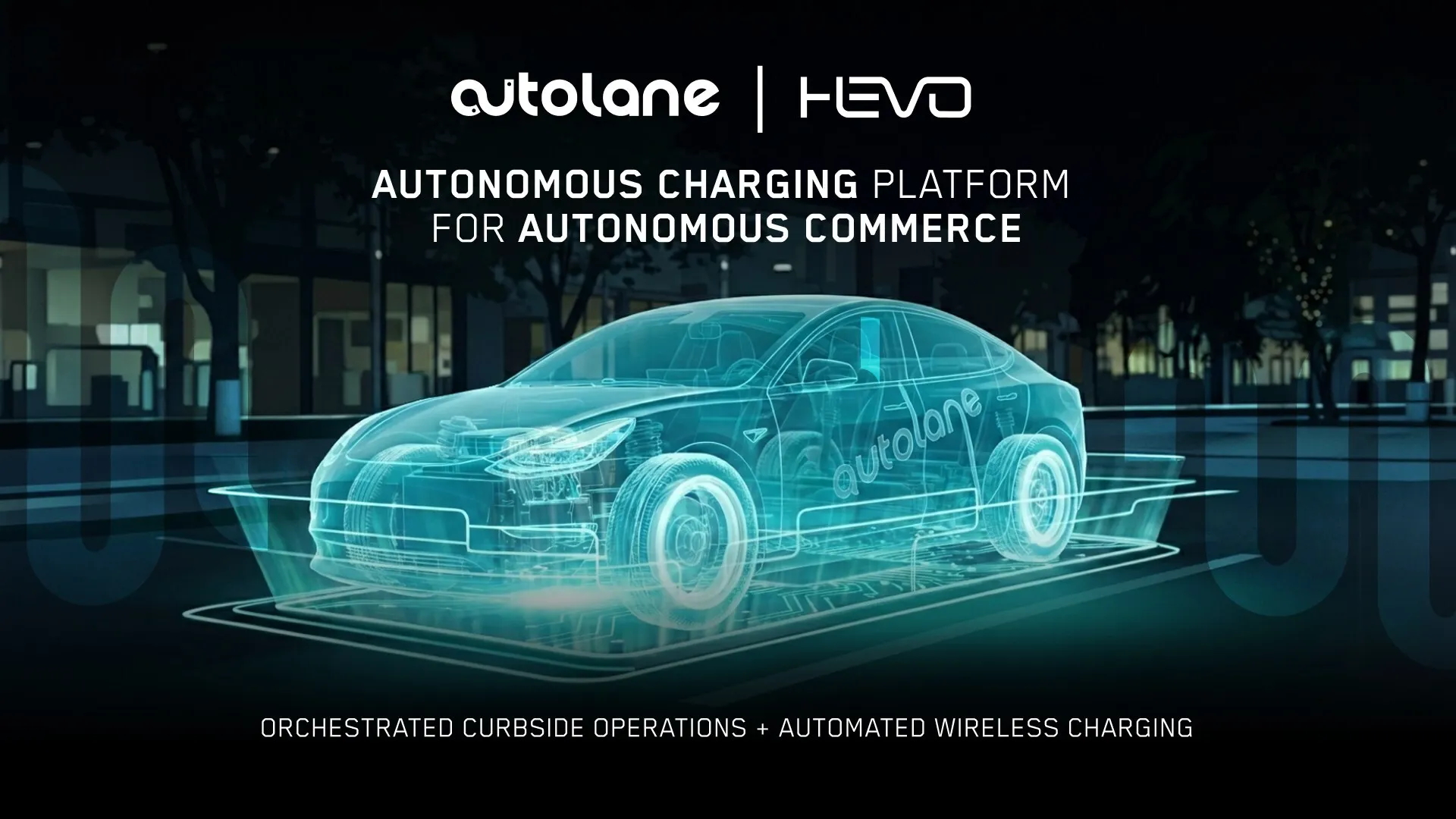
Autolane and HEVO have announced a strategic partnership to integrate wireless charging technology into autonomous vehicle operations, enabling electric autonomous fleets to recharge automatically during idle or dwell time.
The companies said the collaboration combines Autolane’s curbside orchestration platform with HEVO’s Rezonant wireless charging system and Journey fleet management platform to create what they describe as an integrated solution for automated charging in autonomous mobility services.
Under the partnership, autonomous vehicles operating within Autolane’s network will be able to automatically dock at designated charging zones and recharge wirelessly without requiring manual plug-in connections.
The companies plan to begin joint commercial trials in 2026 using production electric vehicle platforms equipped with HEVO’s wireless charging hardware.
The demonstration projects will evaluate several operational capabilities, including autonomous vehicle arrival and docking at charging locations, wireless energy transfer during dwell time between missions and integration of charging data into Autolane’s mission planning system.
Autolane said its platform functions as an operational coordination layer for autonomous vehicles, managing routing, curbside access and logistics for deliveries, ride-hailing services and other mobility operations across private properties and commercial hubs.
HEVO’s Rezonant charging technology is designed to allow electric vehicles to recharge automatically when parked above compatible charging pads embedded in the ground. The system is designed for commercial fleet applications and has been certified for safety and interoperability standards.
The companies plan to initially target deployments in locations including retail and restaurant hubs, logistics centers, campus transportation networks and mixed-use commercial developments.
According to the partners, embedding wireless charging into operational workflows could improve fleet utilization by allowing autonomous vehicles to recharge during scheduled stops between missions.
Ben Seidl said charging infrastructure remains one of the last operational steps in autonomous vehicle systems that typically requires human intervention.
Jeremy McCool said the integration of wireless charging with autonomous mobility systems could help create a scalable model for automated fleet operations.
The companies said the first trials will focus on selected locations in the United States, with plans to expand to additional markets where autonomous vehicle deployments are increasing.