
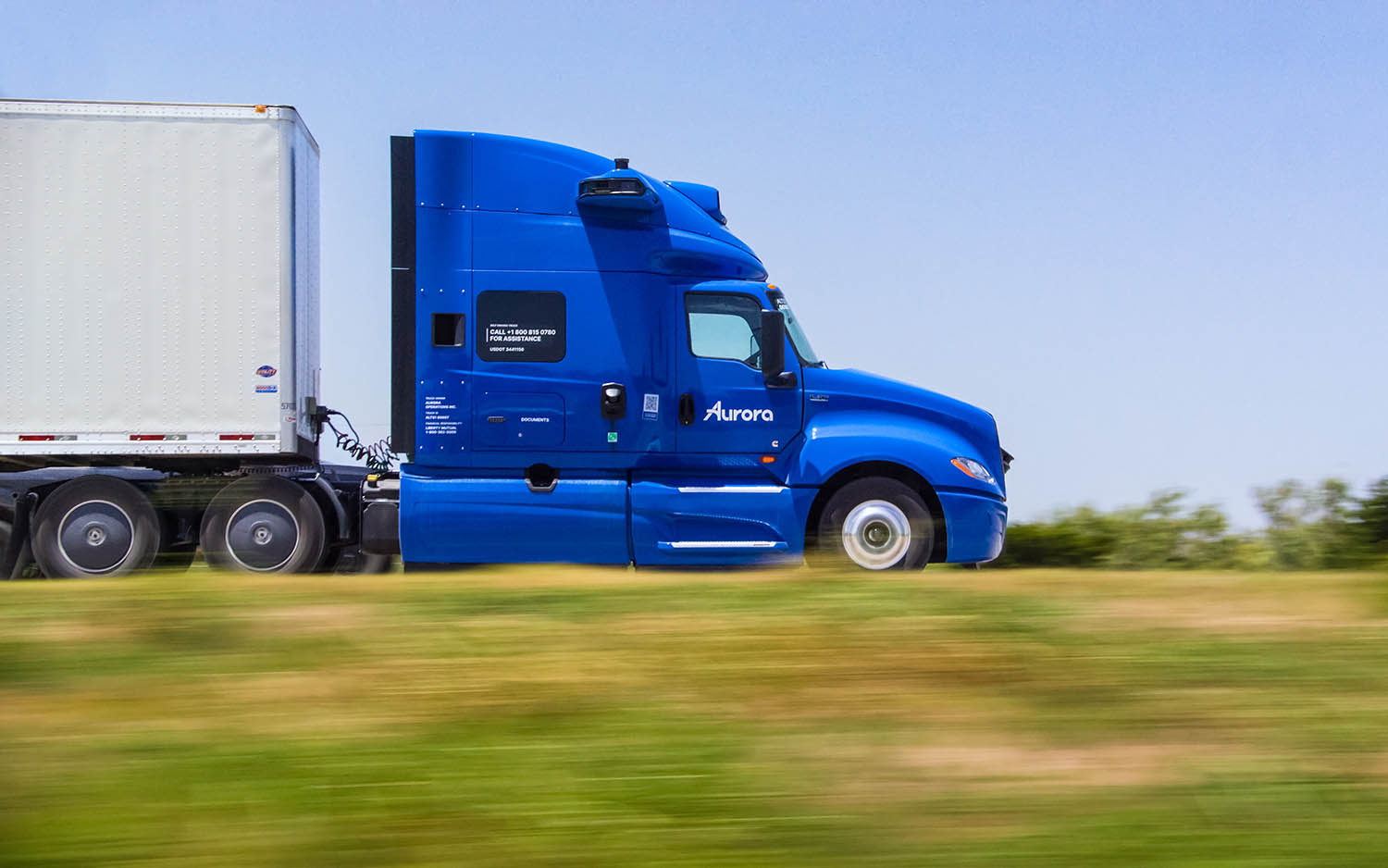
Autonomous vehicle technology company Aurora expects to have more than 30,000 self-driving trucks on U.S. roads generating $5 billion in annual revenue by the end of 2030, a substantial expansion from its expected 200 driverless trucks and $80 million revenue run rate at the end of 2026, according to TechCrunch.
Aurora Chief Financial Officer David Maday said the target represents a relatively small share of the overall heavy-truck market. The company expects the number of driverless trucks on the road to increase to more than 1,000 by the end of 2027.
Aurora Plans to Shift Business Model
Aurora currently operates a transportation-as-a-service model that the company plans to limit to about 500 trucks. Under this approach, Aurora owns and operates the autonomous trucks and charges customers including Detmar Logistics, Hirschbach, McLane and Werner approximately $2 per mile, including a fuel surcharge.
Maday said the company’s economics are expected to change in 2027 as Aurora moves toward a driver-as-a-service model. Under that structure, customers would purchase and maintain the autonomous trucks and pay Aurora a per-mile subscription fee for its autonomous driving technology.
Aurora expects that subscription fee to be about $0.85 per mile. The company would maintain the autonomous driving system and associated hardware, while customers would own and maintain the underlying trucks.
Moving vehicle ownership away from Aurora’s balance sheet is a key part of the company’s planned expansion. Aurora expects to reach breakeven gross margins on a run-rate basis in the first half of 2027, when approximately 500 autonomous trucks are operating.
Third-Generation Hardware Supports Expansion
Aurora’s next major hardware transition is planned for the end of 2027, when the company expects to introduce its third-generation autonomous driving system.
The hardware package includes sensors, computing systems and other equipment required for autonomous operation. Aumovio, formerly known as Continental, is Aurora’s manufacturing partner for the third-generation hardware.
Aumovio will also finance the hardware for Aurora and provide servicing and repair support for the systems, helping reduce the upfront financial burden associated with scaling the autonomous fleet.
Expansion Planned Across Continental U.S.
Aurora currently operates autonomous trucking services in a limited number of southern U.S. states. The company expects to expand its operations to most of the continental United States by 2030.
Maday said Aurora expects its cost structure to improve significantly as the company’s technology and operations scale.
“By 2028, I expect that our cost structures are going to be really outstanding. That’s why you see our gross margin starting to take off,” Maday said.
Aurora also continues to plan for an eventual expansion into robotaxi services. Maday said the company expects improved cost structures by 2028 to support entering the ride-hailing market.
Scaling Autonomous Freight Operations
Aurora’s 2030 plan calls for its driverless fleet to grow from a projected 200 trucks at the end of 2026 to more than 30,000 by the end of 2030.
The planned expansion will involve the transition to customer-owned autonomous trucks, deployment of third-generation hardware, expansion of operating territory and continued development of Aurora’s commercial driverless freight services.