



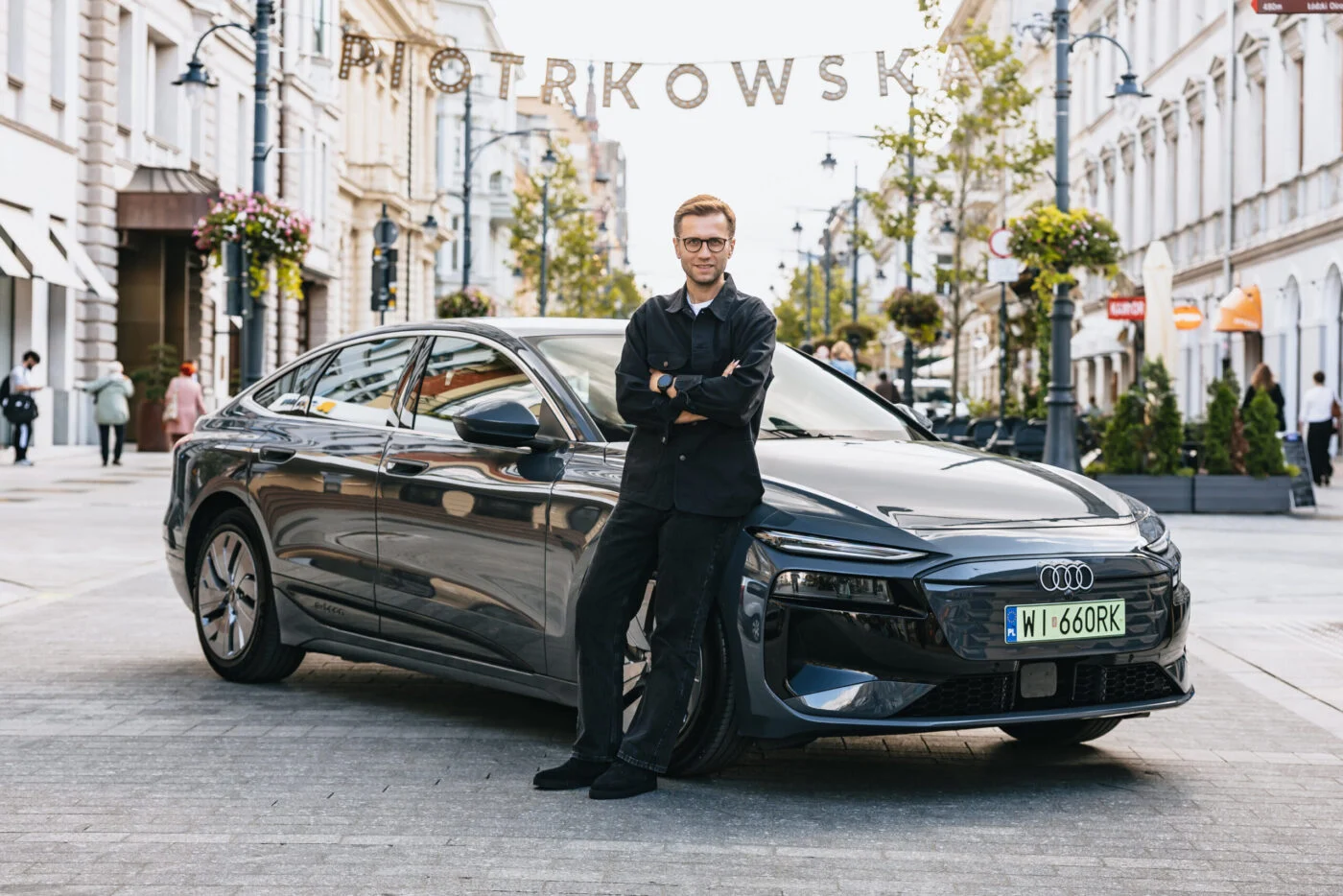
European Rally Champion Miko Marczyk has set a Guinness World Record with an Audi A6 Sportback e-tron performance after covering 1,338 kilometres on a single battery charge. Audi said the drive was completed with average energy consumption of 7.09 kWh per 100 kilometres.
Marczyk began the record attempt at 1:55 a.m. on September 11, driving along the Vistula River across Poland. The route passed through Kraków, Sandomierz, Warsaw, Toruń and Grudziądz before reaching Hel on the Baltic coast, after which he returned along the same route.
The journey lasted more than 45 hours and ended between Toruń and Ciechocinek after the car had travelled exactly 1,338 kilometres.
Record Attempt Covered 1,338 Kilometres
According to Audi, Marczyk drove in normal traffic conditions, including during rush hours, and did not recharge the vehicle during the attempt. Average temperatures were around 15 degrees Celsius, with temperatures falling to as low as 7 degrees in Grudziądz during the early morning.
The distance was 561 kilometres beyond the Audi A6 Sportback e-tron Performance’s official maximum WLTP range of 777 kilometres.
The vehicle used a 94.9-kWh usable battery, while energy consumption during the record drive averaged 7.09 kWh/100 km.
Marczyk attributed the result to the interaction between the electric drivetrain, battery and vehicle aerodynamics.
“Even for me, a result of 1,338 kilometres was a pleasant surprise,” said Marczyk.
Driving Strategy And Aerodynamics
Marczyk used a range of efficiency-focused driving techniques during the attempt, including maintaining a steady speed, anticipating traffic conditions, limiting unnecessary acceleration and braking, maintaining correct tyre pressure and using regenerative braking.
The A6 Sportback e-tron is based on Audi’s Premium Platform Electric (PPE) architecture. The Performance version used for the attempt has a battery with 100 kWh of gross capacity and 94.9 kWh of usable capacity, together with an 800-volt electrical architecture.
Aerodynamics were another factor in the vehicle’s efficiency. Audi lists a drag coefficient of 0.21 for the A6 Sportback e-tron, making it the company’s most aerodynamic production model to date.
Audi said aerodynamic drag accounts for around 40% of energy consumption for the Sportback during the WLTP test cycle. The influence of aerodynamic resistance becomes greater as vehicle speed increases.
Regenerative Braking Supports Efficiency
The vehicle can recover up to 220 kW of energy during deceleration. Audi said the regenerative braking system can handle around 95% of everyday braking manoeuvres without requiring the mechanical brakes.
The record therefore does not represent a new real-world range figure for typical driving conditions. A journey involving sustained motorway speeds, heating or air conditioning and a required battery reserve would produce a substantially different result.
Instead, the attempt demonstrates how vehicle efficiency can change when aerodynamic performance, rolling resistance, regenerative braking and driving behaviour are optimised over an extended journey.
The 7.09 kWh/100 km consumption figure provides an indication of the energy efficiency achieved during the specific record conditions rather than a typical everyday consumption figure.
Marczyk Previously Set Long-Distance Fuel Record
The attempt follows another long-distance efficiency record by Marczyk. In March 2025, he drove a standard fourth-generation Škoda Superb with a 2.0 TDI engine for 2,831 kilometres on a single tank of fuel.
That drive achieved average fuel consumption of 2.6 litres per 100 kilometres.
With the Audi A6 Sportback e-tron, Marczyk applied a similar efficiency-focused approach to an electric vehicle, concentrating on reducing energy consumption rather than maximising distance from a tank of diesel.


