

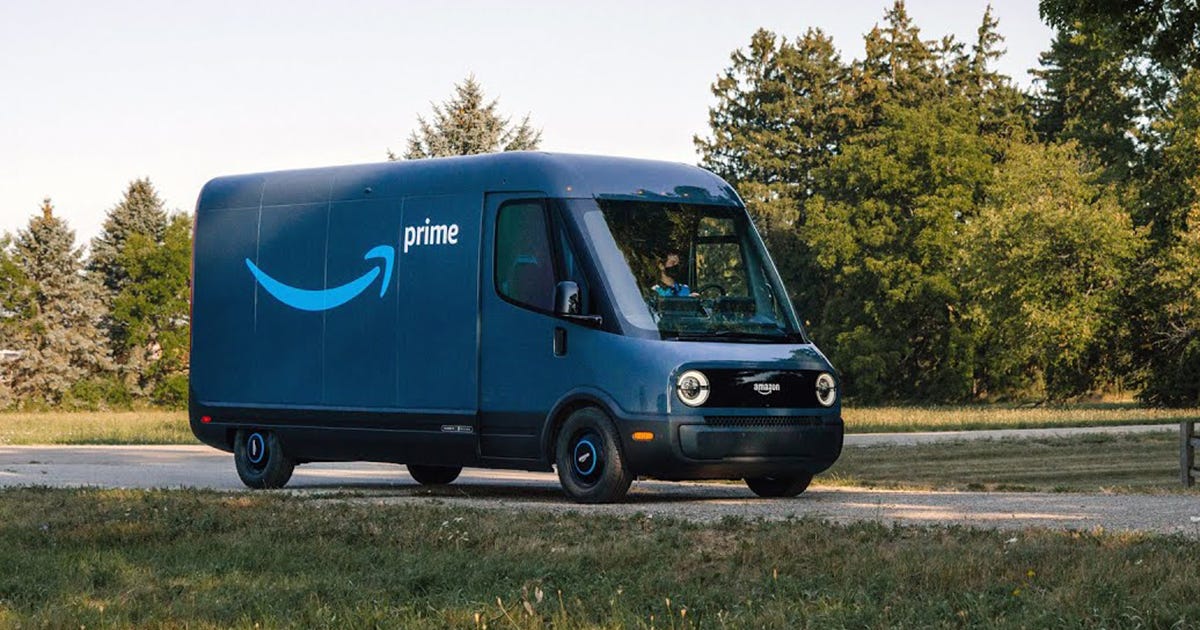
Amazon has surpassed 50,000 electric delivery vans operating across its global logistics network, reaching the halfway mark toward its target of deploying 100,000 electric delivery vehicles by 2030.
The company said the fleet delivered more than 2.4 billion packages worldwide during the past year without producing tailpipe emissions, marking a significant milestone in its broader effort to reduce transportation-related carbon emissions.
The expansion forms part of The Climate Pledge, the net-zero carbon initiative co-founded by Amazon in 2019, which aims to achieve net-zero emissions across the company’s operations by 2040.
Europe Plays a Key Role in Electrification
More than 10,000 of Amazon’s electric delivery vans were operating in Europe by the end of 2025, supported by a €1 billion investment program announced in 2022 to accelerate the decarbonization of its transportation network across the region.
One of Amazon’s largest European electric vehicle deployments involved nearly 5,000 electric vans supplied by Mercedes-Benz for delivery partners operating in Austria, France, Germany, Italy, and the United Kingdom.
To support the growing fleet, Amazon has expanded its charging infrastructure and reports operating tens of thousands of charging points globally, including thousands located across European facilities.
Micromobility Expands in Urban Areas
Beyond electric vans, Amazon continues to increase the use of low-emission transportation solutions in dense urban environments.
The company now operates more than 70 micromobility hubs across over 50 European cities, utilizing electric cargo bikes, electric mopeds, and pedestrian delivery carts to navigate narrow streets, pedestrian zones, and low-emission urban districts.
Since launching its first cargo bike delivery operation in 2017, Amazon and its delivery partners have completed more than 100 million deliveries through micromobility networks in Europe, including more than 30 million deliveries during 2025 alone.
According to the company, these operations have prevented more than 17,000 metric tons of carbon emissions, equivalent to removing approximately 3,900 gasoline-powered passenger vehicles from the road for one year.
Electric Trucks Join the Network
Electrification efforts are also expanding beyond last-mile delivery operations.
Amazon currently operates more than 100 electric heavy goods vehicles (HGVs) within its European middle-mile transportation network, which connects fulfillment centers, sorting facilities, and delivery stations.
The company said it expects to more than double the number of electric heavy trucks operating in Europe by the end of 2026.
Growing Use of Rail and Sea Freight
In addition to vehicle electrification, Amazon has continued shifting freight transport from road-based logistics to lower-carbon rail and maritime transport.
The company now utilizes more than 500 rail and sea freight routes across Europe, twice the number operated three years ago. According to Amazon, these transport modes generate nearly 50% less carbon emissions compared with equivalent road transport routes.
During 2025, more than 35% of inventory transfers on European routes exceeding 500 kilometers were moved by rail or sea. Amazon also reported transporting 170 million packages via rail and maritime routes across Europe during the year, representing a 45% increase compared with 2024.
In France, the company launched parcel transportation services using the country’s high-speed TGV rail network, transporting more than 500,000 packages by rail during 2025.
Sustainable Fuels for Hard-to-Decarbonize Sectors
For transportation sectors where battery-electric technologies remain difficult to deploy, including aviation and long-distance maritime shipping, Amazon is increasing its use of lower-carbon fuels.
The company said it purchased more than 14 million gallons of blended sustainable aviation fuel (SAF) during 2025 for use in its direct air transport operations.
Amazon said these purchases are intended not only to reduce emissions but also to support the development and scaling of sustainable fuel supply chains for industries where electrification remains challenging.
With electric vehicles, micromobility solutions, rail freight, maritime shipping, and sustainable fuels all playing a role, Amazon continues to broaden its approach to transportation decarbonization as it works toward its 2040 net-zero commitment.