
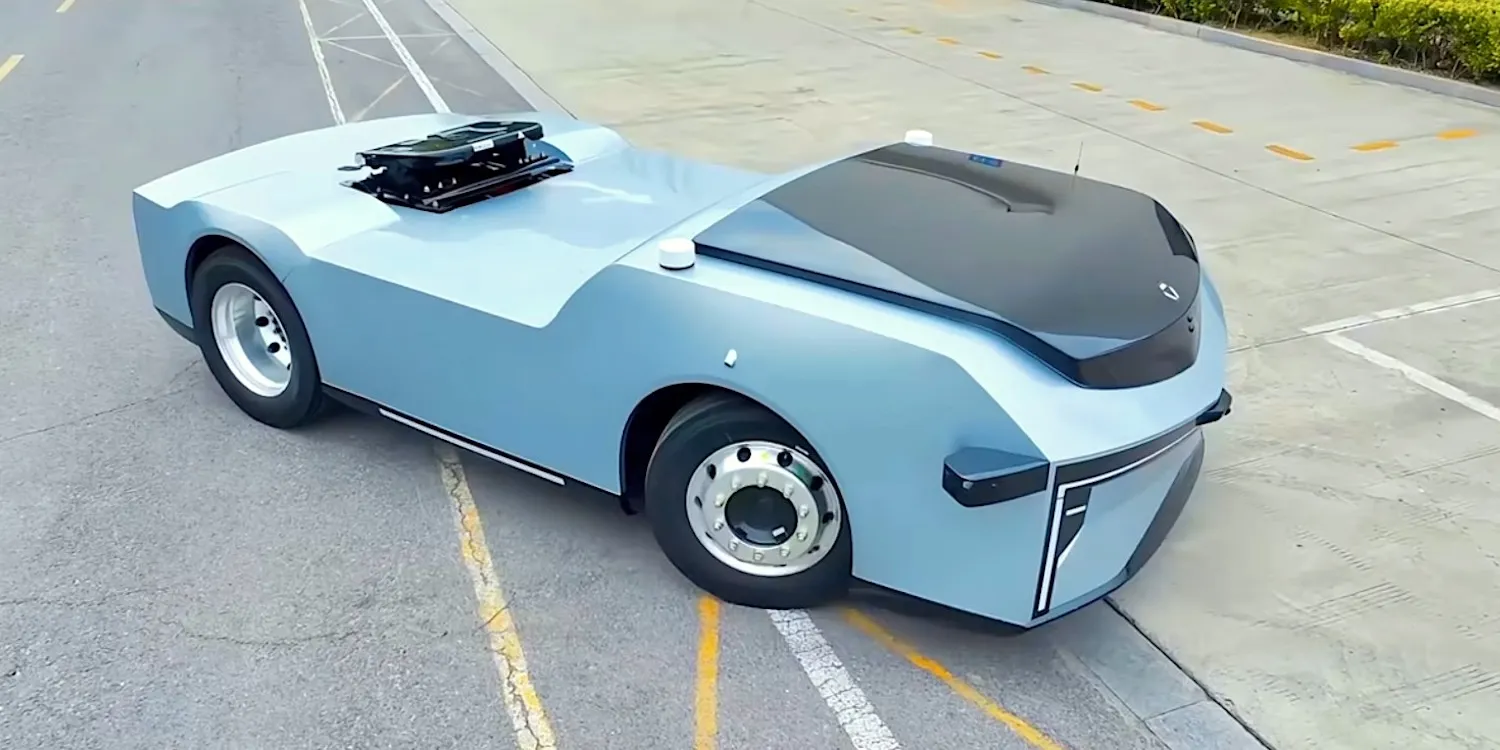
Chinese construction machinery manufacturer XCMG has introduced the SDA411, a fully electric terminal truck designed to operate without a driver’s cabin. The concept vehicle combines a Level 4 (L4) autonomous driving system with onboard perception technology to perform logistics tasks in industrial environments with minimal human intervention.
The design targets terminal and yard operations, where vehicles typically move heavy loads over short distances at relatively low speeds. These conditions make the segment a potential application for electric drivetrains and automated vehicle control.
XCMG presented the SDA411 as a platform developed specifically for unmanned logistics, with the aim of supporting continuous operations in environments where vehicles, equipment and personnel may share the same working space.
Cabless Design Built Around Autonomous Operation
Unlike conventional terminal tractors, the SDA411 has no driver’s cabin. Its operation instead relies on an L4 autonomous driving system and a 360-degree perception setup designed to support navigation, obstacle detection, task execution and parking.
In a LinkedIn post, XCMG described the vehicle’s capabilities:
“With no cab and an L4 autonomous driving system, the platform is purpose-built for unmanned logistics,” said XCMG. “Its 360° perception system enables autonomous navigation, obstacle avoidance, task execution and parking, supporting continuous mixed-traffic operations in demanding environments.”
Video shared alongside the announcement showed the SDA411 navigating XCMG’s campus, performing emergency stops and approaching a charging station. A human attendant was shown connecting the vehicle to the charger, indicating that at least some charging activities still involved manual intervention in the demonstration.
The footage provided an initial look at the concept’s operating functions, although it did not establish the vehicle’s performance in a commercial deployment or confirm the extent of its readiness for unsupervised operations.
Electric Power Suits Repetitive Yard Work
Terminal trucks, also known as yard tractors or yard dogs, move trailers and freight containers between loading areas, storage zones and transport connections. Their work generally involves frequent stops, precise positioning and repeated short-distance movements.
These characteristics can suit electric propulsion. Instant torque can support moving heavy loads from a standstill, while electric operation can reduce local exhaust emissions and drivetrain noise compared with diesel-powered vehicles.
Autonomous control could add another layer of operational efficiency by coordinating repetitive movements and allowing vehicles to perform assigned tasks with less direct driver involvement.
For operators managing logistics yards, the potential benefits would depend on factors such as battery range, charging arrangements, vehicle reliability, site layout and integration with existing logistics systems. XCMG has not provided detailed technical specifications or commercial deployment figures for the SDA411 in the announcement described.
Automation Could Help Address Driver Shortages
The introduction of autonomous terminal equipment comes as logistics and industrial operators face concerns about workforce availability and an aging pool of experienced drivers. Repetitive yard work is one area where companies may explore automation to maintain throughput when recruiting enough operators becomes difficult.
Vehicles such as the SDA411 could eventually allow a smaller team to oversee multiple automated units rather than manually drive each vehicle. Such arrangements could shift some responsibilities toward fleet supervision, exception handling and coordinating vehicle movements.
Automation could also change access to certain logistics jobs by reducing the need for continuous manual driving, although the scale of that effect would depend on how companies deploy the technology and reorganize their workforces.
The outcome is not necessarily limited to replacing individual driving tasks. Industrial operators would still need personnel to manage operations, handle maintenance, respond to unusual situations and ensure safe interaction between automated equipment and workers.
Implications for the Terminal Truck Market
XCMG’s cabless concept enters a segment where electric and automated terminal equipment could become increasingly relevant to ports, distribution centers and industrial facilities. Manufacturers such as Kalmar and Orange EV also operate in the terminal tractor and electric commercial vehicle sectors, making the development relevant to the broader market for lower-emission yard equipment.
However, the SDA411 remains a concept whose commercial prospects will depend on further technical validation and deployment details. The announcement did not specify a production schedule, pricing, battery capacity, operating range or plans for customer deliveries.