
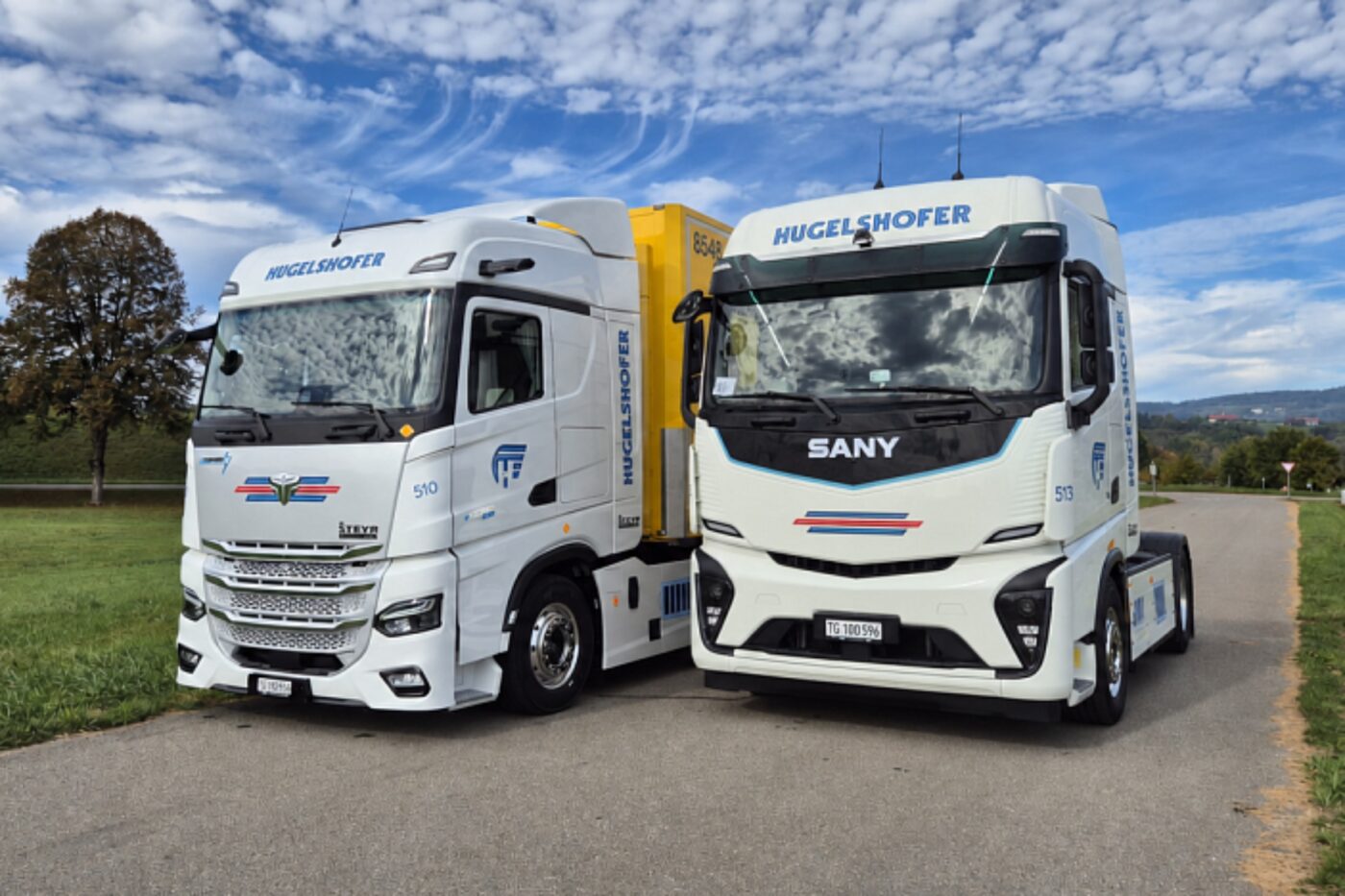
Swiss logistics operator Hugelshofer Logistik AG has added two electric trucks to its fleet, bringing its total number of electric trucks to 87. The new vehicles are the SuperPanther eTopas 600, assembled in Austria, and the Sany e263, manufactured in China.
The company plans to evaluate both trucks in daily transport operations, comparing their range, energy consumption, reliability, ease of use, service support and total cost of ownership. The trials form part of Hugelshofer’s longer-term objective of electrifying its entire vehicle fleet by 2035.
Two Trucks Enter Operational Testing
The eTopas 600 is assembled at Steyr Automotive’s facility in Austria, while the Sany e263 is produced in Changsha, China. The Sany model marks the manufacturer’s first entry into the Swiss market, according to Hugelshofer.
The company is adding the vehicles after several years of experience with electric heavy-duty trucks from European manufacturers. Hugelshofer began operating electric trucks in 2020, when it introduced what it described as Switzerland’s first 40-tonne battery-electric articulated truck.
In 2024, the company opened a fast-charging facility for electric trucks in Frauenfeld, which it identified as Switzerland’s largest of its kind.
Hugelshofer said the latest additions will broaden its experience with different electric truck technologies.
“Over the past years, we have gained extensive experience with electric trucks from various European manufacturers. We have tested new technologies, explored operational limits, and gained numerous insights. Not everything worked perfectly right away. However, these very experiences have driven us forward and significantly shaped our e-mobility strategy. With the two new vehicles from Superpanther and Sany, we are now deliberately expanding our technological horizon,” the company said in a German-language statement.
Range, Efficiency and Operating Costs Under Review
The two trucks will be assessed under the demands of regular logistics operations rather than solely through manufacturer specifications. Hugelshofer will examine how their performance translates into day-to-day transport requirements, alongside maintenance needs and service quality.
The results will help the company compare the vehicles’ operating costs over their service lives. Hugelshofer has not disclosed a testing schedule, individual vehicle specifications or the expected duration of the evaluation.
The company said its purchasing and operational decisions would be based on vehicle performance rather than the country of manufacture.
“Ultimately, what matters is not where an electric truck is manufactured, but how well it meets the demands of challenging daily transport operations.”
Chinese Technology in European Truck Production
Although the eTopas 600 is assembled in Austria, SuperPanther is a Chinese company. It develops the electric drivetrain platform, software and high-voltage electronics in China, while final assembly takes place at Steyr Automotive using components from European suppliers.
The Sany e263, meanwhile, is manufactured in China. The two additions therefore give Hugelshofer an opportunity to assess electric trucks using different manufacturing and technology arrangements.
Hugelshofer views the entry of Chinese manufacturers into the electric truck market as a source of additional competition.
“We see this development as an opportunity. Competition drives innovation, creates new technical possibilities, and can improve the economic viability of e-mobility in the long term.”
Fleet Electrification Target Set for 2035
Hugelshofer’s latest additions bring its electric truck fleet to 87 vehicles. The company has continued to expand its battery-electric operations since 2020, supported by dedicated charging infrastructure.
The target of a fully electrified fleet by 2035 will depend on vehicle performance, charging availability, operational requirements and the economics of replacing conventional trucks. The comparative results from the SuperPanther and Sany vehicles will provide additional information for the company’s future fleet decisions.