
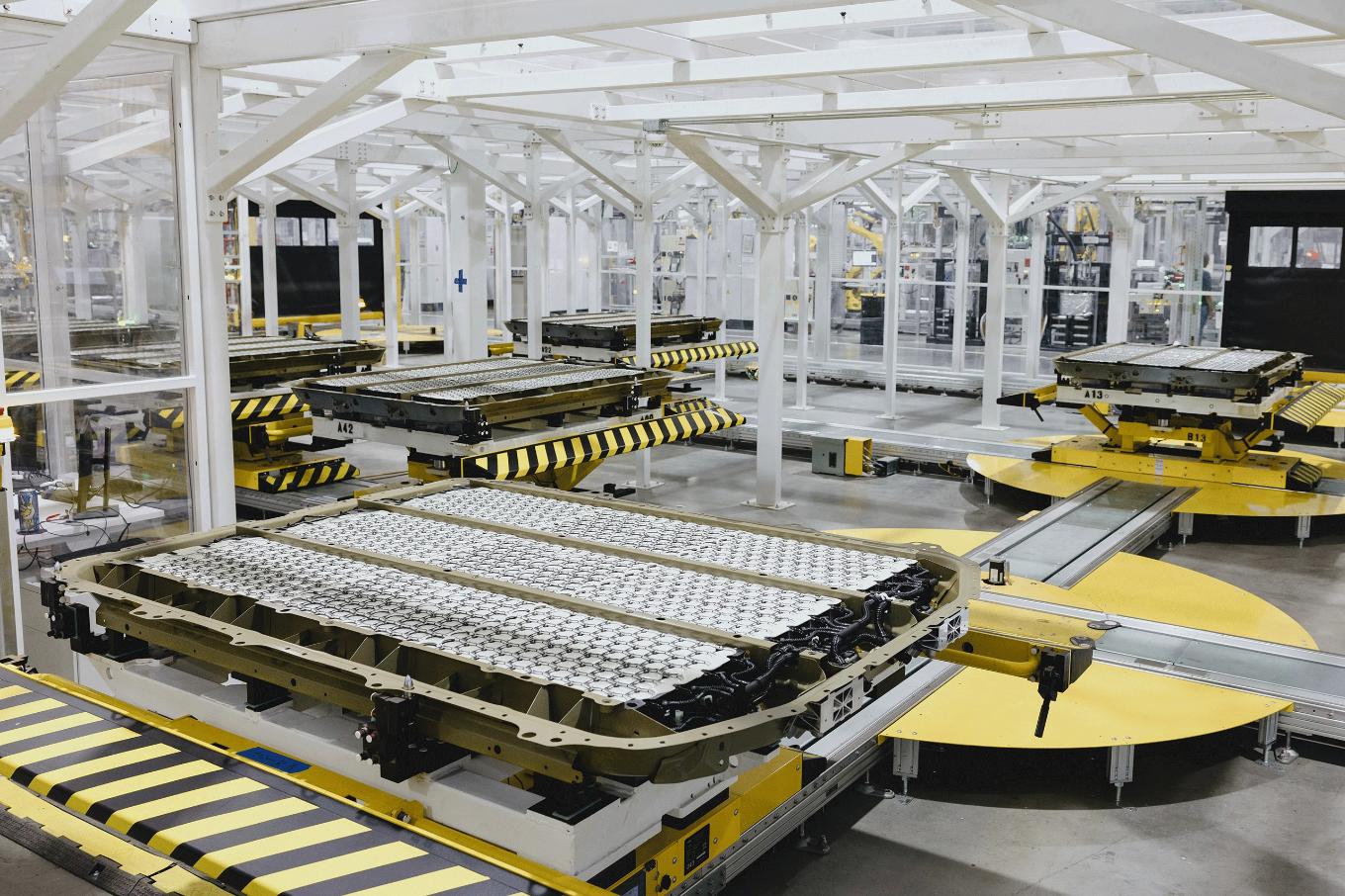
Rivian has expanded its partnership with Redwood Materials to include recycling battery production scrap from its manufacturing facilities alongside battery packs retired from its electric vehicles. The agreement extends the companies’ existing collaboration on second-life battery storage and material recovery.
Under the arrangement, battery packs deemed unsuitable for vehicle use will be returned through Rivian’s US service centre network. Redwood will assess each pack to determine whether it can be reused in stationary energy storage systems or should be sent for recycling.
Battery Reuse and Material Recovery
The expanded partnership builds on an April 2026 agreement under which Redwood is installing 10 MWh of energy storage using repurposed Rivian battery packs at the automaker’s plant in Normal, Illinois.
Redwood says its recycling process recovers more than 95% of the lithium, nickel, cobalt and copper contained in batteries. Adding production scrap to the agreement extends the collaboration across more stages of the battery lifecycle, from manufacturing waste to vehicle retirement and potential second-life applications.
Supporting Energy Storage and Grid Reliability
The companies said stationary battery storage can help manufacturers manage electricity demand amid constrained grid infrastructure and delays in grid connections. Repurposed EV batteries can store electricity when demand is lower or renewable energy is more readily available, then supply power during peak periods.
Rivian founder and CEO RJ Scaringe said the arrangement could support broader energy storage deployment.
“Giving Rivian battery packs a second life in stationary storage is a massive unlock for the energy transition. By partnering with JB and the Redwood team we’re turning retired EV batteries into a powerful tool to make the grid more reliable and lower energy costs for everyone.”
The expanded agreement combines battery reuse and recycling with stationary storage applications, while supporting the recovery of materials for potential use in new battery production.