
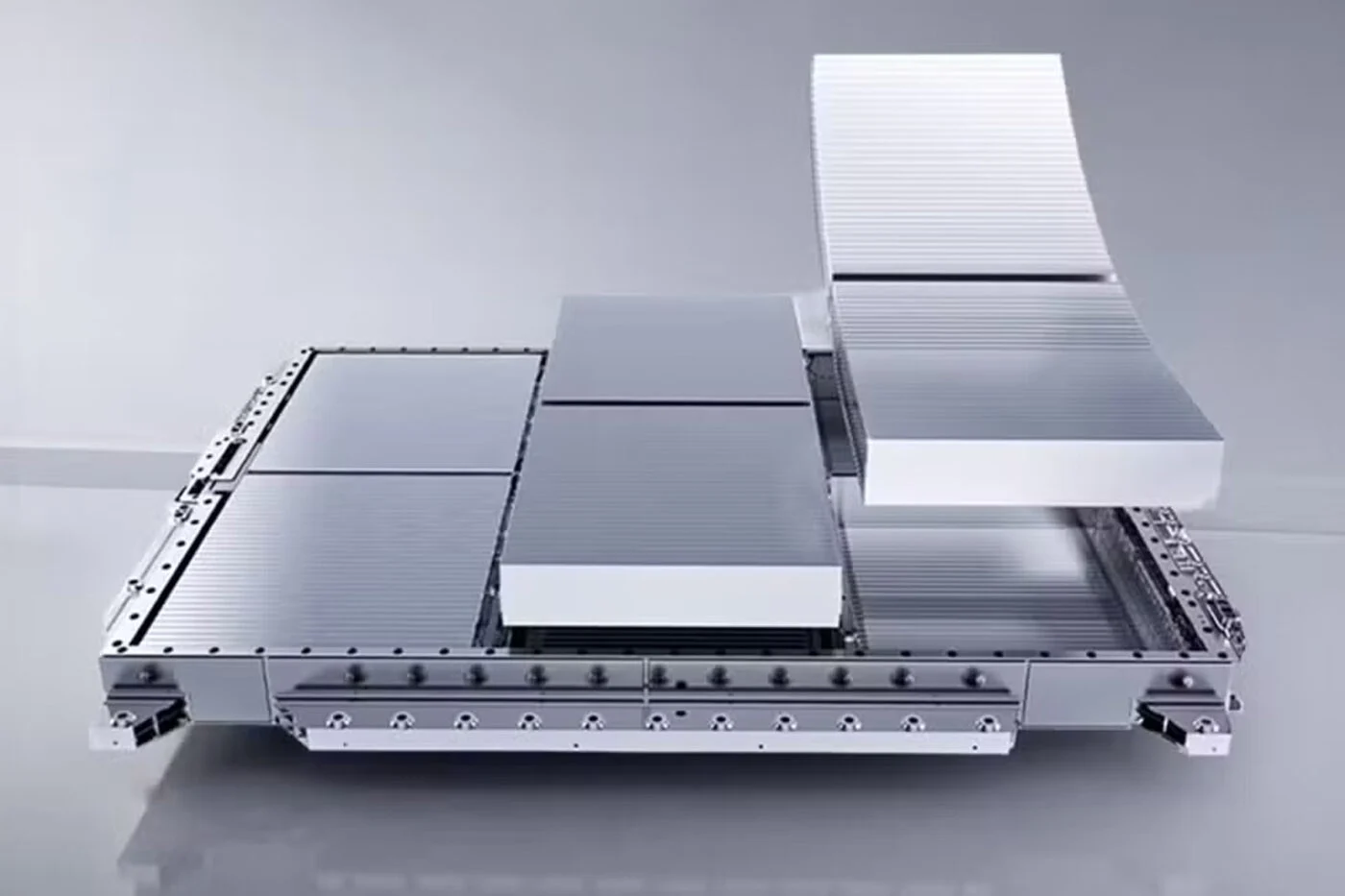
BYD has filed six new patents covering materials, cell structures and manufacturing techniques for solid-state batteries, adding to the Chinese automaker’s efforts to develop next-generation battery technology for electric vehicles.
The filings focus heavily on improving the interface between electrodes and solid electrolytes, an area that remains critical to the performance and durability of solid-state cells. The developments come as Chinese media reports that BYD is targeting small-scale production of dual-electrolyte solid-state cells in 2027, although the automaker has not officially confirmed that timetable.
Patents Target Electrolyte And Cathode Stability
Four of the patents address battery materials and chemistry.
One filing proposes an ion-conducting interlayer positioned between halide and sulphide solid electrolytes. The layer is designed to remain electrochemically stable while limiting unwanted reactions between the two electrolyte materials, potentially improving cell durability and cycle life.
Another patent describes the use of a first solid electrolyte as a buffer between the active cathode material and a sulphide electrolyte. BYD says the structure is intended to improve chemical stability while controlling heat generation. The patent specifies that the active cathode layer should release no more than 117 joules per gram under defined thermal conditions.
Two additional filings address cathode construction. One outlines a composite cathode incorporating monocrystalline and polycrystalline cathode materials alongside different solid electrolytes.
The proposed design seeks to combine the structural stability associated with monocrystalline materials with the stronger rate performance of polycrystalline materials.
A separate patent describes a three-material cathode in which lithiated metal oxides and metal sulphides are combined with a solid electrolyte. The structure is intended to reduce resistance at material interfaces while improving specific capacity and extending battery cycle life.
BYD Develops Manufacturing And Quality Controls
The other two patents focus on production techniques rather than battery chemistry alone.
One introduces ionic-liquid wetting agents distributed in a gradient across an electrode. The approach is designed to improve ion movement while maintaining consistent contact between solid materials during cell operation.
The second establishes a measurement referred to as “Re”, which evaluates the contact ratio between cathode and electrolyte particles. BYD specifies that at least 60% of the perimeter of a cathode particle should be in contact with electrolyte particles to support charging performance, capacity and durability.
The patents indicate that BYD’s development programme is addressing not only the composition of solid-state cells but also the manufacturing precision required to make the technology viable at scale.
2027 Production Reports Remain Unconfirmed
The latest filings follow a solid-state battery patent granted by the China National Intellectual Property Administration in late July covering composite cathode structures.
Chinese media reports have linked BYD’s recent research to plans for small-scale production of solid-state cells based on its dual-electrolyte cathode design in 2027. The initial batteries are reportedly expected to undergo testing in prototype vehicles before any broader rollout.
BYD has not publicly confirmed the reported 2027 production schedule.
The company has previously outlined a longer-term solid-state battery roadmap. BYD said last year that it had produced its first solid-state battery cells and was targeting demonstration vehicles from 2027, with wider commercialisation expected toward the end of the decade.
The automaker has also continued research into sodium-ion batteries, indicating that it is pursuing several next-generation battery chemistries at the same time.
Solid-State Batteries Still Face Production Hurdles
Despite growing investment in the technology, manufacturing solid-state batteries at large scale remains a significant challenge for the industry.
CATL Chairman Robin Zeng said in June that engineering and production limitations mean solid-state batteries are still several years away from widespread mass-market adoption.
For BYD, the latest patent activity highlights an effort to address some of those challenges through improvements to electrode-electrolyte interfaces, cathode design and production processes as the company works toward vehicle-level testing and eventual commercialisation.
Source: CarNewsChina