
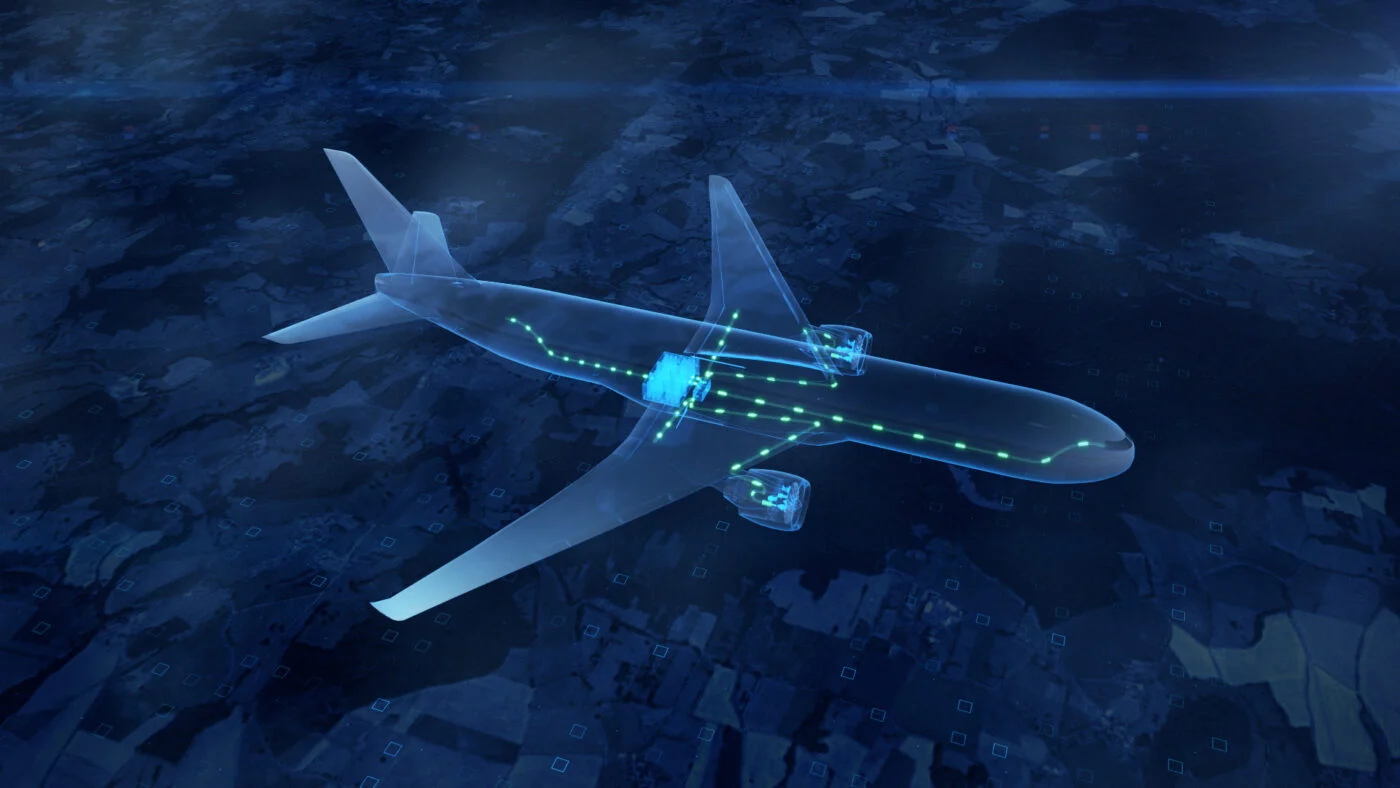
Airbus is collaborating with partners from Europe and the United States to develop a high-voltage electrical energy architecture for future commercial aircraft through the LEIA project, an initiative aimed at advancing hybrid-electric systems for onboard aircraft operations.
LEIA Targets Aircraft-Level High-Voltage Integration
Funded by the European Union’s Clean Aviation Joint Undertaking, the LEIA project focuses on developing and validating high-voltage power generation and distribution systems for non-propulsive aircraft functions.
Airbus-Backed GENtwoPRO Project Targets Fuel Cell System for 100-Seat Hydrogen Aircraft
Rather than replacing conventional engines with electric propulsion, the project seeks to electrify onboard systems by integrating scalable motor-generators, electronic control units, batteries and energy management technologies into a unified aircraft architecture.
Airbus is leading the system integration effort, bringing together technologies developed by project partners for aircraft-level testing.
A full ground demonstration of the integrated system is scheduled for 2027.
Building on Previous Hybrid-Electric Research
LEIA expands on the earlier SWITCH project, which concentrated on hybrid-electric propulsion subsystems.
Airbus Revises Hydrogen Aircraft Roadmap, Delays First Test Flight to Late 2030s
In July, Collins Aerospace completed integrated laboratory testing alongside Pratt & Whitney, GKN Aerospace and MTU Aero Engines before transferring the systems to Airbus’ Sustainable Technology and Engineering Projects (STEP) laboratory in Ottobrunn, Germany.
The STEP facility will conduct aircraft-level integration testing, including battery installation and energy management validation, to evaluate how high-voltage components operate together under realistic conditions.
Supporting More Electrified Aircraft
Airbus said increasing aircraft electrification requires more sophisticated methods of generating, storing and distributing electrical power.
The LEIA project aims to address these challenges by validating how generators, batteries and electrical systems can operate together through high-performance, high-voltage networks while maintaining efficient energy management.
The results are expected to support the future certification and integration of hybrid-electric architectures in next-generation short- and medium-haul commercial aircraft.
Multiple Electrification Pathways
Alongside LEIA, Airbus continues to invest in hydrogen fuel cell technologies.
Airbus and MTU Deepen Hydrogen Fuel Cell Partnership to Advance Zero-Emission Aviation
Through Aerostack, its joint venture with ElringKlinger, the company is developing aviation fuel cell systems following earlier work under the H2Sky research program, which produced a fuel cell stack delivering between 100 and 200 kilowatts.
Aerostack is now participating in the GENtwoPRO project with Airbus and other partners to develop scalable fuel cell systems for regional aircraft carrying up to 100 passengers.
While both programs represent important advances in aircraft electrification, Airbus has not announced a timeline for introducing either the LEIA technologies or its hydrogen fuel cell systems into commercial production aircraft, with further testing and certification still required before deployment.