
Li Auto delivered 30,895 vehicles in June, down 14.84% from a year earlier and marking its second consecutive month of year-on-year sales declines, according to data released by the company on Wednesday.
The June total was also 7.36% lower than the 33,350 vehicles delivered in May.
Second-Quarter Deliveries Meet Guidance
Li Auto delivered 98,330 vehicles during the second quarter, meeting its previously issued guidance of between 95,000 and 100,000 units.
For the first six months of 2026, deliveries totaled 193,472 vehicles, representing a 5.13% decline from 203,938 units delivered during the same period last year.
As of June 30, the company’s cumulative deliveries reached 1,733,687 vehicles.
Profitability Under Pressure
Li Auto has faced mounting pressure on both sales and earnings in recent quarters.
The company reported a net loss of 2.3 billion yuan (approximately US$339 million) in the first quarter, while gross margin declined sharply to 7.9% from 20.5% a year earlier.
In response, Li Auto has begun refreshing its higher-margin L-series extended-range electric vehicle lineup.
New L-Series Models
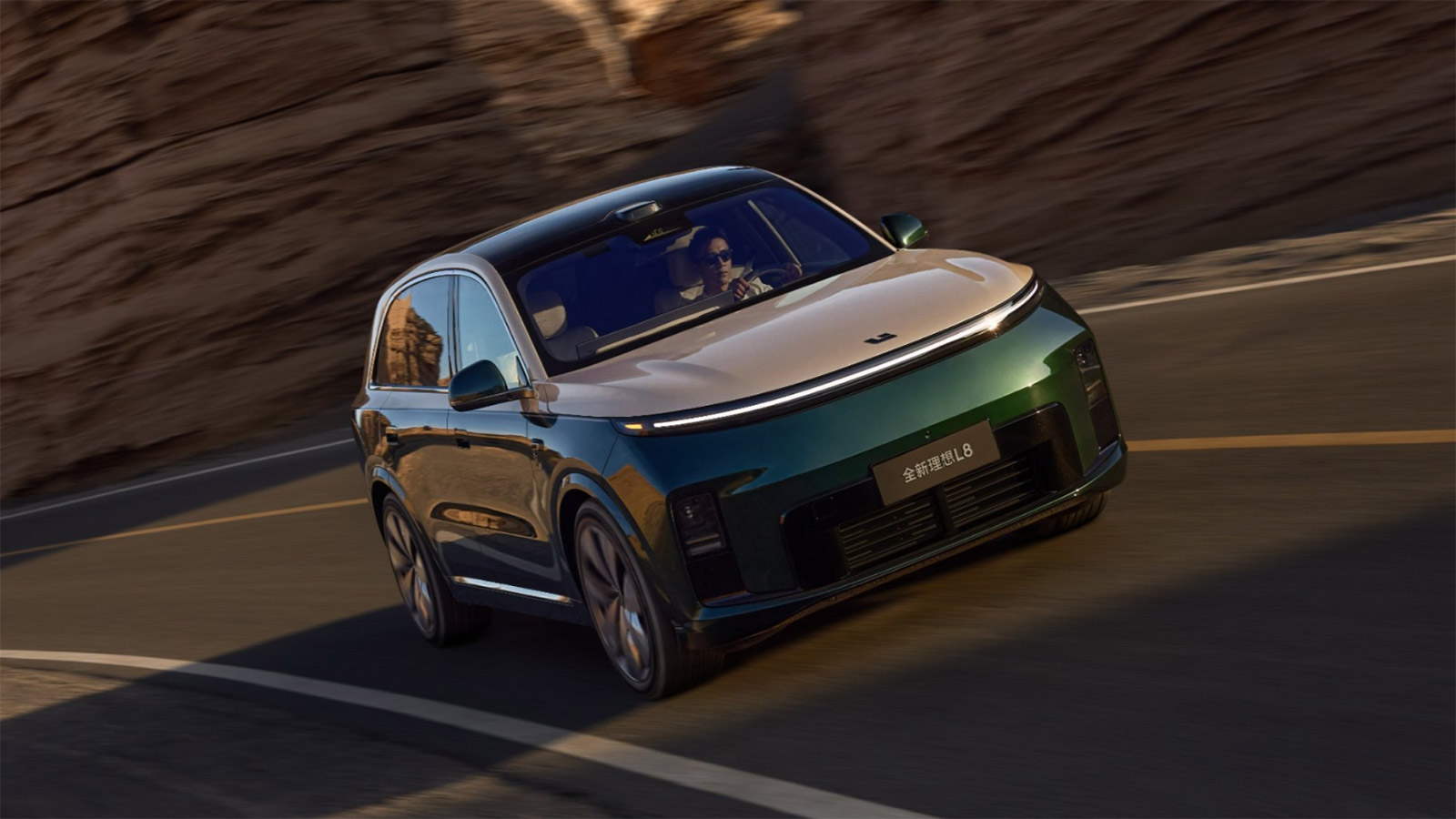
On June 23, the company introduced the new Li L8, a five-seat flagship SUV that replaces the previous six-seat configuration.
The updated model includes connected zero-gravity seats, an 800-volt active suspension system, a fully drive-by-wire chassis, the Mach M100 chip and a 5C range-extender system.
The Li L8 is available in Ultra and Livis variants, priced at 369,800 yuan and 429,800 yuan, respectively.
Li Auto also plans to launch the next-generation Li L6 in July. The L6 is one of the company’s best-selling entry-level extended-range electric vehicles.
Charging Network Continues to Expand
The company’s battery-electric i6 SUV has become an increasingly important contributor to overall sales, with cumulative production exceeding 150,000 units as of June.
At the end of June, Li Auto operated 495 retail stores across 160 cities, along with 536 service centers and authorized body-and-paint facilities in 220 cities.
Its charging network included 4,097 supercharging stations equipped with 22,593 charging stalls across China.