
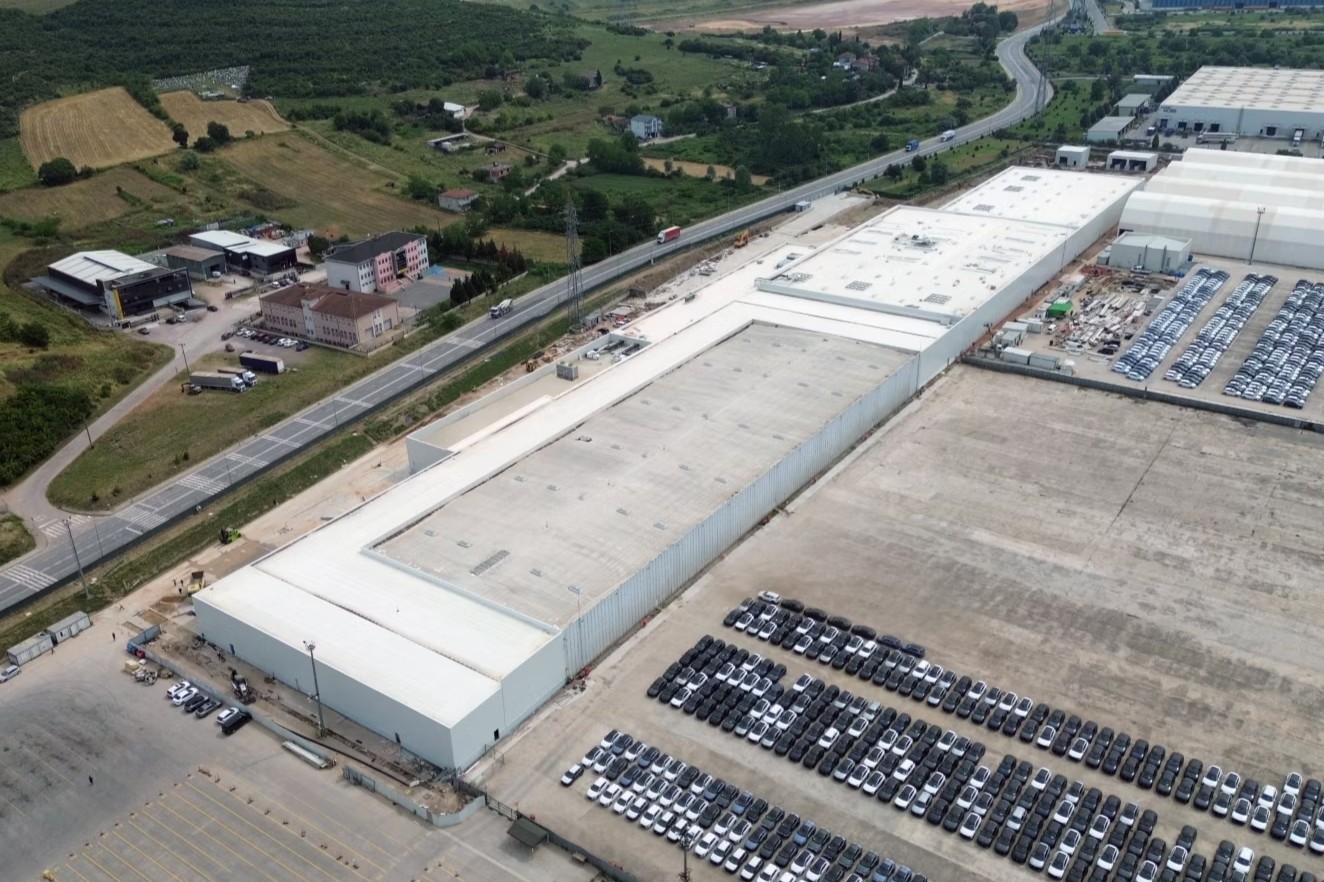
Hyundai is strengthening its electric vehicle manufacturing operations in Turkey with the addition of a dedicated battery assembly facility at its plant in İzmit, supporting production of the upcoming Ioniq 3 electric vehicle.
The battery plant forms part of a broader €715 million investment programme that will prepare the facility for large-scale EV production and increase local manufacturing capabilities.
Battery assembly added to Ioniq 3 production plans
Hyundai previously confirmed that the Ioniq 3 would be manufactured at its Turkish facility, with series production scheduled to begin in August.
The company has now revealed further details about the associated battery investment, which includes the construction of a new battery pack assembly facility within the İzmit manufacturing complex.
Of the total €715 million investment package, €55 million has been allocated to the battery assembly operation.
Automated facility under construction
The new battery plant is being built on a 30,000-square-metre site within the existing factory grounds.
Hyundai is developing the facility in cooperation with Hyundai Mobis and plans to automate battery pack assembly using 27 industrial robots.
Despite the high degree of automation, the company expects the project to create more than 300 new jobs during the initial phase of operations.
Production targets increase
Hyundai expects to manufacture approximately 27,000 units of the Ioniq 3 during its first production year.
Output is projected to rise to more than 40,000 vehicles in 2027 as production ramps up.
The company also indicated that the battery assembly line will eventually support additional electric and hybrid models, although no further details have been disclosed.
First EV production at the İzmit plant
The project represents a major milestone for Hyundai’s Turkish operations.
The İzmit facility has historically produced internal combustion engine models including the Hyundai i20 and Bayon. Since production began in 1997, the plant has manufactured approximately 3.3 million vehicles.
With the introduction of the Ioniq 3, Hyundai will become the first foreign automaker to manufacture fully electric passenger vehicles in Turkey and the second producer of EVs in the country after Turkish manufacturer Togg.
Developed specifically for Europe
The Ioniq 3 is expected to play an important role in Hyundai’s European electrification strategy.
Developed specifically for European customers, the model is based on Hyundai Motor Group’s E-GMP architecture configured with a 400-volt electrical system.
The vehicle shares much of its underlying technology with the Kia EV2 but features a more aerodynamic hatchback design that Hyundai describes as an “Aero Hatch.”
According to the company, the improved aerodynamics contribute to greater driving range compared with its Kia sibling.
Two battery options available
Hyundai unveiled the Ioniq 3 in April and confirmed two battery configurations for the model.
The lineup includes:
- Standard Range: 42.2 kWh battery with up to 334 km WLTP range
- Long Range: 61 kWh battery with up to 496 km WLTP range
Multiple battery supply chains
The company also revealed that different battery chemistries will be used depending on the variant.
The shorter-range models will utilize lithium iron phosphate (LFP) batteries sourced entirely from China, while the longer-range versions will use nickel manganese cobalt (NMC) cells supplied from Hungary.
Although Hyundai has not identified the battery suppliers, the dual sourcing strategy reflects the company’s efforts to optimize costs and performance across different vehicle variants.
Expanding European EV production
The investment in local battery assembly highlights Hyundai’s broader commitment to expanding electric vehicle manufacturing closer to key European markets.
By integrating battery pack production into the İzmit facility, Hyundai aims to strengthen supply chain resilience, increase local value creation and support growing demand for affordable electric vehicles across Europe.
As production of the Ioniq 3 begins later this year, the Turkish plant is expected to become an increasingly important component of Hyundai’s European EV manufacturing network.