
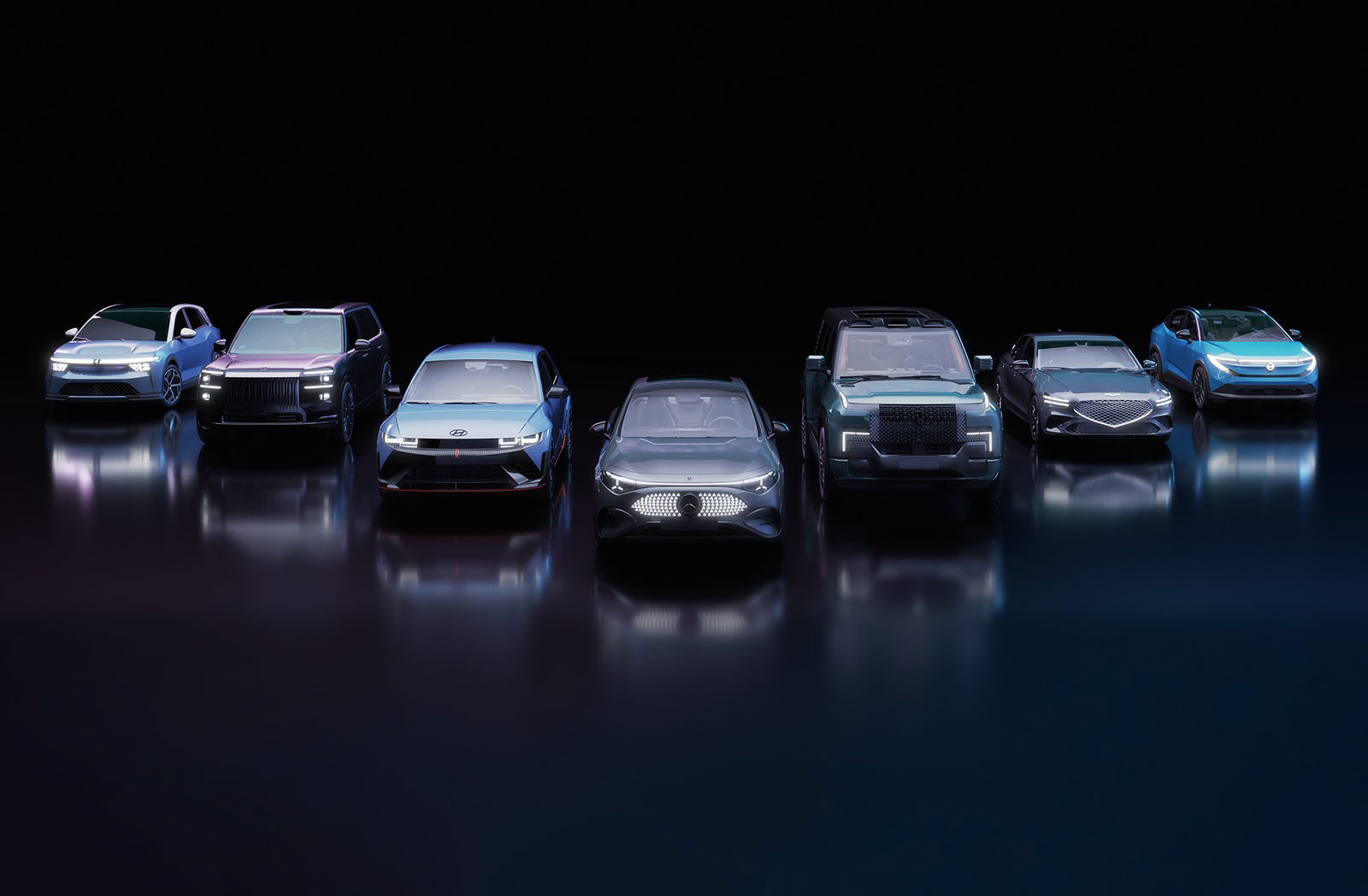
Nvidia has announced a series of partnerships aimed at expanding the deployment of Level 4-ready robotaxi fleets built on its Drive Hyperion autonomous driving platform, extending the technology’s reach across Asia, Europe and the Middle East.
The agreements involve collaborations with Foxconn, VinFast, Autobrains, Humain and Uber, reflecting growing industry adoption of Nvidia’s autonomous vehicle architecture for commercial ride-hailing services.
Taiwan Deployment Planned With Foxconn
Foxconn will use Nvidia’s Drive Hyperion platform to develop Level 4-capable electric robotaxis for deployment in Taiwan.
The first rollout is planned in the city of Kaohsiung, with commercial services targeted to begin in 2028. Initial operations are expected to focus on airport-to-city transportation before expanding to routes connecting Taiwan’s high-speed rail network.
The project marks a significant step for Foxconn as the company expands its role in electric vehicle manufacturing and autonomous mobility technologies.
Southeast Asia and Middle East Expansion
In Southeast Asia, VinFast is partnering with autonomous driving technology company Autobrains to introduce Level 4 vehicles based on the Drive Hyperion platform.
Meanwhile, Saudi Arabian artificial intelligence company Humain plans to deploy Drive Hyperion-powered robotaxis as part of efforts to build autonomous transportation infrastructure in the Middle East.
The initiatives form part of broader regional efforts to develop autonomous mobility ecosystems and integrate advanced transportation technologies into urban infrastructure.
Uber and Autobrains Target European Market
In Europe, Uber and Autobrains are collaborating on a robotaxi program in Munich using Nvidia’s platform.
The project aims to support an original equipment manufacturer (OEM)-agnostic approach to autonomous ride-hailing, allowing multiple vehicle manufacturers to participate within a shared autonomous mobility framework.
The addition of the Munich program extends Drive Hyperion’s commercial footprint into another major automotive market and adds to Uber’s growing network of autonomous vehicle partnerships.
Nvidia Sees Industry Scaling Opportunity
Nvidia founder and Chief Executive Jensen Huang said the autonomous mobility industry is moving toward large-scale commercialization.
“Autonomous mobility is entering its industrial scaling moment. Vehicles are becoming robots, and robotaxi fleets will require AI infrastructure that can perceive, reason and operate safely in the real world,” Huang said.
“Nvidia Drive Hyperion gives the world’s automakers, AV developers and mobility networks a common level 4-ready foundation—uniting compute, sensors, safety software and a global ecosystem to bring robotaxis from pilots to everyday transportation at scale.”
Growing Ecosystem for Autonomous Mobility
The latest partnerships underscore Nvidia’s efforts to position Drive Hyperion as a common technology platform for autonomous vehicle deployment.
The announcement also highlights Uber’s strategy of working with multiple autonomous vehicle developers and manufacturers. The ride-hailing company has established partnerships with a range of autonomous driving firms and vehicle makers as it seeks to integrate robotaxi services into its platform.
Foxconn’s involvement may also address manufacturing challenges that have slowed the expansion of autonomous vehicle fleets. By leveraging its large-scale manufacturing expertise, the company could help support future production of autonomous vehicles as commercial deployments increase.
The new agreements come as automakers, technology companies and mobility providers continue to accelerate investments in autonomous driving technologies, with commercial robotaxi services increasingly viewed as one of the first large-scale applications for advanced artificial intelligence in transportation.